A monastery built around a natural shelter
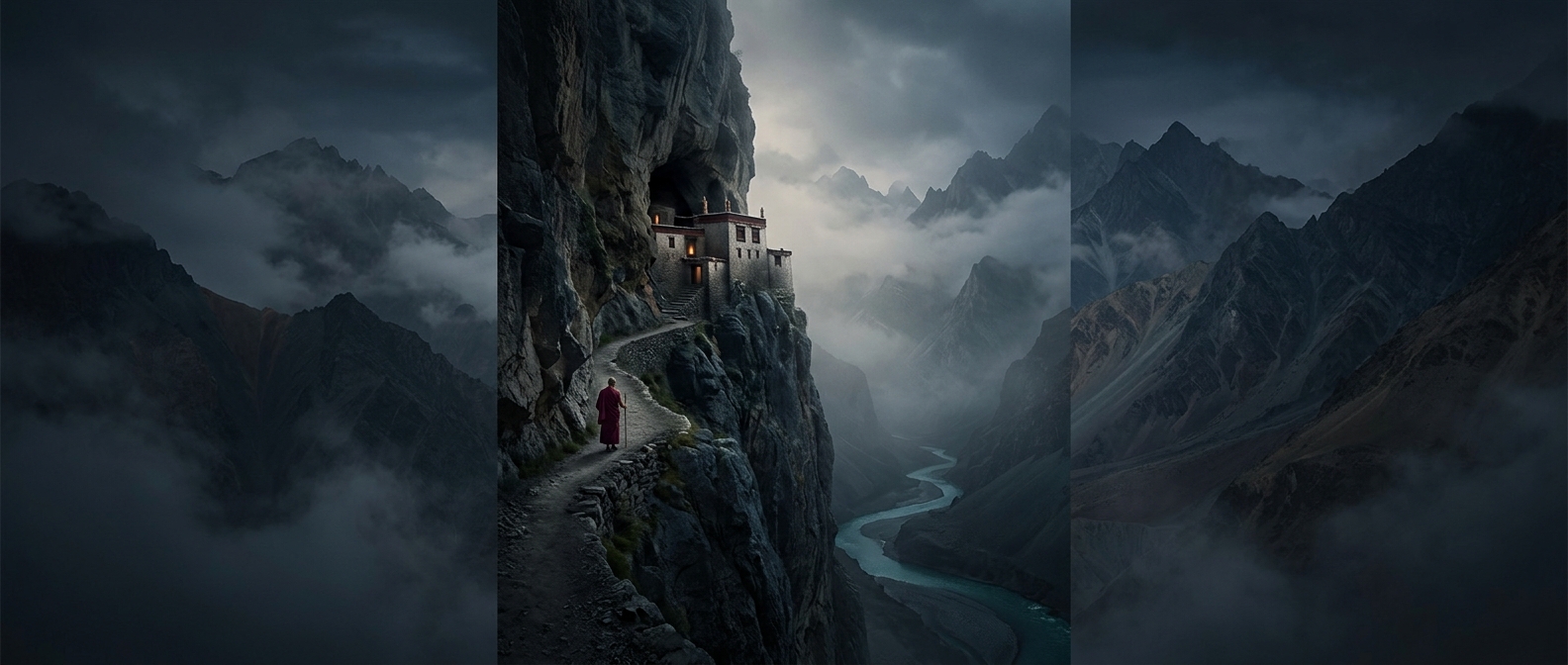
At Phuktal Gompa, the cave is not simply a dramatic backdrop: it is the feature around which the monastery took shape. Its buildings cling to the limestone face around the cave’s entrance, making use of the narrow ledges and uneven ground rather than spreading across a valley floor. The result is a compact, tiered settlement—part religious complex, part village—whose pale walls seem to grow out of the rock.
The cave also gives the site a deeper religious meaning. In Buddhist monastic life, caves have long served as places for retreat and meditation, away from the distractions of ordinary settlement. At Phuktal, that sheltered space remains at the center of a working monastery, linking the community’s daily life to the landscape that first made the location distinctive.
Isolation shapes everyday life
The same terrain that protects the monastery from easy access also makes ordinary logistics difficult. Food, building materials, and other necessities must reach a place without a road; narrow paths and bridges turn a short distance on a map into a demanding journey. This is why the approach is not just a scenic walk but part of understanding how the monastery functions: its community has to organize life around what can be carried in and when routes are passable.
The cliffside setting is therefore more than visual drama. It reflects a practical choice to build where shelter, retreat, and a small foothold in the valley came together. At Phuktal, even the route to the doorway reveals how closely a remote monastery’s spiritual purpose and daily survival are tied to the terrain.