How swallowing briefly takes breathing offline
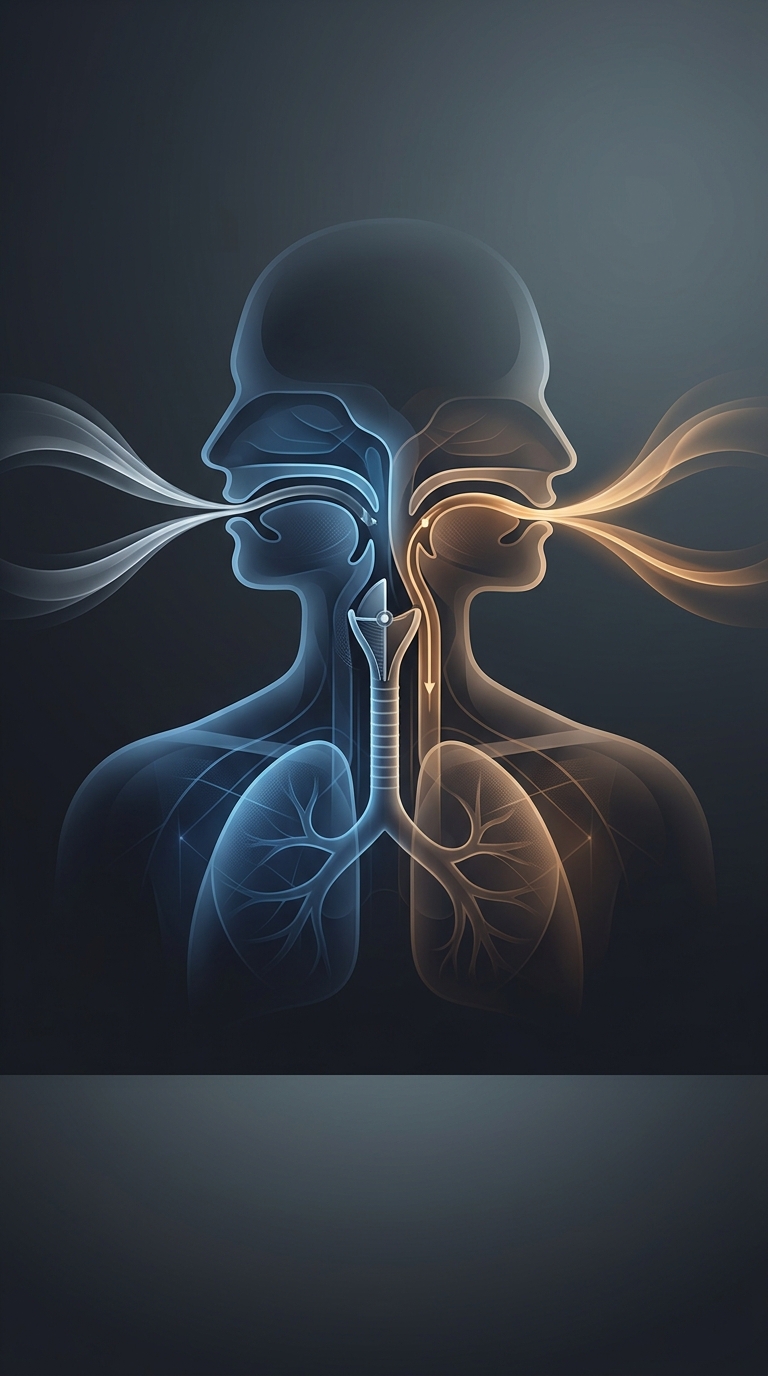
Breathing and swallowing share a busy intersection at the back of the throat. Air travels from the nose or mouth toward the larynx—the entrance to the windpipe—while food and drink must pass behind it into the esophagus, the tube leading to the stomach. Because these routes cross, swallowing requires a carefully timed pause in breathing.
As a swallow begins, muscles lift the larynx and the epiglottis, a small flap of tissue, folds over its opening. Other movements close the vocal folds, narrowing the airway further. Together, these actions direct the swallowed material toward the esophagus and keep it out of the lungs. Breathing resumes once the swallow is complete.
Why a mistimed swallow makes you cough
The pause is brief, but the sequence has to happen in the right order. If a crumb or drop of liquid slips toward the airway, sensory nerves detect the intrusion and trigger a cough. The forceful burst of air helps eject material before it travels farther down the windpipe. That familiar cough is a protective reflex—not proof that food has reached the lungs.
This coordination is one reason swallowing is more than simply pushing food down. The throat must momentarily prioritize a safe passage for each mouthful, then reopen the airway so the next breath can begin.