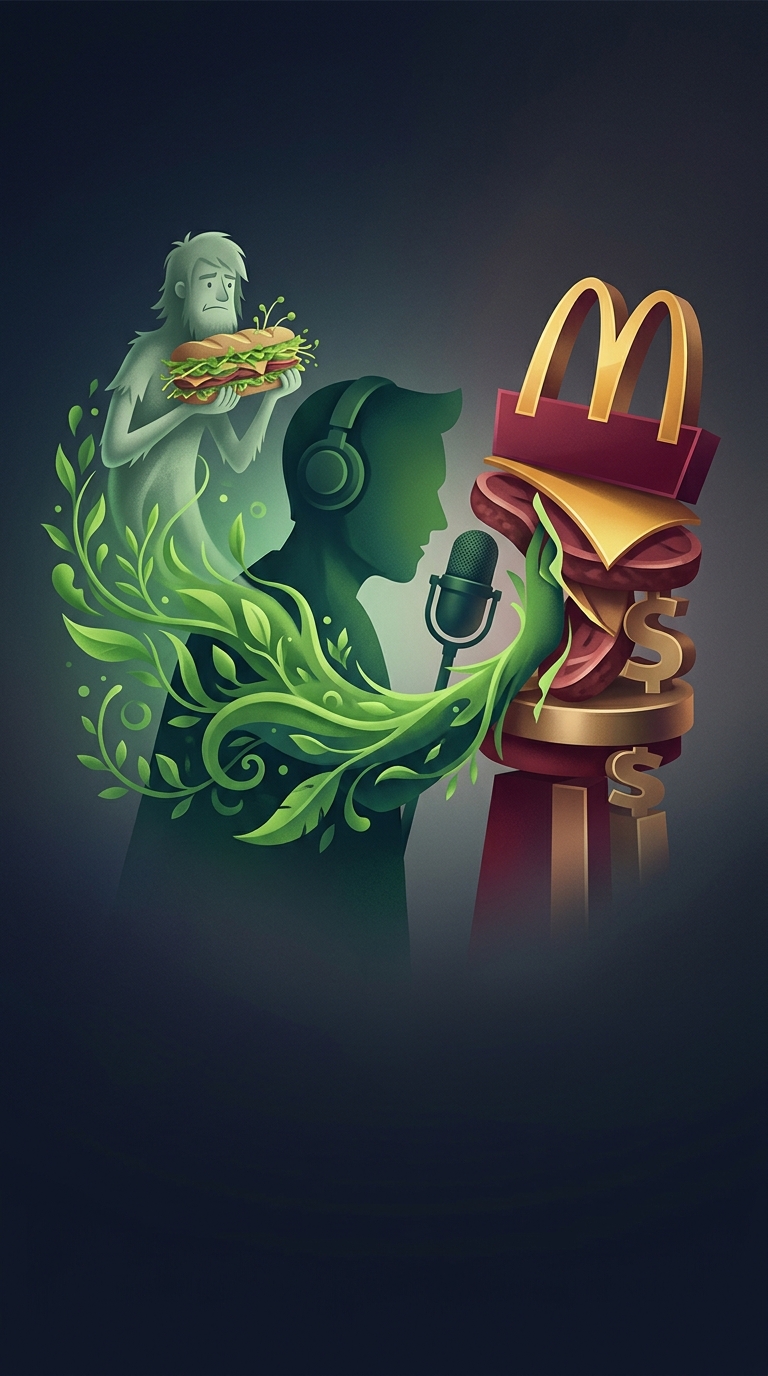
Shaggy’s appetite became a question of principle
Shaggy’s comedy has long depended on food: he and Scooby-Doo turn snacks into a running gag, often eating enormous amounts while fleeing danger. That made Casey Kasem’s personal refusal to promote meat more than a private preference. If the character’s jokes relied on meat-heavy meals, Kasem would be lending his familiar voice to something he opposed.
The solution was to change what Shaggy ate rather than discard the appetite that made the character funny. Vegetarian food could still support the same comic business—oversized portions, frantic snacking and Scooby’s eager participation—while bringing the role closer to Kasem’s convictions.
A commercial made the boundary harder to ignore
The conflict sharpened when Kasem was asked to voice Shaggy in a fast-food advertisement. Commercial work ties a performer’s voice directly to a product, so accepting the job would have meant endorsing meat sales, not merely portraying a fictional character who ate. Kasem left the role rather than make that association.
His eventual return came with a further change: Shaggy was written as vegan, meaning he avoided animal products, not just meat. The shift shows how a performer’s ethical boundary can reach beyond a single recording session and into a character’s ongoing portrayal. For Shaggy, the adjustment preserved the food-centered humor while changing what the jokes put on the plate.