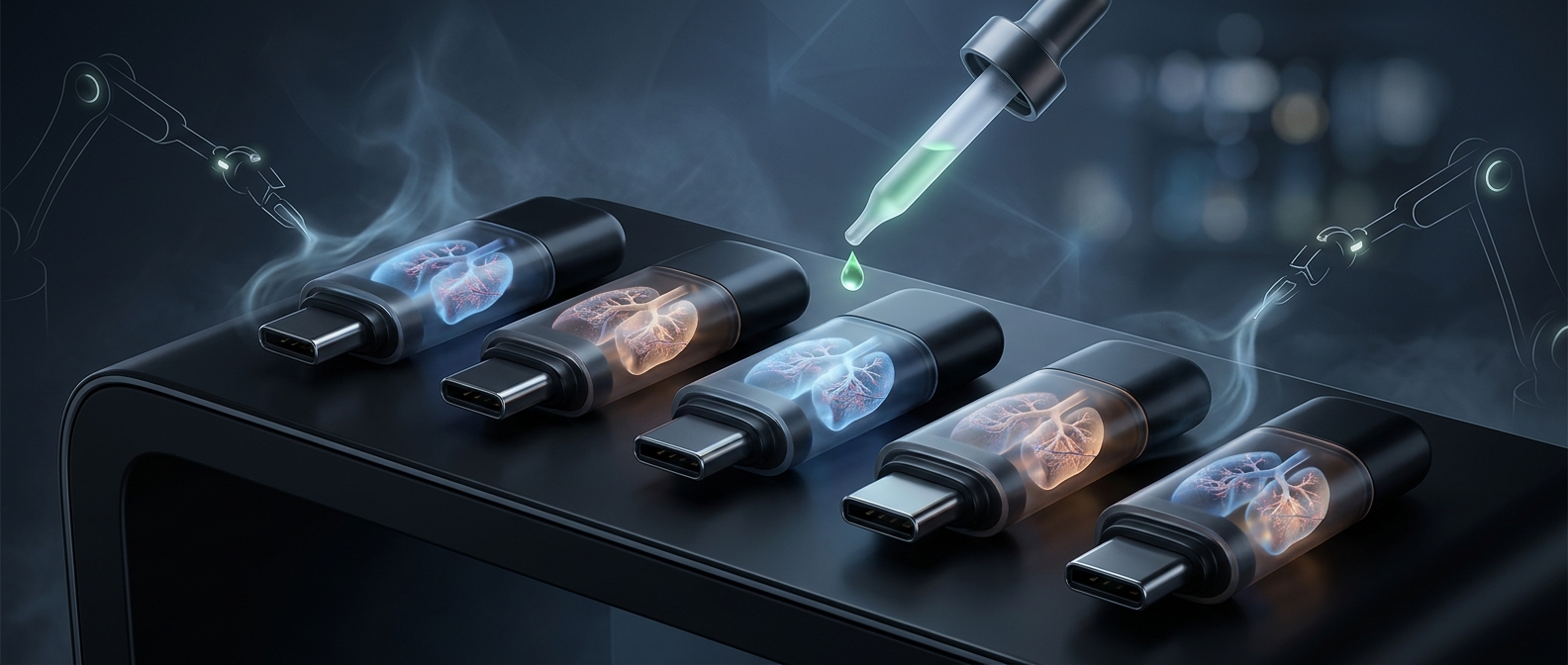
How a chip turns odor into a signal
A smell is a mixture of airborne molecules. As those molecules drift across an Aryballe sensor, some attach to synthetic peptides—short chains of amino acids—fixed to a small silicon chip. Different peptides tend to interact with different molecules, so a mixture can produce a characteristic pattern of binding across the sensor.
The chip’s optical system detects those interactions by measuring changes in light. Software then compares the resulting pattern with patterns it has learned to recognize. The output is a classification, not a human-like experience of smelling: the device detects chemical signatures and assigns them labels.
Why use many receptors?
One receptor alone would reveal little about a complicated odor. The useful information comes from the combined response of many peptide spots: a particular mixture may activate several in a distinctive arrangement. Machine learning helps interpret that pattern, much as image-recognition software identifies an object from many visual features rather than one pixel.
This approach can help distinguish odors that share some of the same molecules, but its judgment depends on the patterns it has been trained to recognize and the conditions in which it operates. A chip does not automatically know what “spoiled” means; that category has to be defined through examples and the system’s intended use.
From odor to practical warning
The appeal is consistency. A sensor could check air or products for a known chemical signature without relying on someone’s subjective impression of whether something smells unusual. That makes machine olfaction potentially useful for tasks such as monitoring food quality or detecting hazardous gases.
The memorable twist is that the “nose” is really a chemical pattern reader: a rotting-fruit odor becomes a map of molecular interactions, then a software label.