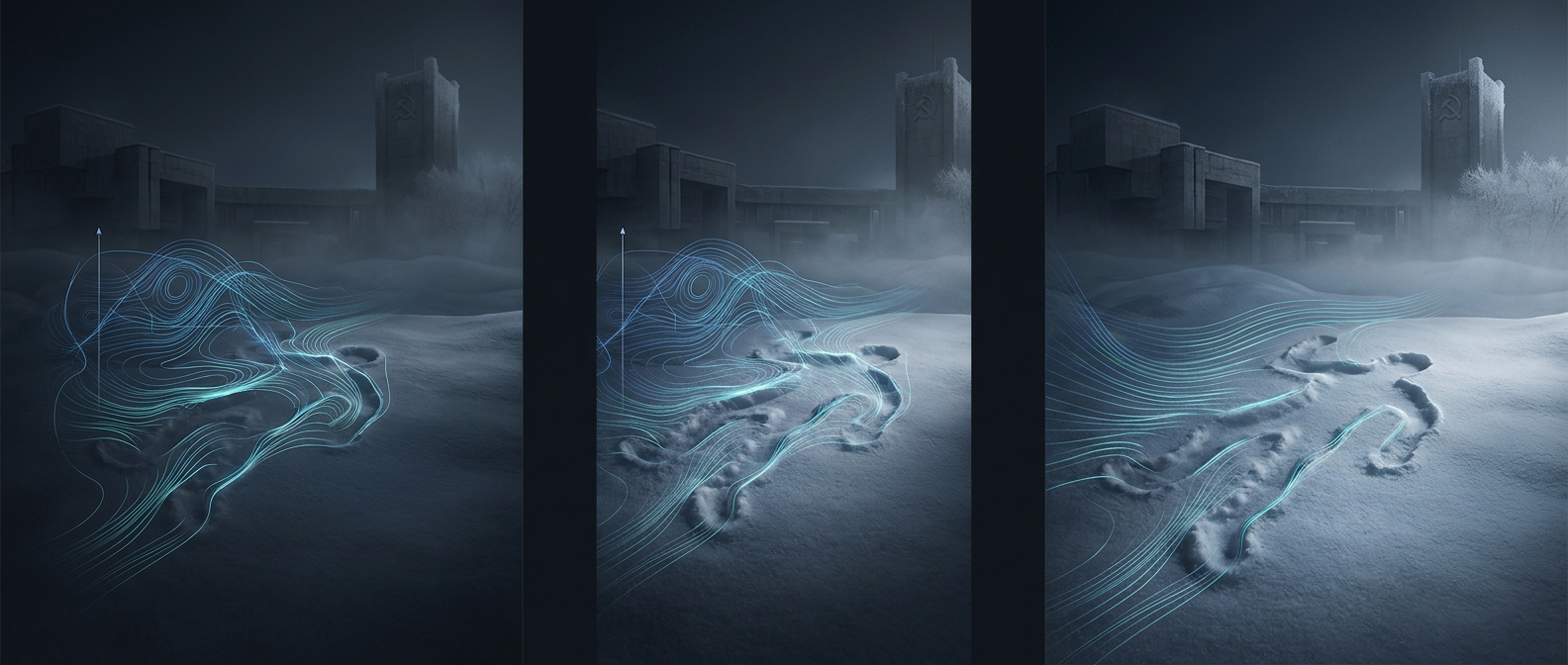
How an Animated Snowdrift Became a Testable Avalanche
To animate snow convincingly, Disney’s Frozen team needed more than a white surface that looked right. Snow bends, breaks, compacts, and slides in ways that depend on how its grains interact. The production’s simulation tools represented those behaviors so artists could create believable moving snow. Researchers later adapted that kind of modeling to examine a very different question: whether a small snow slab could have injured people in a tent at Dyatlov Pass.
Modeling a Slab, Not a Giant Avalanche
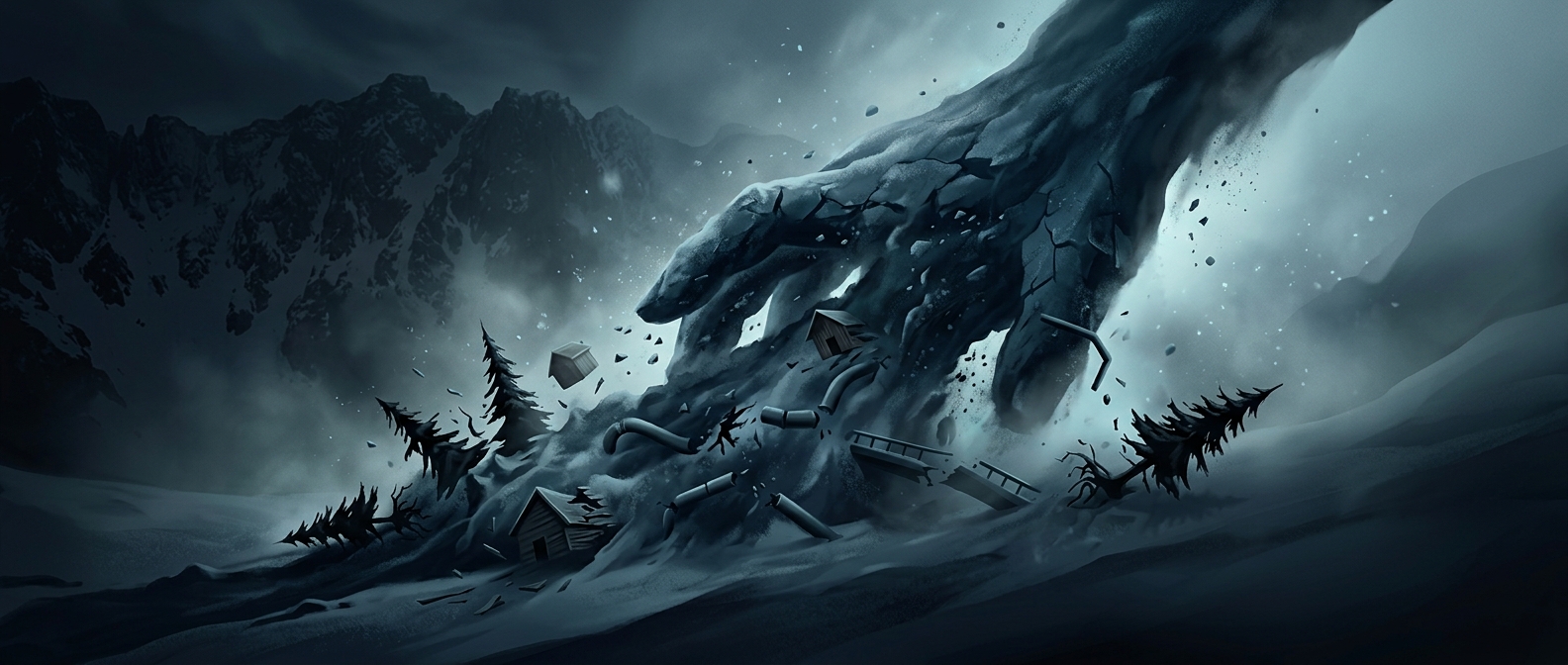
The avalanche explanation does not require a mountainside-sized torrent sweeping the hikers away. It proposes that a compact, cohesive layer of snow could break loose and press into the tent. A slab of snow can be heavy and stiff enough to deliver a forceful blow, even if it travels only a short distance.
A computer model lets researchers vary the snow’s properties and the slope’s conditions, then track how the moving mass would interact with a tent and the bodies inside. That makes it possible to ask whether the proposed mechanism is physically plausible, rather than relying only on a dramatic mental picture of an avalanche.
What the Simulation Can—and Cannot—Show
The key insight is that snow need not bury someone to cause serious harm. A dense slab striking through a tent could produce severe injuries while leaving a scene that does not resemble the familiar image of people buried beneath a huge avalanche. The simulation therefore helps test a specific mechanical possibility: how a relatively small mass of snow might transfer force in a confined space.
A model cannot, by itself, establish exactly what happened on the mountain. Its value is narrower and more concrete: tools developed to make fictional snow behave plausibly can also help researchers investigate how real snow might move, collide, and injure.