Why the PlayStation 2 Could Be More Than a Game Console
The PlayStation 2 arrived in Europe with a feature that complicated its customs identity: it could play DVDs as well as games. Sony argued that the machine belonged in the category of computers rather than entertainment devices. Under European import rules, that distinction mattered because the categories could face different tariffs.
This was not just a branding question. Customs officials classify products by what they are designed to do, and a different classification can change the cost of bringing them into a market. Calling the PS2 a computer gave Sony a financial reason to emphasize capabilities beyond gaming.
The Hardware Behind the Argument
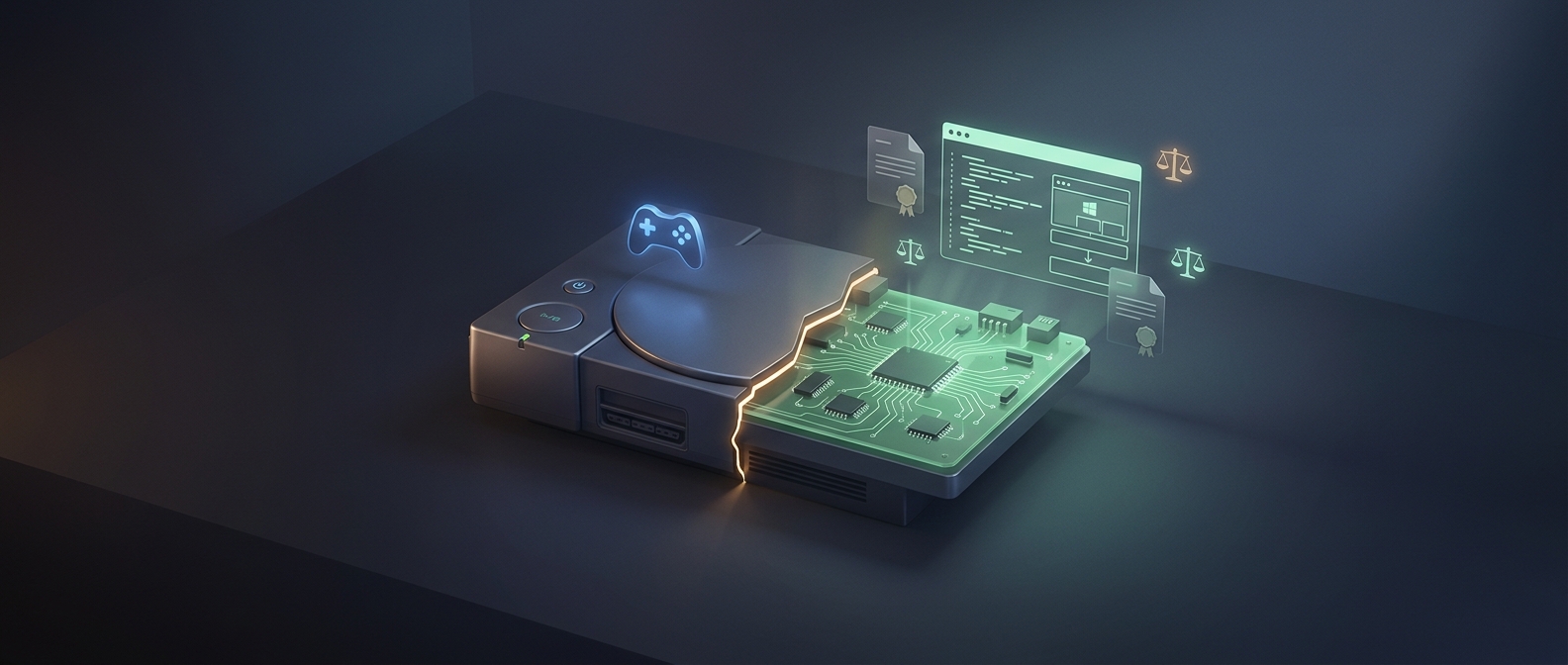
The PS2’s DVD playback made the computer claim more plausible to consumers: the console could serve as a living-room movie player, not only a machine for running games. It also had USB ports, and an optional network adapter let it connect to the internet. Sony later offered a Linux kit that could turn the system into a basic computer, though that did not mean most buyers used it that way.
Those features helped build the case, but they did not settle the customs question by themselves. A device can have several uses while still being classified according to the use officials consider central. The PS2’s dual identity—game system on the shelf, multimedia machine in Sony’s argument—made that classification consequential: a technical description could affect the price of importing millions of consoles.