The engine moves water, not a propeller
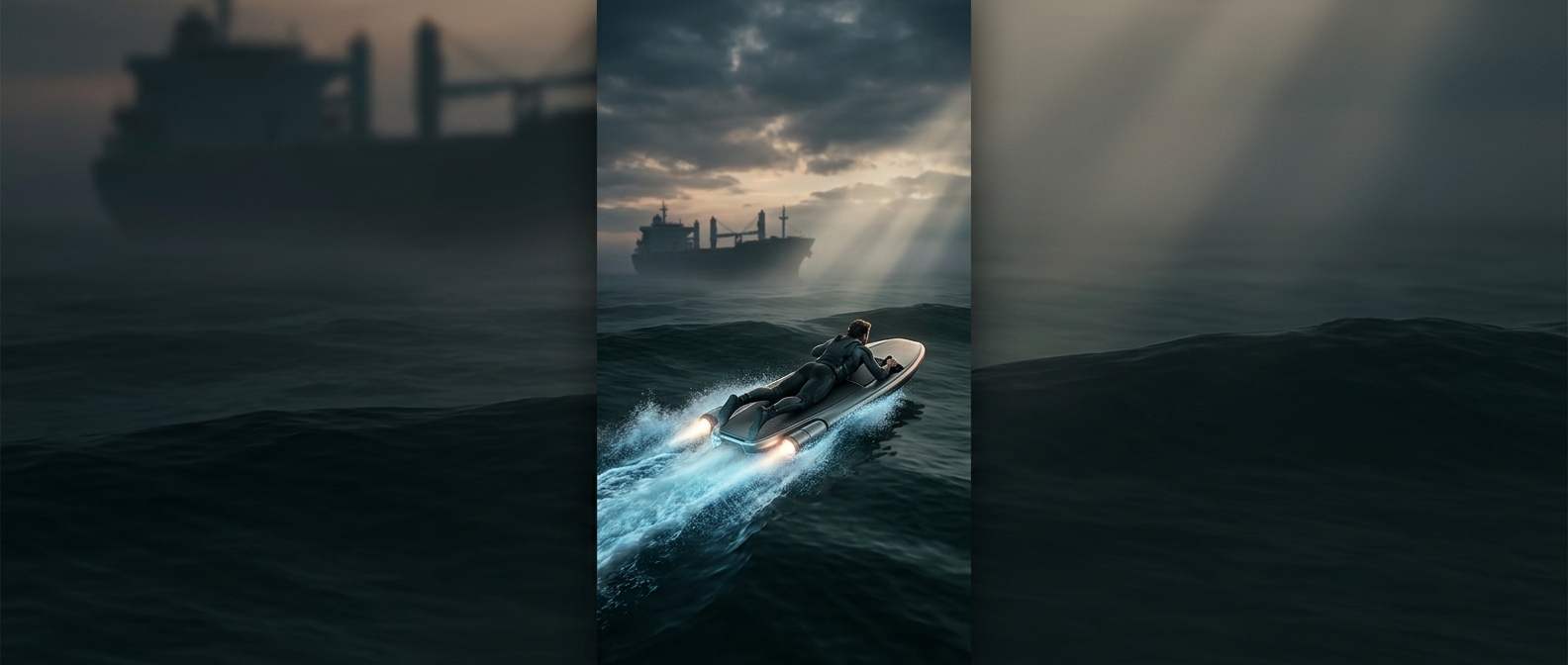
Inside a jet bodyboard, a small motor spins an impeller—a rotor with angled blades—inside a passage beneath the board. Water enters through an intake, is accelerated by the impeller, and exits through a narrow nozzle. The nozzle’s concentrated stream creates thrust, while the board’s broad underside supports the rider at the surface.
Because the propulsion unit is built into the board, there is no exposed propeller projecting behind it. That compact layout is useful on a small craft, but it does not make the motor effortless: the intake must keep drawing water, and the rider has to balance over the board while it accelerates.
Steering means redirecting the ride
On a powered board, turning is not simply a matter of waiting for a wave to carry the nose around. The rider shifts weight and uses the board’s steering controls to change direction; depending on the design, those controls can redirect the jet’s flow. The result is a craft whose movement depends on both the rider’s balance and the water stream beneath the hull.
That also changes the ride’s basic constraint. A conventional bodyboard relies on suitable waves, while a jet bodyboard can make its own forward motion—but only while its motor is running and its intake can supply water. Its “engine room” is tiny, yet the stream it produces is what turns a floating plank into a powered vehicle.