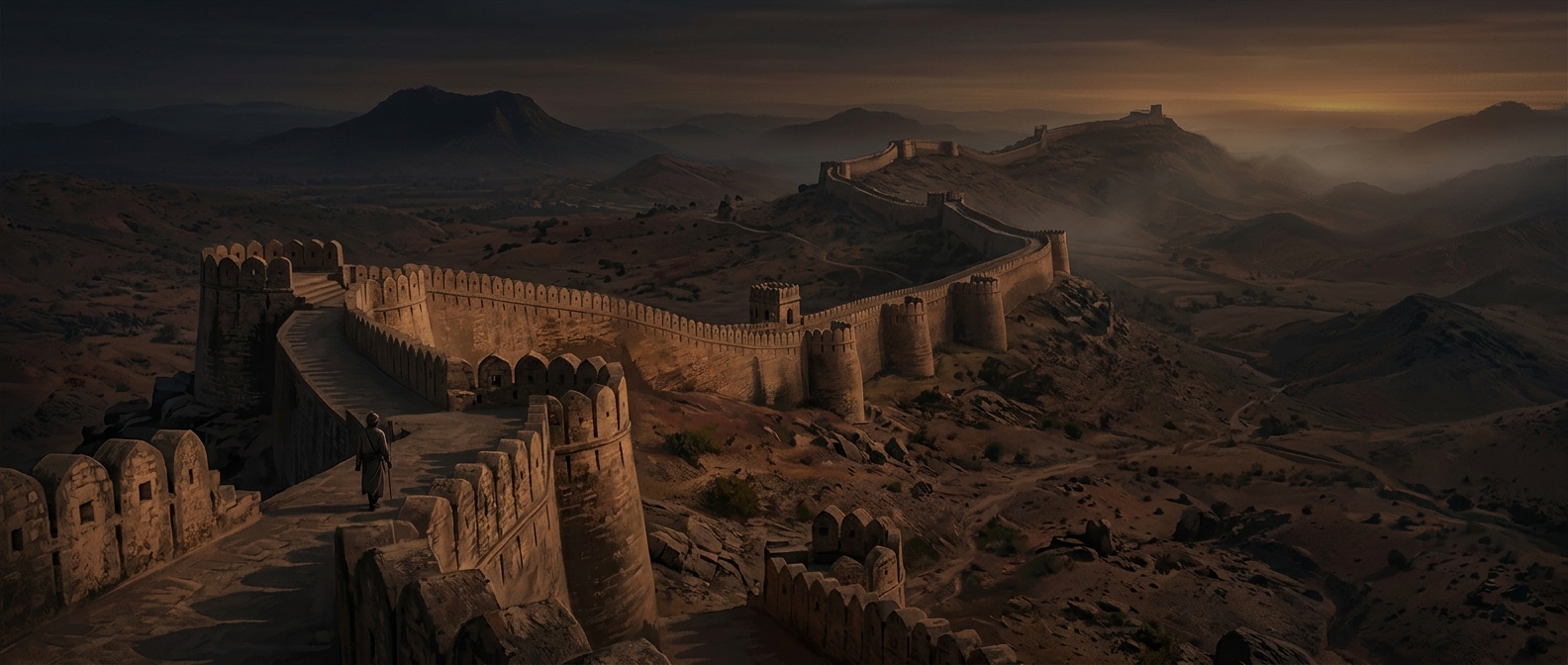
A wall built to follow the mountains
Kumbhalgarh’s great wall does not cut a straight line across the landscape. It climbs and bends along the ridges of Rajasthan’s Aravalli hills, using steep slopes as part of the fort’s defenses. That route helps explain its remarkable length: the builders had to enclose a mountain stronghold, not simply draw a boundary around a flat site.
The wall’s broad top made it more than a barrier. Soldiers could move along it, and its width was sufficient for several horses to ride side by side. From the ramparts, defenders could watch approaches through the surrounding hills while the high ground made an assault more difficult.
A stronghold for Mewar
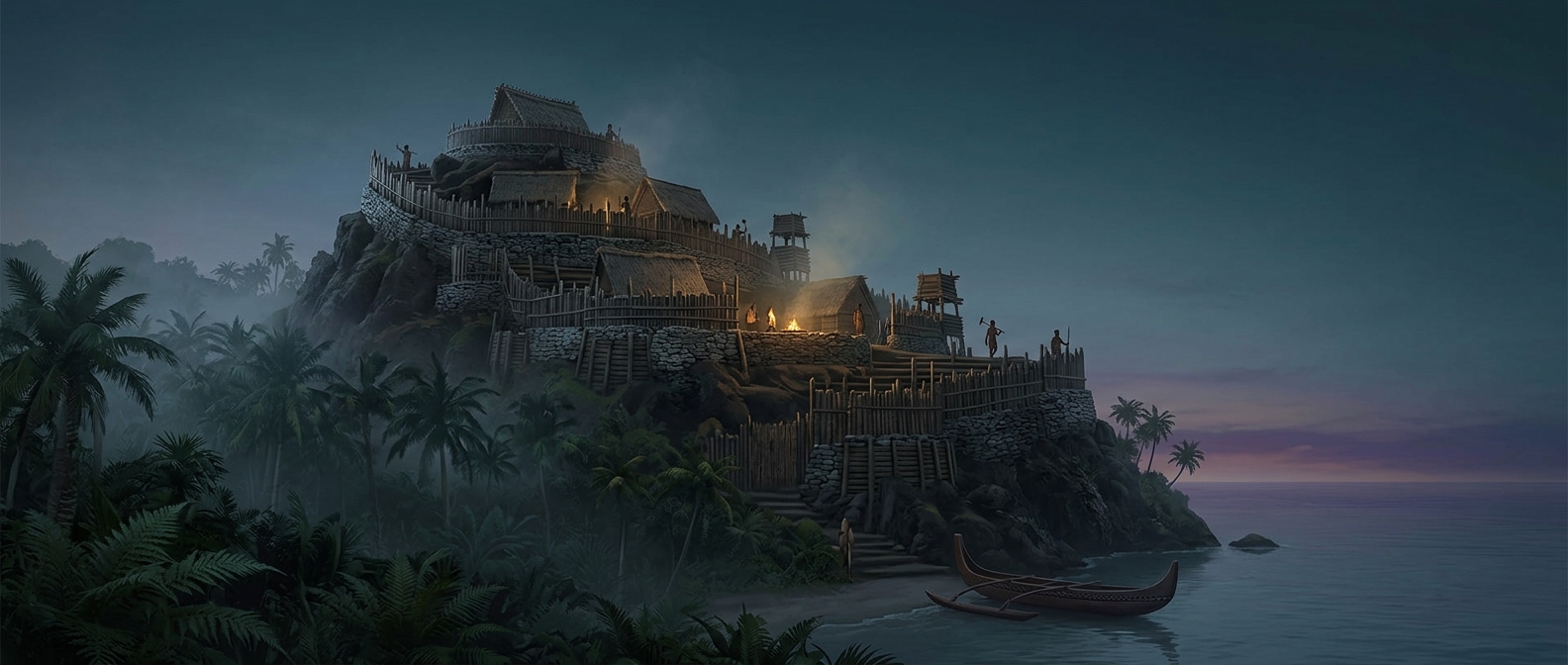
The fort was developed in the 15th century under Rana Kumbha, ruler of Mewar. Its defenses joined the long perimeter wall with fortified gates and towers, turning the terrain itself into part of a larger military system. A winding approach through hills could slow and expose attackers before they reached the fort’s entrances.
The wall’s scale is striking, but its shape tells the more revealing story: at Kumbhalgarh, defense meant adapting to the mountain rather than trying to erase it. Its stone line still traces those ridges, making the fort’s strategy visible across the landscape.