A Page Built to Be Read, Not Looked Through
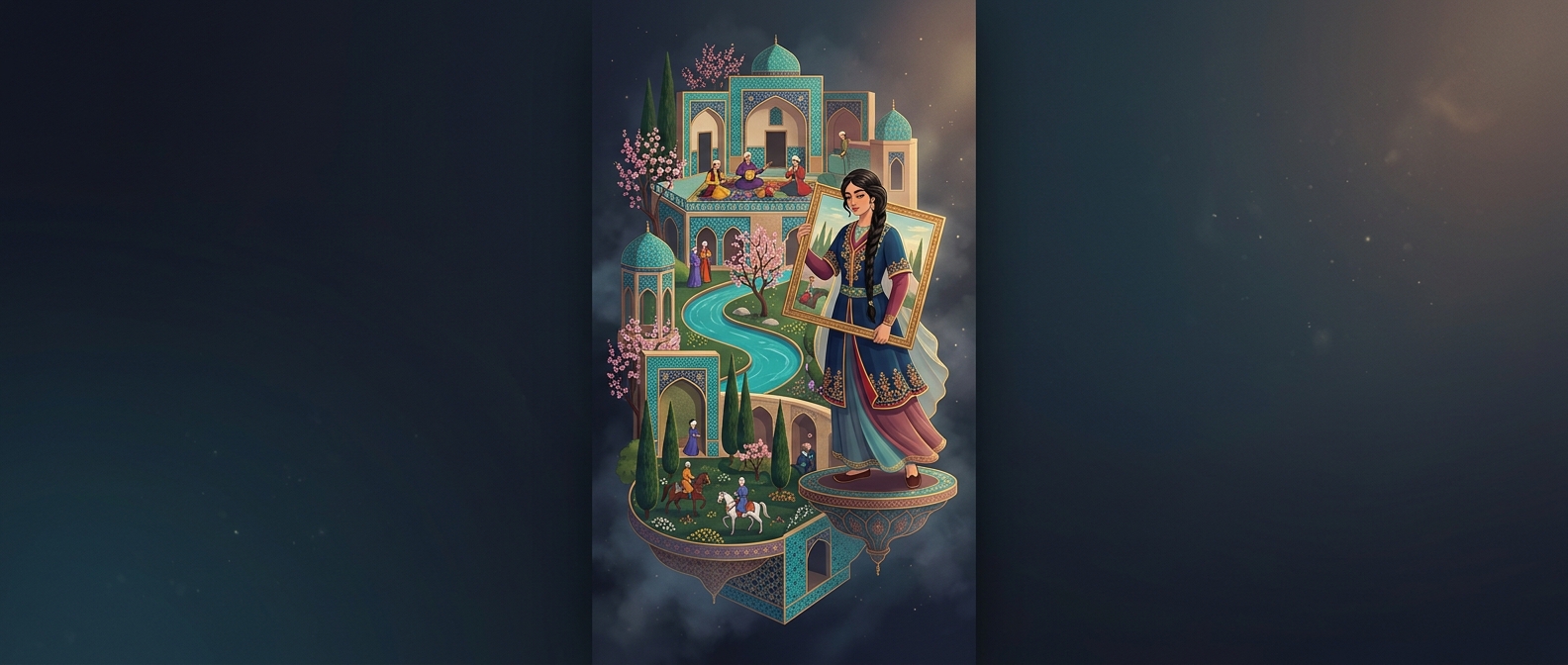
In a Persian miniature, a distant building may sit above a nearby figure rather than appear smaller behind it. This arrangement compresses space: the image gives less attention to creating a single, realistic viewpoint and more to keeping important people, places, and actions visible at once.
That choice suits the miniature’s home in an illustrated manuscript. A scene might need to show a conversation, a palace interior, and activity in a courtyard within the same small page. Overlapping elements can hide details, so artists often lift parts of the setting upward or arrange them in clear bands. Walls may even be shown from an angle that reveals what is happening inside.
Space Organized Around the Story
Linear perspective makes parallel lines appear to meet in the distance, causing faraway objects to look smaller. Persian miniatures may use some depth cues, but they do not consistently make the whole scene obey that system. Scale and placement can instead emphasize narrative importance: a prominent figure may remain large, while architecture unfolds in layers around them.
The result is not simply a flat picture. It is a carefully ordered space in which the viewer’s eye can travel from one detail to another—across patterned floors, through open doorways, and up toward rooftops or gardens. Rather than asking the viewer to stand at one fixed point, the painting makes room for several parts of the story to be seen together.