How a Letter Lost Its Route
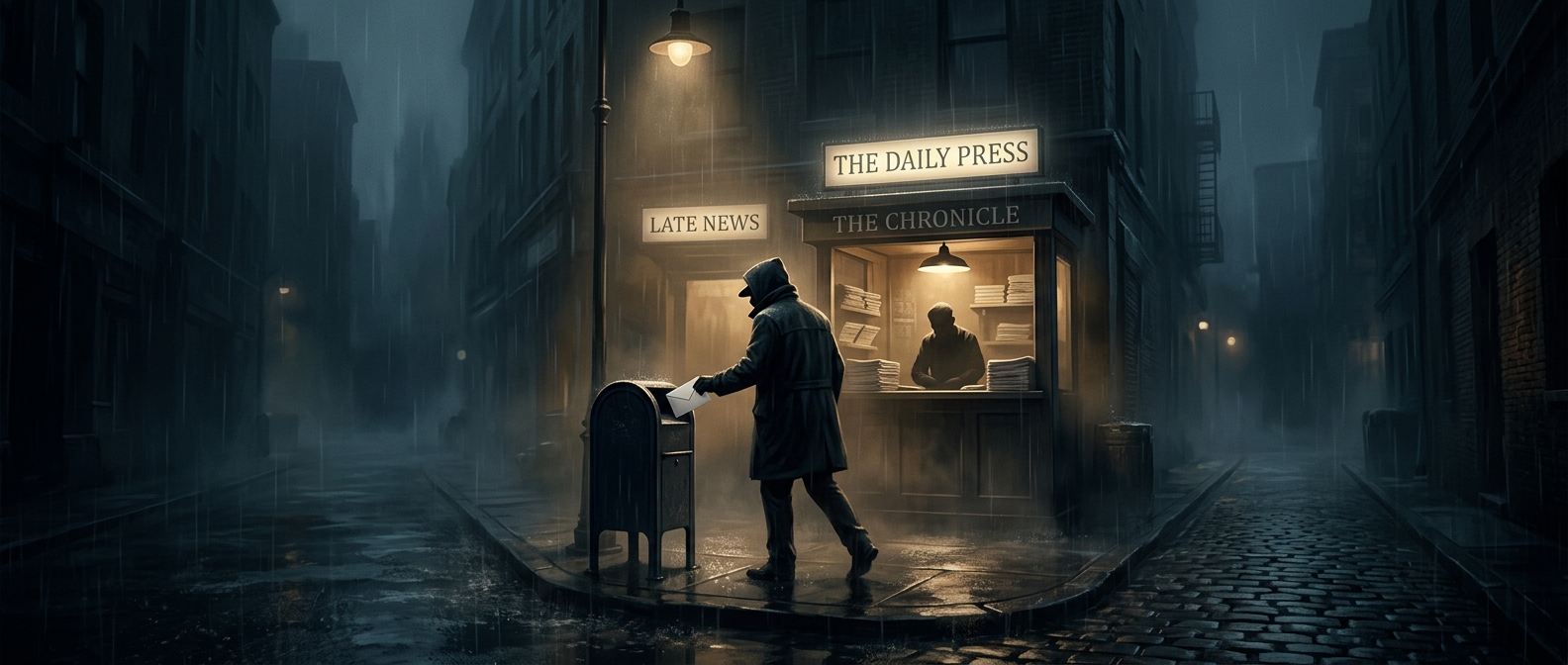
A postal address is more than a destination: it is the information that lets each sorting point decide where a piece of mail should go next. If handwriting blurred a street name, a town was missing, or the address described someone too vaguely, the letter could no longer follow that chain. Postal workers might use context and local knowledge to interpret it, but a plausible guess was not always enough to risk sending private correspondence to the wrong person.
The Search for a Way Through
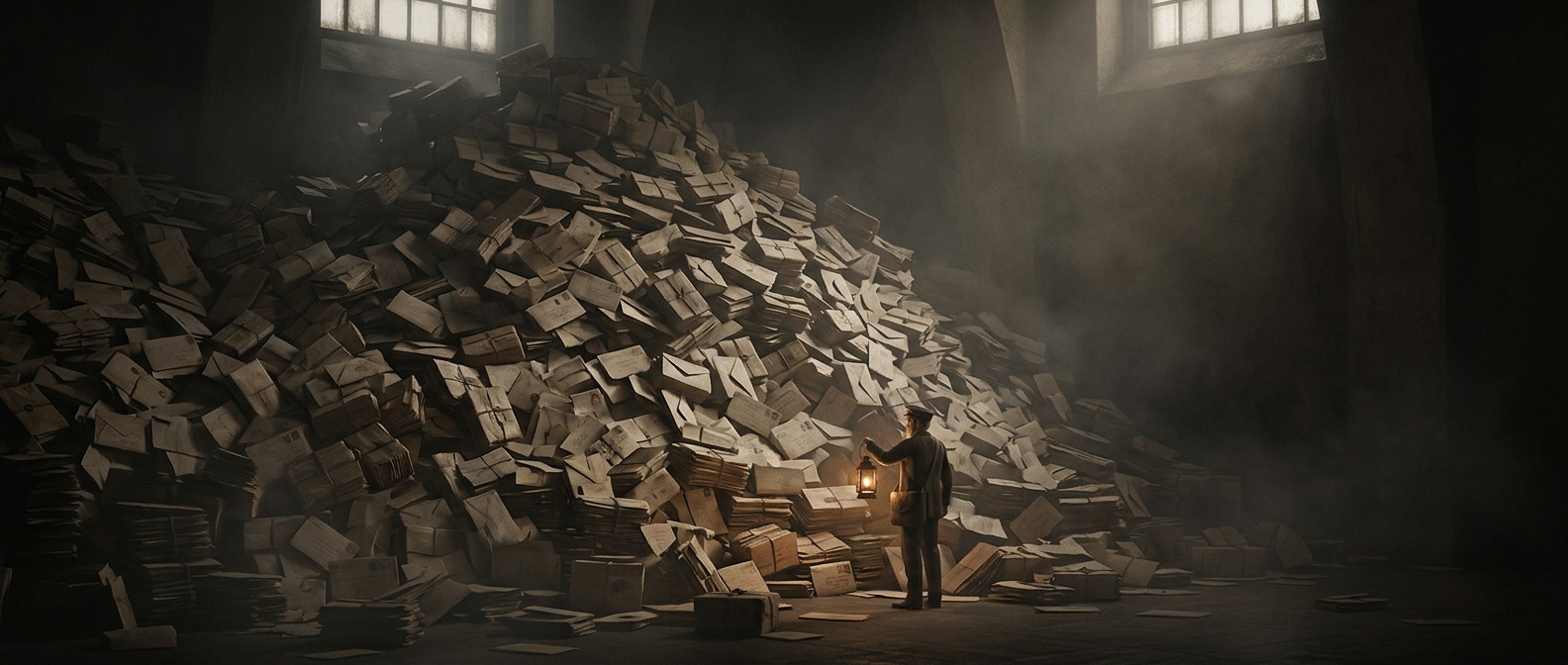
Undeliverable mail was gathered for further examination rather than simply dropped from the system. In dead letter offices, workers tried to extract clues from the envelope—such as a return address, a clearer version of a place name elsewhere on the letter, or other identifying details. The goal was to find either the intended recipient or a route back to the sender.
That work had limits. A letter could name a person but give no town, or include an address that was obsolete or impossible to distinguish from others. Opening mail to look for clues was subject to postal rules and practices that differed across places and periods; it was not a magical way to recover every missing address. If no reliable lead emerged, the item remained unresolved.
Private Words, Public Paperwork
The backlog was the human residue of a system built to move objects by readable instructions. Each letter had begun with an expectation: that someone would find it, recognize the name, and understand why it mattered. But postal staff could not deliver emotion or intention in place of an address. Love letters and angry complaints alike could become files of clues—or, when those clues ran out, paper with no dependable destination.