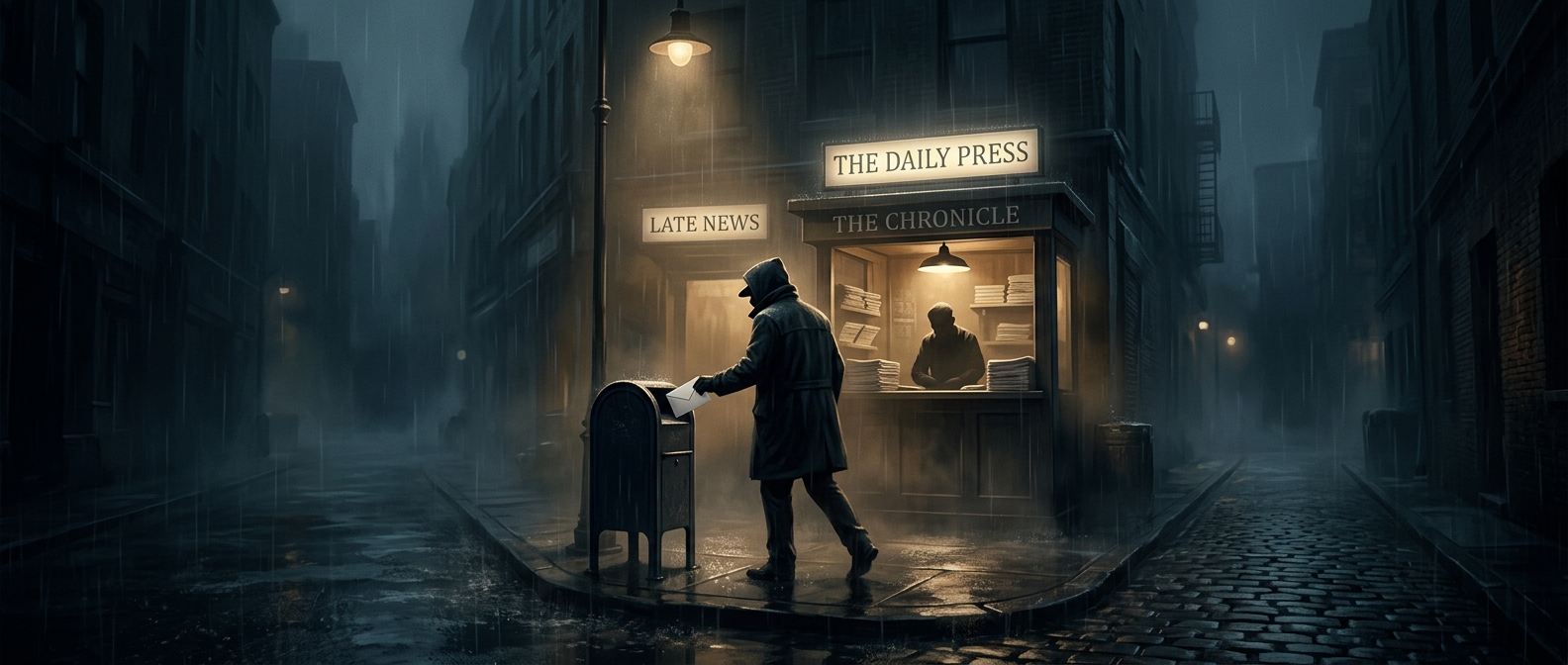
A crime scene moved onto the front page
The Zodiac Killer’s ciphers were not simply clues left for investigators. By sending coded messages to newspapers and insisting they be printed, he made editors part of the story’s machinery: publication carried his words to a mass audience, while the symbols gave readers a task to perform. The case could now unfold not only through police work, but in kitchens and living rooms where people tried to crack the code.
How a cipher recruited the reader
A substitution cipher replaces ordinary letters with symbols or other characters. That made the messages look forbidding, but readers could test patterns: repeated marks might stand for repeated letters, and short groups might correspond to common words. Solving one became a public puzzle, with every guess offering the possibility of progress—and the danger of mistaking a pattern for proof.
The format also blurred the line between evidence and entertainment. A decoded message could be discussed as news, but readers’ interpretations were not the same as verified investigative findings. The larger the audience, the more room there was for both useful attention and unsupported speculation.
The press became part of the contest
Newspapers had to weigh the public’s interest against the effect of printing a criminal’s demands. Publishing could alert readers and expose a message to potential analysis; it could also give the sender the reach he sought. That tension made the newspaper itself a stage in the case, rather than a neutral window onto it.
The lasting twist is that the cipher’s audience was never limited to codebreakers. Each printed symbol invited thousands of ordinary readers to join the hunt, turning a private act of violence into a puzzle whose terms had been set by the person who sent it.