How a Diamond Camp Became a Town
Kolmanskop grew after diamonds were found near the railway line in German-controlled Southwest Africa, now Namibia, in the early 20th century. The rush drew workers and investors to a remote stretch of desert. To keep a permanent settlement going, the mining company built homes and public facilities, bringing in supplies that the surrounding landscape could not provide.
But the town depended on nearby diamonds. As mining shifted elsewhere and the local fields became less profitable, people left. By the mid-20th century, Kolmanskop had been abandoned.
Wind Does the Slow Work
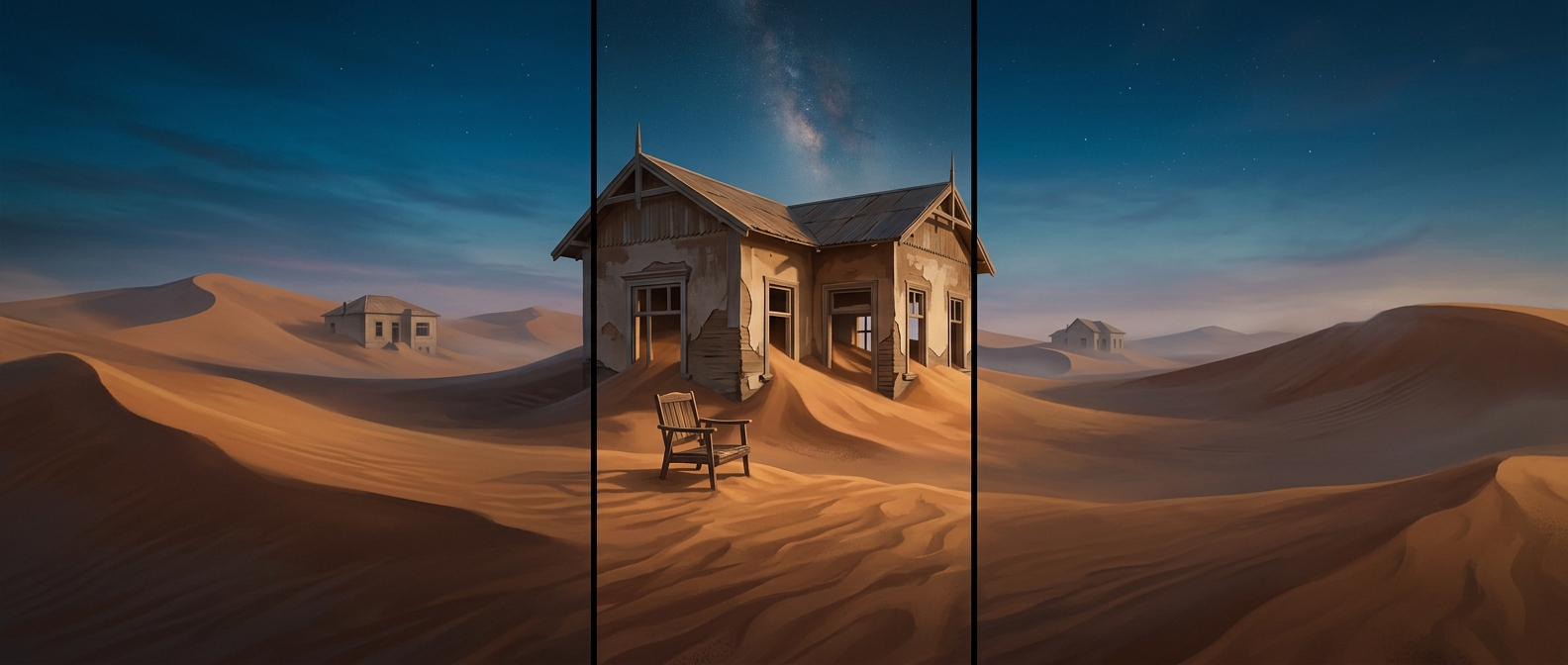
The dunes do not need to burst through a wall to fill a house. Wind pushes loose, dry sand against buildings and through open doors, broken windows, and gaps in roofs. Once inside, the grains settle in corners and across floors. With no residents to sweep them out or repair the buildings, each breach gives the sand another route inward; weathering gradually makes those openings larger.
That process is especially visible in rooms because walls and doorways hold the sand in place. A dune may shift outside, but inside, a drift can remain piled against a staircase or fill a former living space.
A Settlement Left to the Desert
Kolmanskop’s buildings are not simply decorative ruins: their scale reflects the brief period when diamond wealth could support a town in an exceptionally remote place. Now their interiors show the reverse of that arrangement. The same fine sand that once lay beyond the front door can accumulate where people lived, while the empty rooms offer no one to keep it out.