How a Wind Tunnel Holds a Flyer in Place
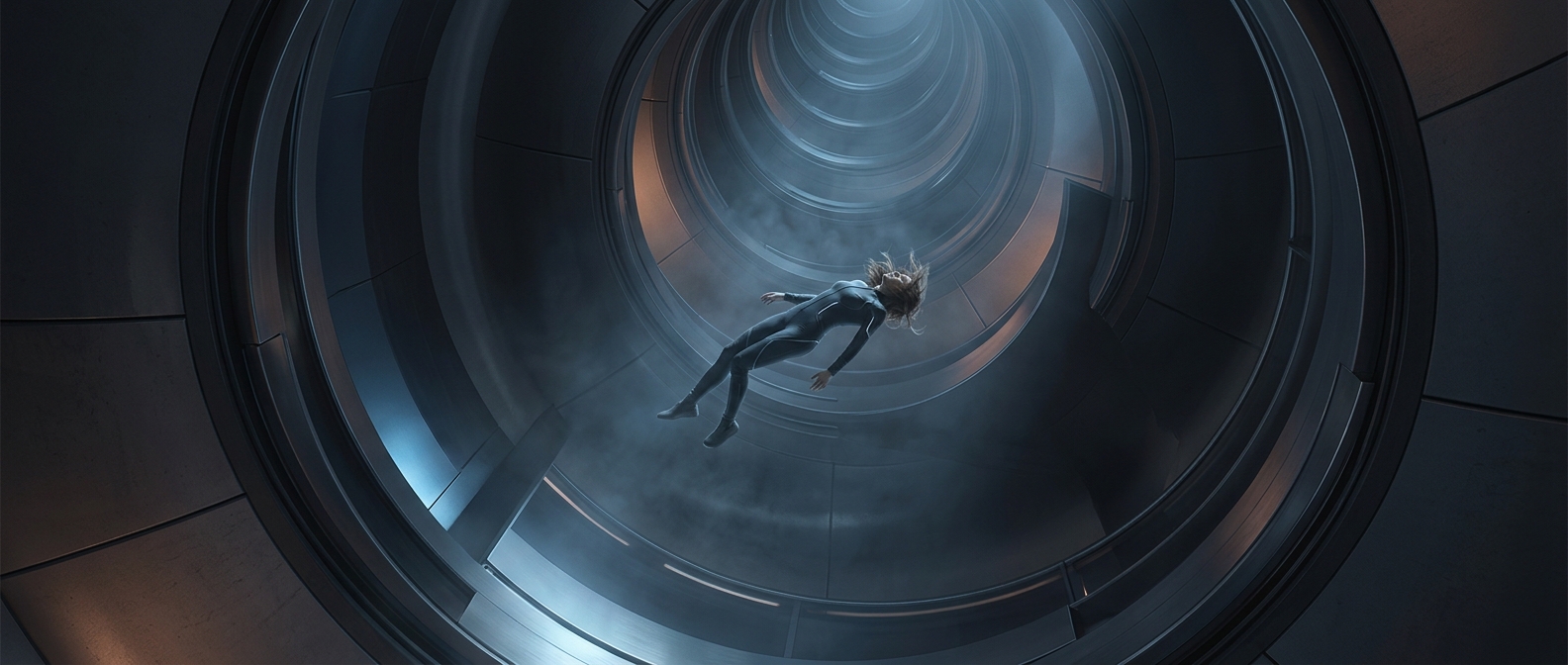
The apparent “floor” beneath a flyer is moving air. Fans drive air upward through a flight chamber, and the flyer’s body pushes against that flow. When the upward force balances the pull of gravity, the flyer stays at roughly the same height. If the air pushes harder, the flyer rises; if it pushes less, the flyer sinks.
That balance depends not only on air speed but also on how much air the body catches. A spread-out posture creates more drag—the force of air resisting motion—than a tucked posture. Small changes in arm, leg, or torso position can therefore alter height and stability without the flyer touching anything.
Why the Airflow Has to Be Carefully Shaped
A fan alone would produce a rough, uneven blast. A human flight tunnel guides air through the chamber and back around a circulation loop. Screens and other flow-conditioning components help smooth the stream, so the flyer is supported by a more even column of air rather than buffeted by every swirl.
The engineering challenge is to make that column strong enough to support a person while keeping it controllable. Operators can adjust the airflow to suit the flyer, while the flyer learns to steer by changing body position. The result is a compact lesson in flight control: in this chamber, a slight shift in posture changes how the moving air acts on the whole body.