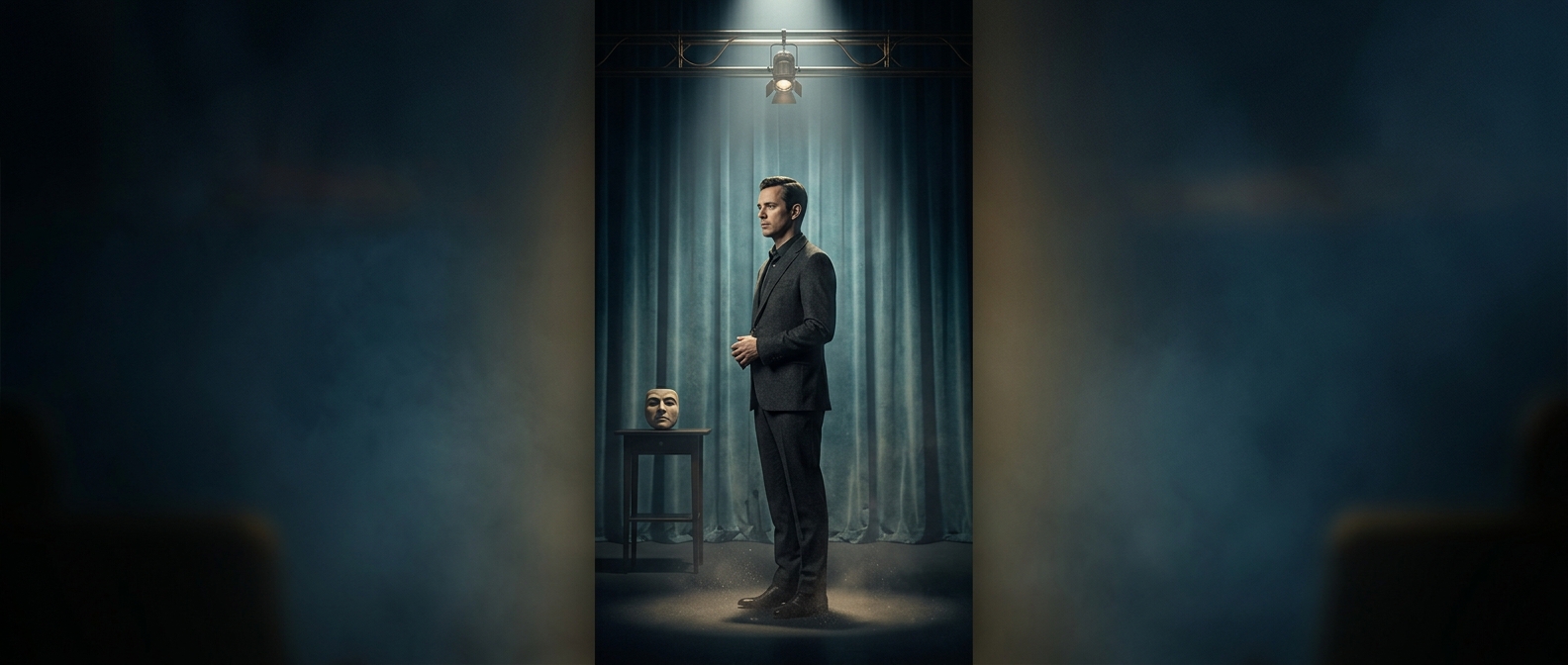
The face can reveal the joke before the words do
A punchline depends on timing: the audience needs a moment to take a statement at face value before it notices the hidden joke. A grin, raised eyebrow, or brief break in composure can signal that something funny is coming, changing how those words land. For a performer delivering dry humor, even a tiny facial reaction can act like an accidental spoiler.
Keeping still is an active task
A straight face is not simply the absence of laughter. The performer has to notice and restrain small reactions as they arise: the corners of the mouth lifting, the eyes narrowing, or the muscles around the nose tightening. Those movements can begin before a person consciously decides to smile, so maintaining a neutral expression takes ongoing control rather than one decision made at the start.
The challenge grows when the performer is also listening to a scene partner or responding naturally to an audience. Trying too hard to clamp down can itself create tension in the face, which may look conspicuous. The aim is to keep the expression ordinary—not frozen—while allowing the joke to arrive in the voice and words.
Composure becomes part of the timing
That restraint is part of the performance, not just a backstage difficulty. A composed face lets a ridiculous line pass as if it were perfectly reasonable, preserving the contrast that makes deadpan comedy work. If a performer cracks too soon, the audience may laugh at the visible struggle instead of following the joke’s intended rhythm. The smallest twitch can change who gets the laugh—and when.