Why a tumor can contain such different tissues
Most tumors grow from cells that keep multiplying while producing more of the same kind of tissue. A teratoma can take a stranger route because it begins with a germ cell—a cell involved in reproduction that has the capacity to develop into many kinds of tissue.
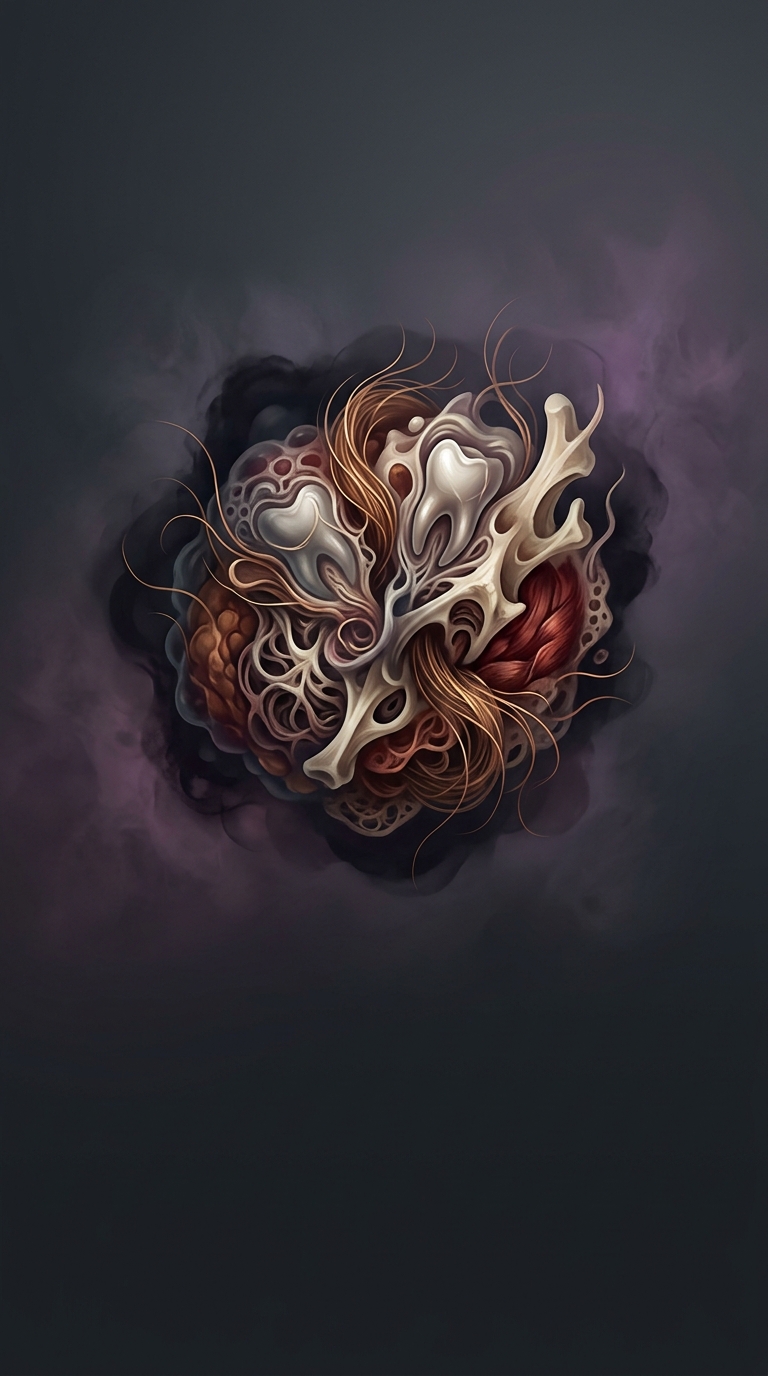
As those cells multiply, some may follow developmental programs for tissues such as skin, cartilage, or nerve. The result is not a miniature person or a deliberately assembled set of body parts. It is a disorganized growth, with tissue types mixed together inside one mass. That developmental range explains why a teratoma can contain structures as different as hair and bone.
What the contents do—and do not—tell doctors
Finding recognizable tissue inside a tumor can be startling, but appearance alone does not determine whether it is dangerous. Teratomas differ: some are mature, meaning their tissues look more developed under a microscope; others are immature, with less developed tissue. Their location and other features also matter, so clinicians assess the growth as a whole rather than judging it by a striking specimen.
Teratomas can arise in different parts of the body, including the ovaries, testes, and the region near the tailbone. Depending on where one grows and how large it becomes, it may cause pressure or other local problems—or be discovered during an examination or scan for another reason. Treatment depends on the specific tumor and may involve removing it and examining its tissue.
The unsettling detail has a straightforward biological explanation: the tumor’s contents reflect what its starting cells were capable of becoming, not a body taking shape inside another body.