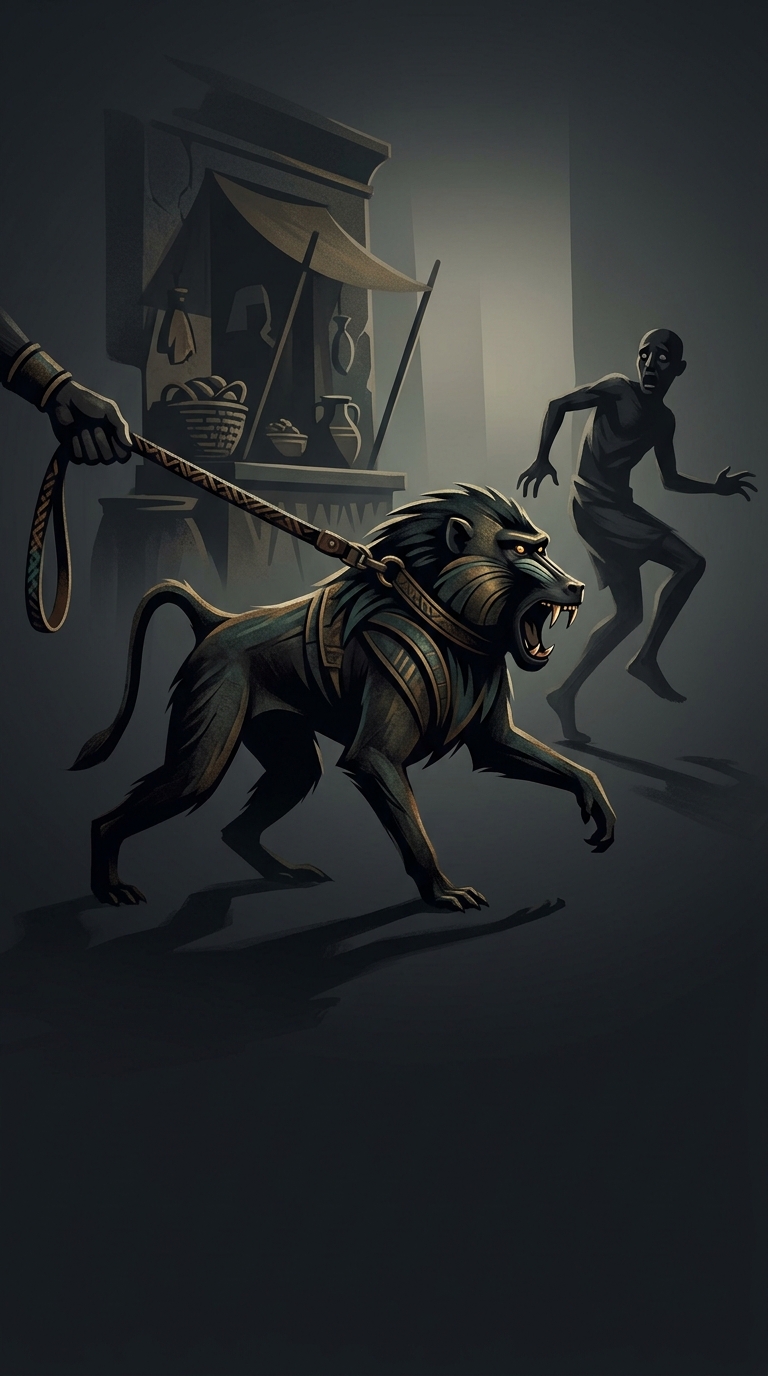
What the Baboon Scenes Can—and Can’t—Tell Us
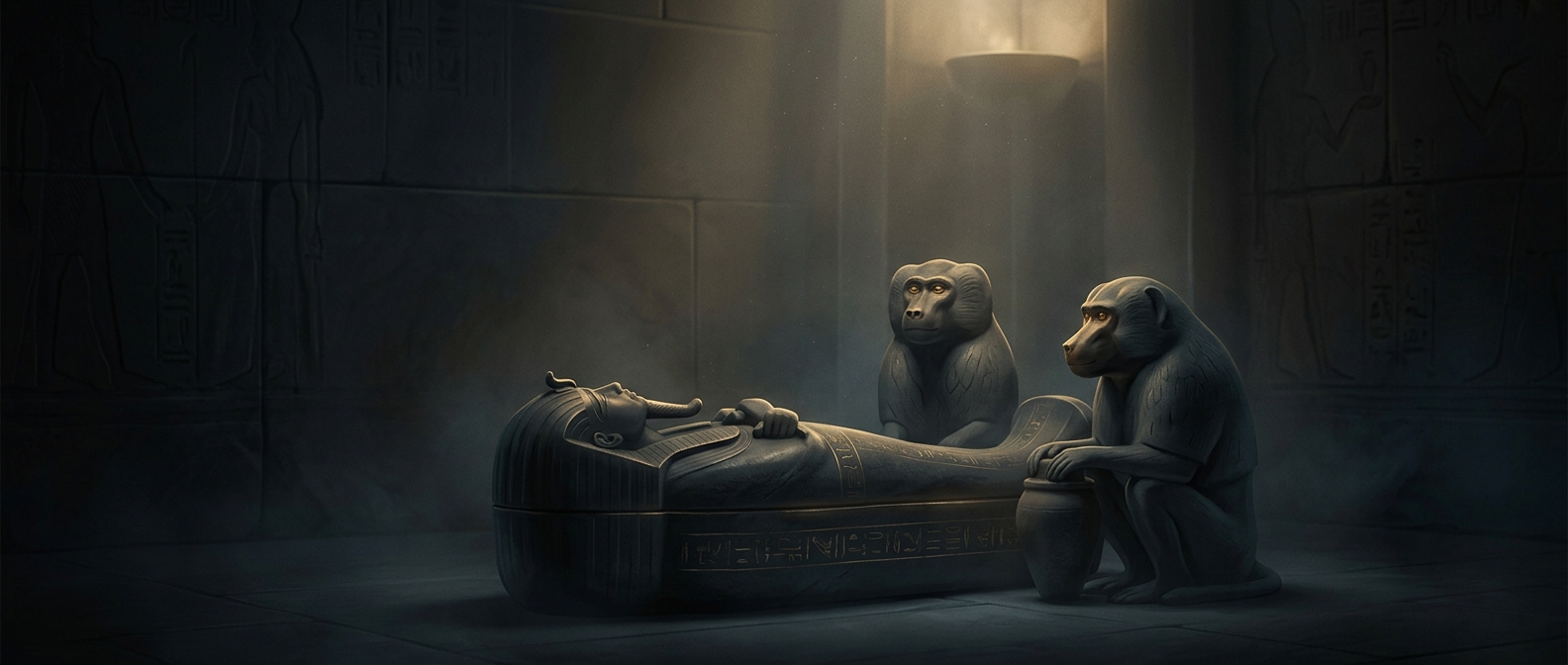
Ancient Egyptian art does show baboons and other monkeys around people, sometimes on leads and sometimes behaving aggressively. But a picture of a tethered animal biting someone does not, by itself, document an official police tactic. There is no solid basis for the claim that Egyptian authorities deployed trained baboons to patrol markets or arrest thieves.
Tomb and temple images were made to convey scenes, roles, and ideas—not to serve as straightforward records of everyday law enforcement. Animals could appear as pets, performing creatures, or comic participants in human activity. A bite in a scene may be vivid storytelling, not evidence that an animal was assigned to catch criminals.
How Order Was Actually Maintained
Egyptian authorities relied on human officials and guards to enforce rules and protect public spaces. A market could be crowded and closely watched without requiring an animal patrol: people responsible for order could observe disputes, intervene, and bring suspected offenders before officials.
The baboon story is memorable because it turns a familiar image—an animal on a leash—into a dramatic explanation of policing. The safer historical reading is narrower: Egyptians depicted monkeys in human settings, but the artwork does not establish a baboon-based police force. A scene that looks like a thief getting bitten may be striking; it is not, on its own, proof of a patrol procedure.