What the comparison means
The often-cited comparison is to a blood alcohol concentration of about 0.10%—above the 0.08% legal limit for driving in every U.S. state. It is a comparison of driving impairment, not a claim that sleep loss puts alcohol in the body or affects every person in exactly the same way. The number gives a sense of how severely prolonged wakefulness can compromise safe driving.
Why a tired driver becomes dangerous
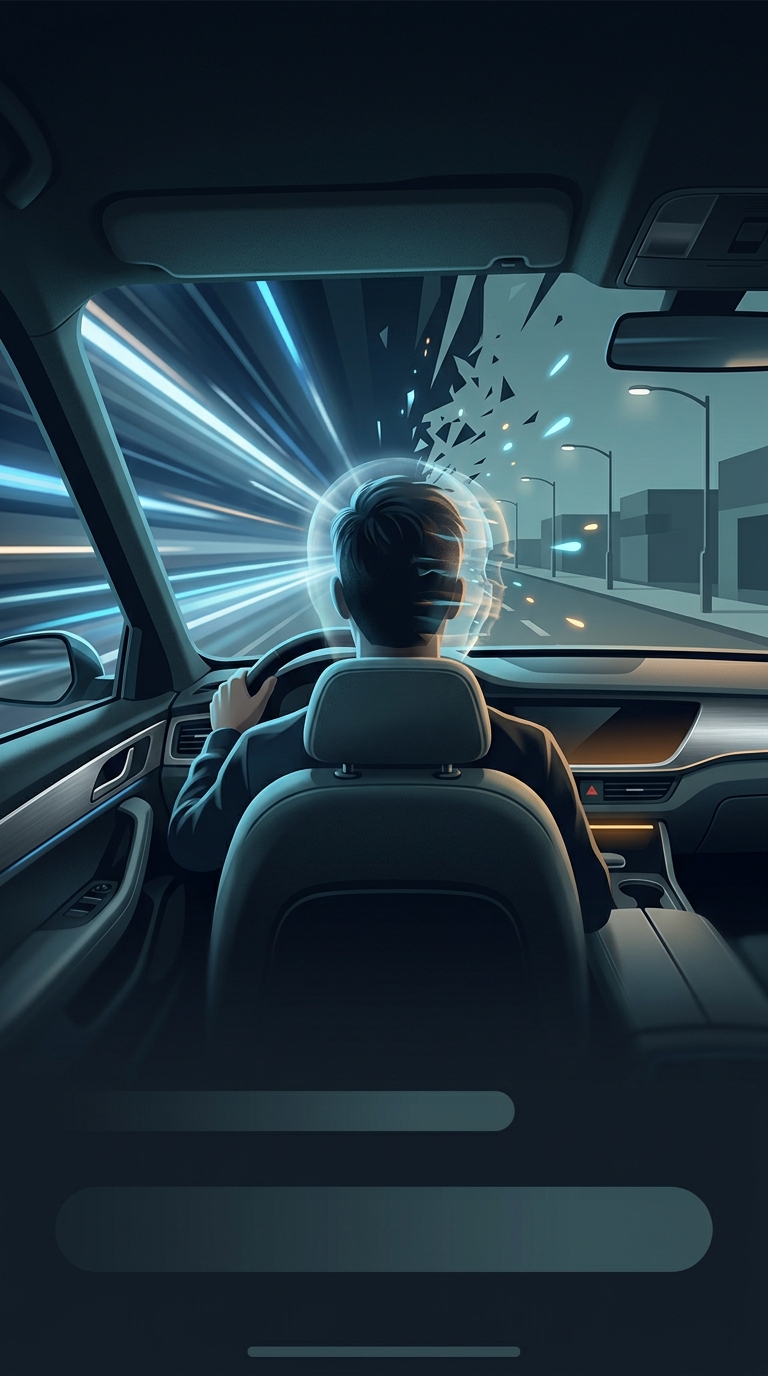
Driving depends on steady attention: noticing a brake light, judging how quickly another car is closing, and choosing a response in time. After a full day awake, the brain has increasing difficulty sustaining that attention. Responses can slow, and brief lapses in awareness—sometimes called microsleeps—may occur without the driver deciding to close their eyes.
That makes fatigue especially hazardous on familiar or monotonous roads. A driver may feel they are still in control while missing a signal or reacting too late. Caffeine, an open window, or loud music may make someone feel more alert for a while, but they do not reliably restore the judgment and attention lost to sleep deprivation.
The practical consequence
The comparison is useful because it reframes staying awake as a road-safety risk, not merely discomfort. If a driver has been awake for 24 hours, the safer choice is to stop driving and sleep or arrange another ride. A momentary lapse at highway speed can cover a long stretch of road before the driver is aware anything went wrong.