A game without a finish line
Many familiar games give players a clear test: score more points, reach the last square, or eliminate an opponent. Dungeons & Dragons did not fit that pattern. Players created characters, explored situations together, and made decisions in a world guided by a referee, later commonly called the Dungeon Master. A session might have goals and dangers, but the game itself had no single standard win condition.
That open-ended structure was central to the experience—and made the product harder to explain as a conventional game. A publisher assessing a game often needs to understand what players do, how a round works, and what counts as winning. With D&D, the answer depended on the group’s choices and the referee’s unfolding adventure.
Making the first copies by hand
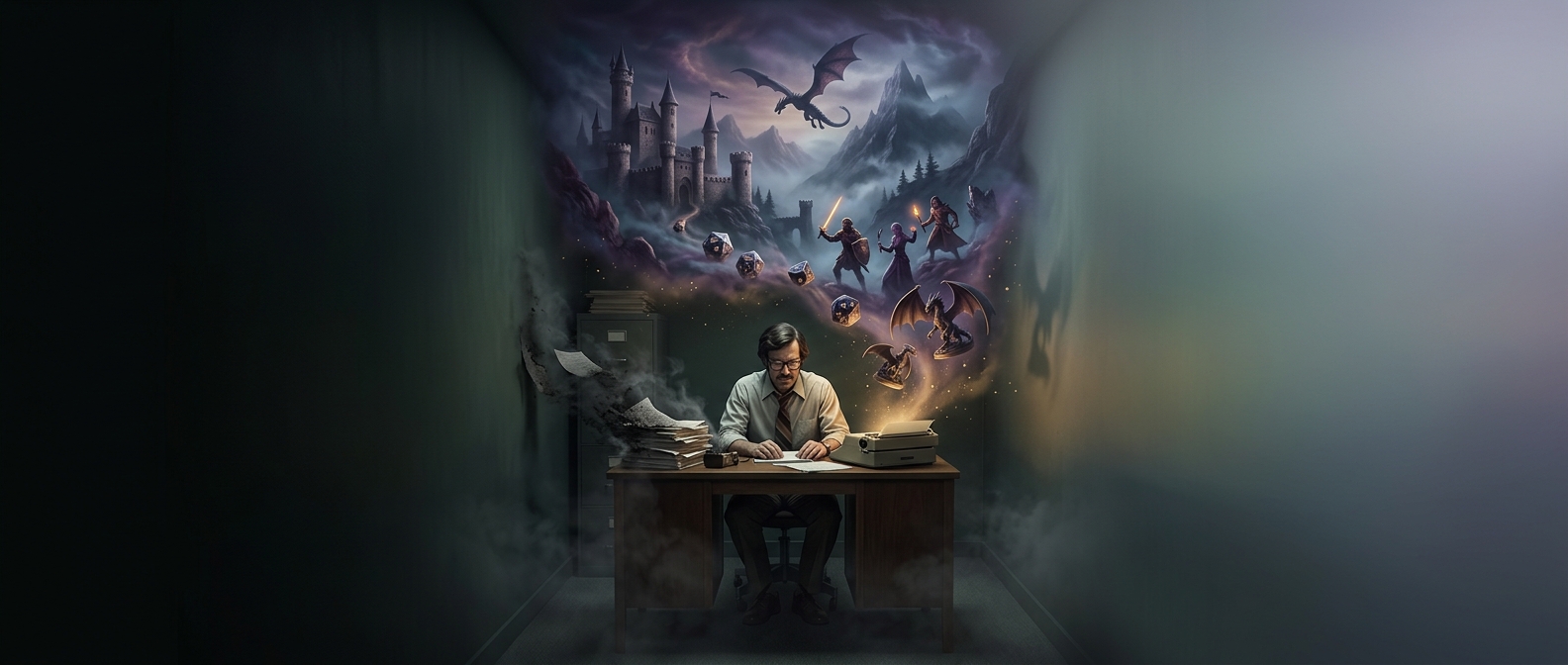
When established publishers declined the game, Gary Gygax moved ahead by assembling the first 1,000 copies himself in his basement. That was a practical response to a product that did not fit a familiar publishing mold: instead of waiting for a company to package and distribute it, he helped get it into players’ hands directly.
The format also shifted where the game’s structure came from. The rules supplied tools for resolving actions, while the referee and players shaped the particular story. There was no fixed ending to sell as the point of play; the appeal was that each group could keep making the adventure its own.