A Small Box Still Carries Big Costs
A handful of cards may look cheap to make, but the retail price covers more than the cardboard. An expansion still has to be designed, tested, illustrated, printed, packaged, shipped, and stocked. Many of those costs do not shrink in proportion to the number of pieces inside: a small run may still require its own packaging and production setup, while freight and retail handling still take a share.
The contents can also be more demanding than they appear. Custom-shaped wooden tokens or specially printed cards may need separate manufacturing steps, and an expansion must fit the base game’s rules and components. The box may be compact, but coordinating all those pieces has a cost.
The Price Reflects Who Is Likely to Buy
Expansions usually appeal to a narrower audience than base games. Publishers may print fewer copies, so they cannot spread setup and development costs across as many sales. At the same time, the people most interested in an add-on are often existing fans who already own the game and want more ways to play. That gives a publisher room to price the expansion for its dedicated audience rather than treating it like a low-cost accessory.
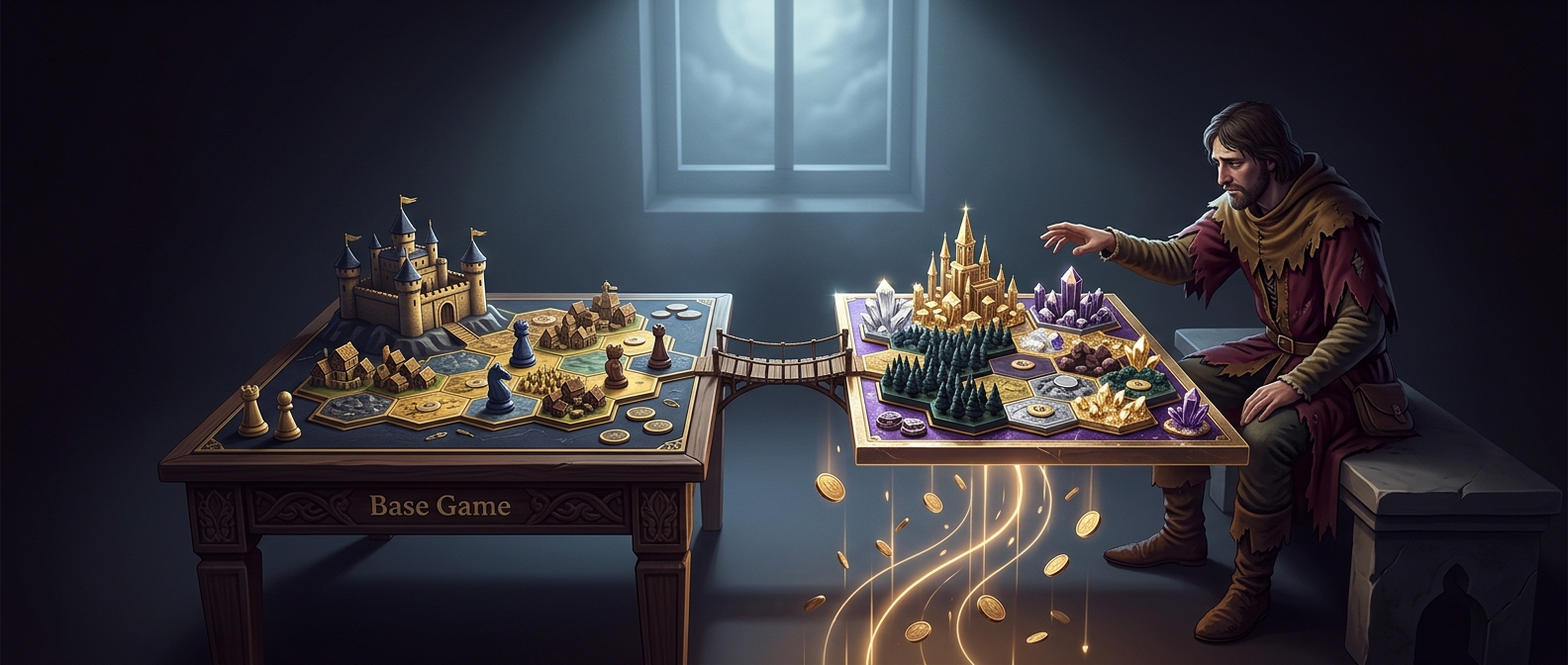
The tradeoff is that the expansion can feel disproportionately expensive beside the base game, especially when the box contains little material. Its price is not simply a count of cards or tokens; it reflects production economics and the value buyers place on extending a game they already enjoy.
Optional in Price, Sometimes Not in Feeling
A publisher can sell new characters or scenarios separately, avoiding the need to raise the base game’s price for everyone. But separate releases can also create pressure for players who want the fullest roster or experience. The add-on remains technically optional, yet its price may feel like part of the cost of keeping up with a game’s complete lineup.