How a Highway Trailer Gets onto a Train
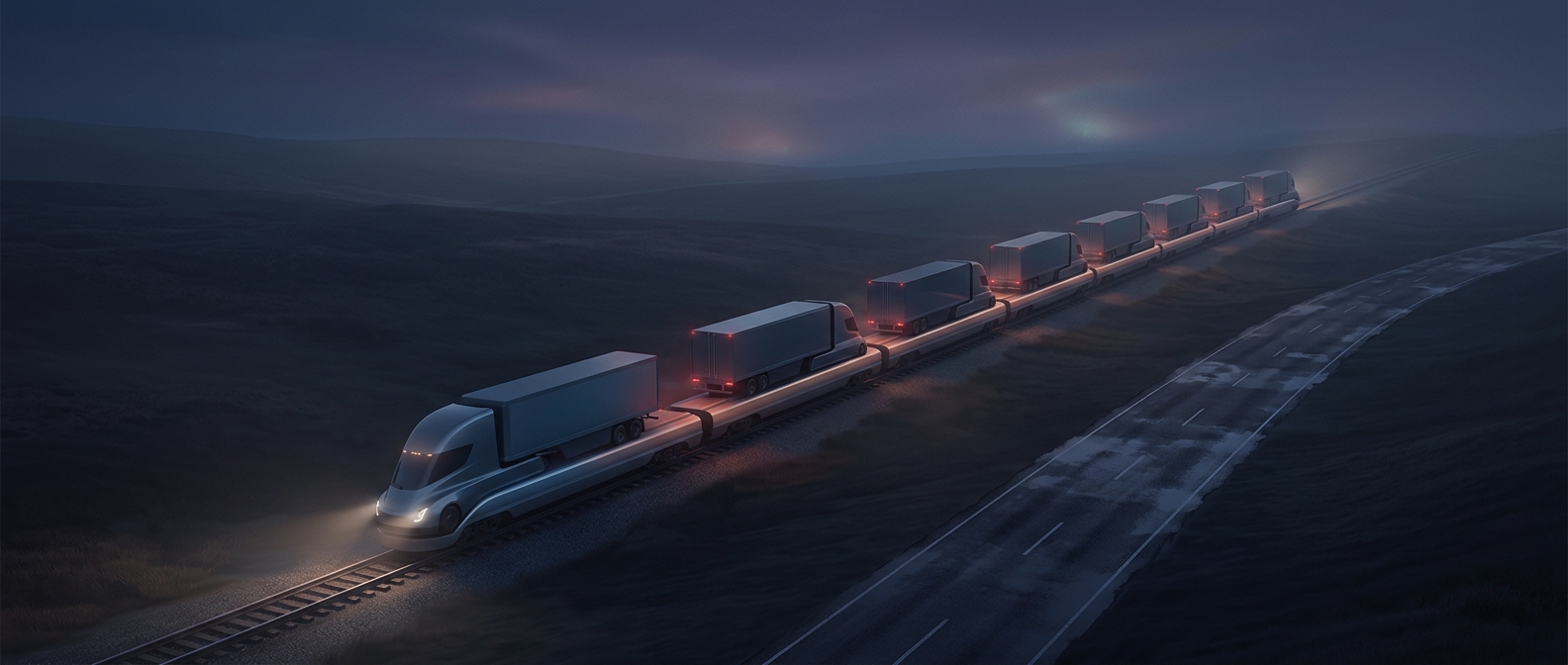
A truck trailer is built to be pulled on roads, not lifted like a shipping container. To move it by rail, a terminal must place it on a railcar and secure it so it cannot shift during the journey. In a common arrangement, the trailer’s road wheels rest on the railcar deck, while its front end is supported and fastened separately. The tractor unit—the powered truck cab—stays behind.
Loading can happen with a ramp that lets a tractor drive the trailer onto a railcar, or with lifting equipment that transfers it from the truck chassis. The method depends on the railcars and terminal equipment available. At the destination, the process is reversed, and a road tractor collects the trailer for its final delivery.
Why Keep the Trailer’s Wheels?
A container is designed to be lifted and stacked; a standard trailer is not. Piggyback service avoids transferring the freight into a different box: the same trailer can make the road pickup and delivery, then travel between rail terminals. That can simplify handling for shipments already organized around truck trailers.
The tradeoff is that a trailer takes up rail space along with its wheels and running gear, which add weight but do not carry freight on the train. Railcars and terminals also need to accommodate trailers’ dimensions and loading needs. Those practical limits help determine which routes and shipments suit the arrangement.
A Shared Job, with a Handoff in the Middle
The system works best when the long rail journey can replace a substantial stretch of highway while trucks remain available at both ends. It does not eliminate trucking: it changes where the tractor is needed. The trailer itself becomes the handoff point between two transport networks, letting rail handle the middle without requiring the freight to be unpacked and reloaded.