How a Fifth Wheel Holds a Trailer
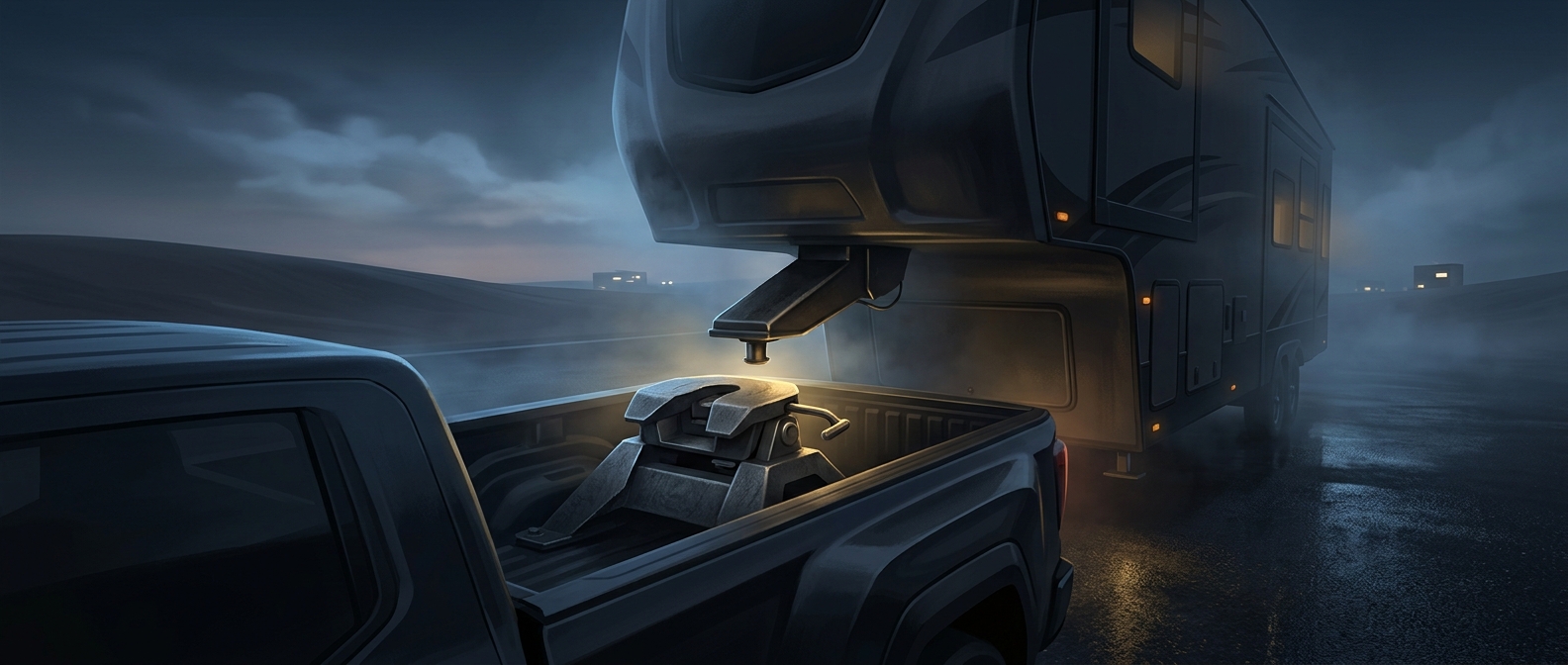
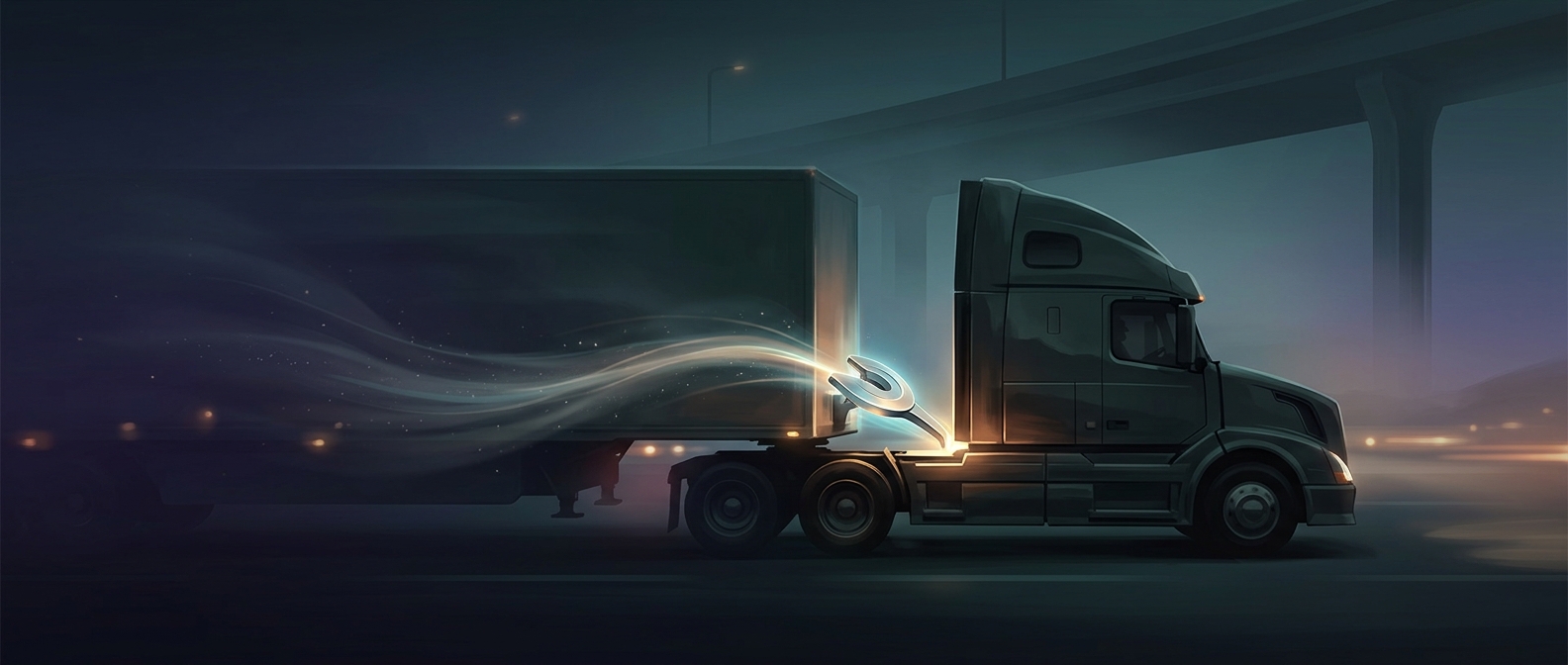
A semi-trailer does not attach to a truck with a simple hitch ball. Its kingpin—a short, heavy steel pin beneath the front of the trailer—slides into a wide, greased coupling plate mounted on the truck. Locking jaws close around the pin, securing the trailer while allowing the joint to move.
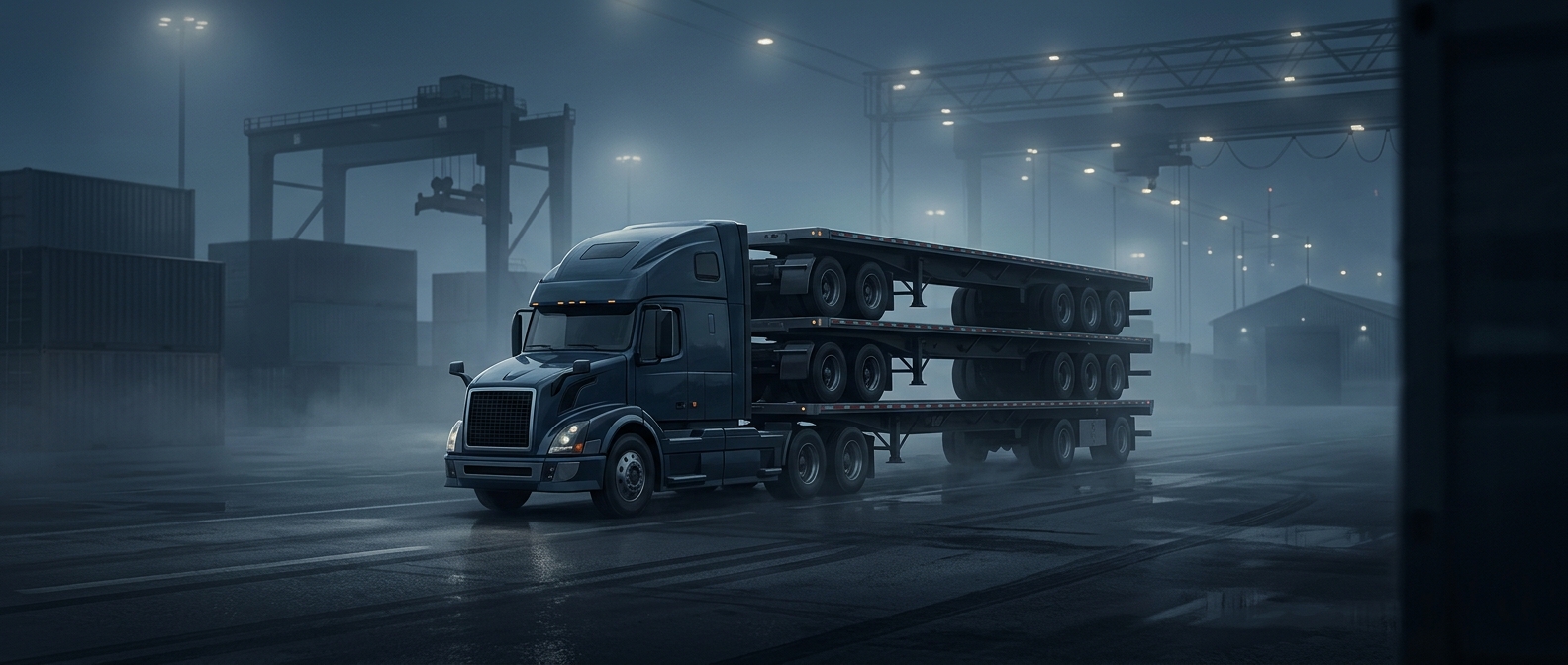
The plate is called the fifth wheel. It sits over the truck’s rear axles, where it can transfer a substantial part of the trailer’s downward load into the truck’s frame. The trailer’s own axles support the rest. This arrangement lets the truck carry the trailer’s front end without needing a rigid connection from bumper to bumper.
Why the Connection Must Pivot
A truck and trailer cannot follow exactly the same path around a corner: the trailer cuts inside the truck’s turn. The fifth wheel lets the trailer swing left or right around the kingpin, while the plate also tilts to accommodate changes in angle over uneven ground. The joint holds the two vehicles together but does not force them to point in the same direction.
That freedom is essential for turning and backing, but it also makes the connection a critical control point. The locking jaws must fully capture the kingpin before the truck moves; otherwise, the trailer can separate. Once locked, the compact joint both supports the trailer’s front load and allows the movement a long vehicle needs to negotiate a turn.