Why a Birth Scene Uses a Doll
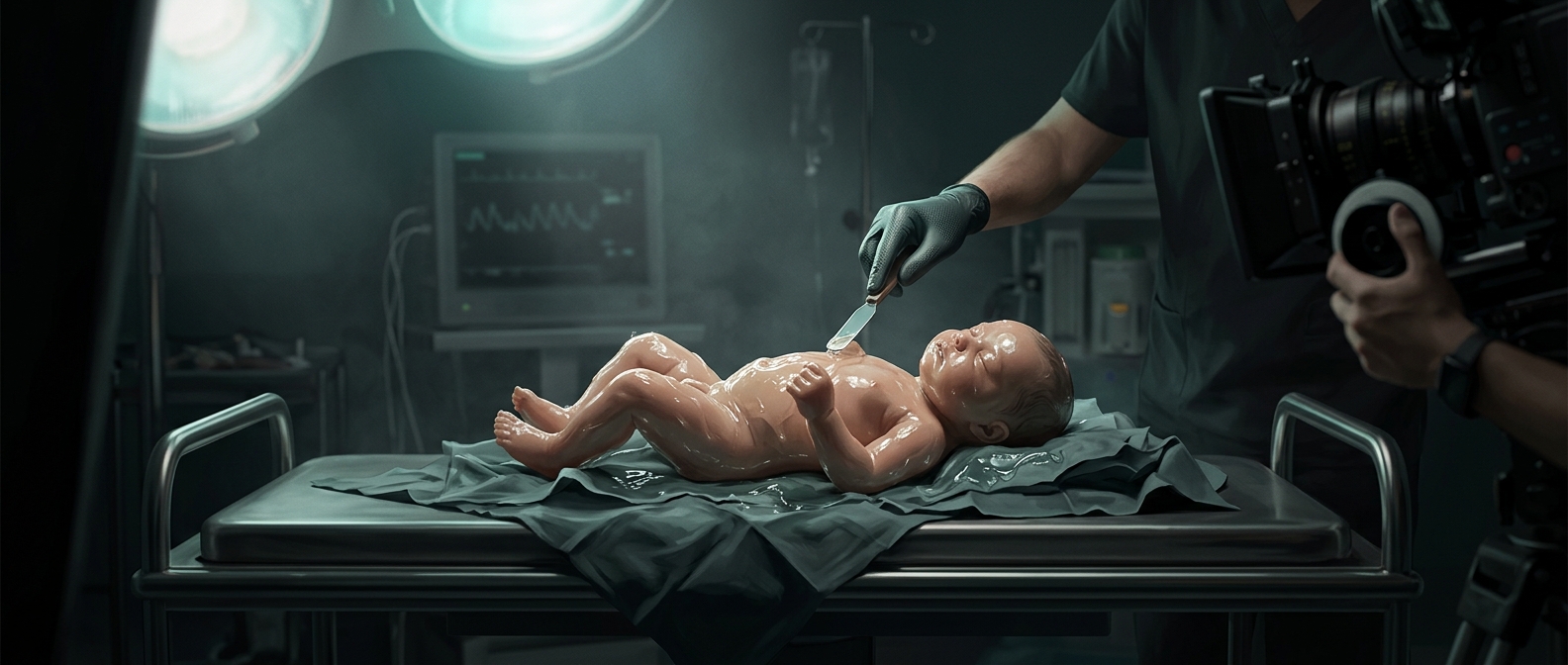
A newborn may appear on screen for only a few seconds, but filming can stretch a scene across repeated takes, camera setups, and lighting adjustments. A real infant cannot simply be held in position until every shot is ready. A detailed silicone doll gives the crew a controllable stand-in for those close-ups, without keeping a newborn on set for a long shoot.
The trick is not just making the doll look like a baby. A birth scene also has to suggest the slippery, messy moment immediately after delivery. Grape jelly and cream cheese smeared over the silicone give it a wet, uneven surface that reads as bodily fluid on camera. The coating is a practical effect: it supplies visible texture and shine without requiring the production to depict actual childbirth fluids.
A Small Effect With a Big Camera Job
The coating helps bridge the gap between a polished prop and the raw image the scene needs. In a close-up, highlights on the jelly can make the skin look slick, while the cream cheese adds thicker, opaque patches. Together, they let the prop register as newly born and not yet cleaned up—an impression that a bare, dry doll would struggle to create.
Because the materials sit on the surface, the crew can adjust or reapply them between takes. The result is a useful filmmaking compromise: the scene can preserve the startling visual detail of childbirth while keeping the infant in the shot a carefully managed prop.