A barcode built for a moving production line
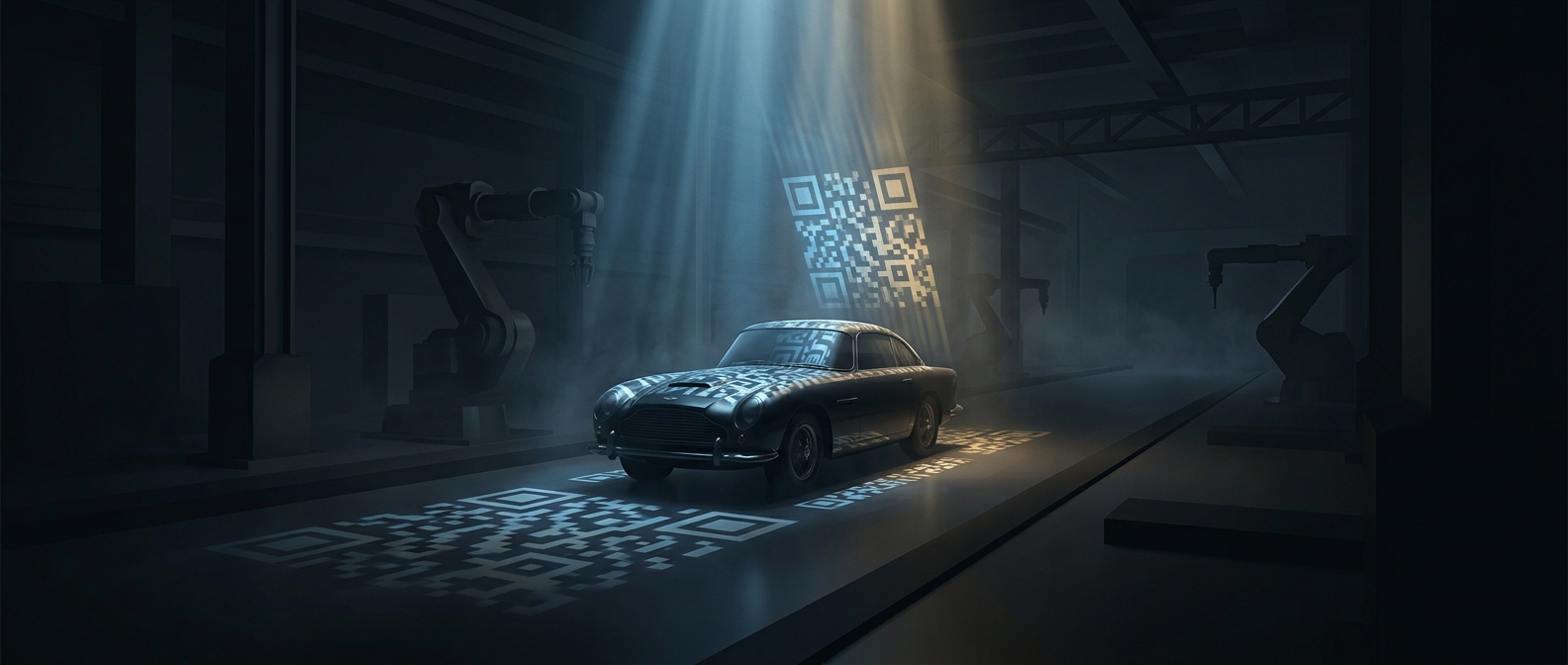
On a car assembly line, a part’s identity matters only if workers and equipment can retrieve it quickly and reliably. A code that needs careful alignment or a separate scan for each piece of information can slow that work down. The design challenge was to make a compact mark that could carry more data and still be read at a glance.
A conventional barcode stores information in the pattern of narrow and wide stripes. A QR code stores it in a grid of dark and light squares, using both dimensions of the image. That lets the code hold more information in a similar area. Its three large corner squares act as visual landmarks: a scanner uses them to locate the code and determine its orientation, so the image can be read even when it is turned.
Why the square pattern traveled beyond factories
QR codes also include error correction—extra data that can help reconstruct the message if part of the pattern is obscured or damaged. That makes the code more forgiving than a simple, pristine label would be, an advantage in practical settings where marks may be handled or printed imperfectly.
These choices made QR codes useful well beyond tracking components. A camera-equipped device can read the same kind of grid and turn it into a web address, contact details, or other stored information. The code itself does not need to be redesigned for each destination; only the data encoded inside it changes.
The factory problem therefore produced a format suited to everyday scanning: a small image that can carry substantial information, be found quickly, and tolerate some visual damage. A square printed on a product can now serve as a compact bridge from the physical object to a much larger digital record.