A visual bridge between two systems
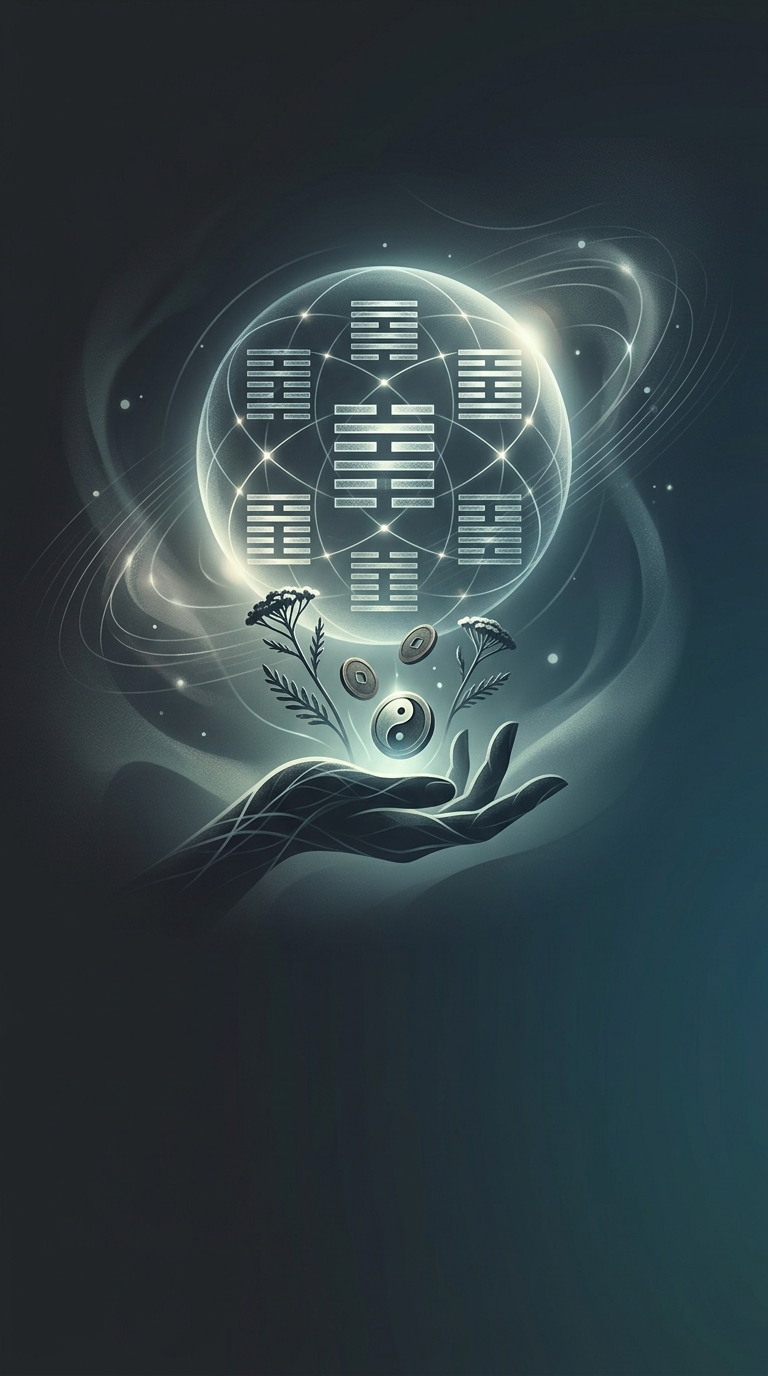
Each I Ching hexagram is built from six stacked lines. A line is either unbroken or broken, so each position has two possible states. That makes a hexagram resemble a six-digit binary number: read each line as a 1 or 0, and the 64 possible arrangements can be assigned values from 0 to 63.
The resemblance caught the attention of German mathematician Gottfried Wilhelm Leibniz after he received diagrams associated with the I Ching from the Jesuit missionary Joachim Bouvet. Leibniz compared the patterns with binary arithmetic, in which numbers are written using only two symbols. The comparison gave him a striking way to connect an ancient Chinese diagram system with a mathematical idea he had been developing.
A connection, not an origin story
The distinction matters: the I Ching’s hexagrams did not generate modern computing, and Leibniz’s binary work was already underway before this exchange. The diagrams offered a compelling parallel, not the missing invention that made computers possible.
Binary notation became useful in computing because electronic circuits can reliably represent two states—for example, a signal being on or off. Hexagrams, meanwhile, carry meanings within a system of divination and interpretation. Their shared two-state structure does not make their purposes the same.
The memorable point is how readily a pattern can travel between fields: six broken-or-solid lines can be read both as an ancient symbolic arrangement and as a sequence of binary digits, even though the two systems arose for different reasons.