A replacement toe built for more than appearance
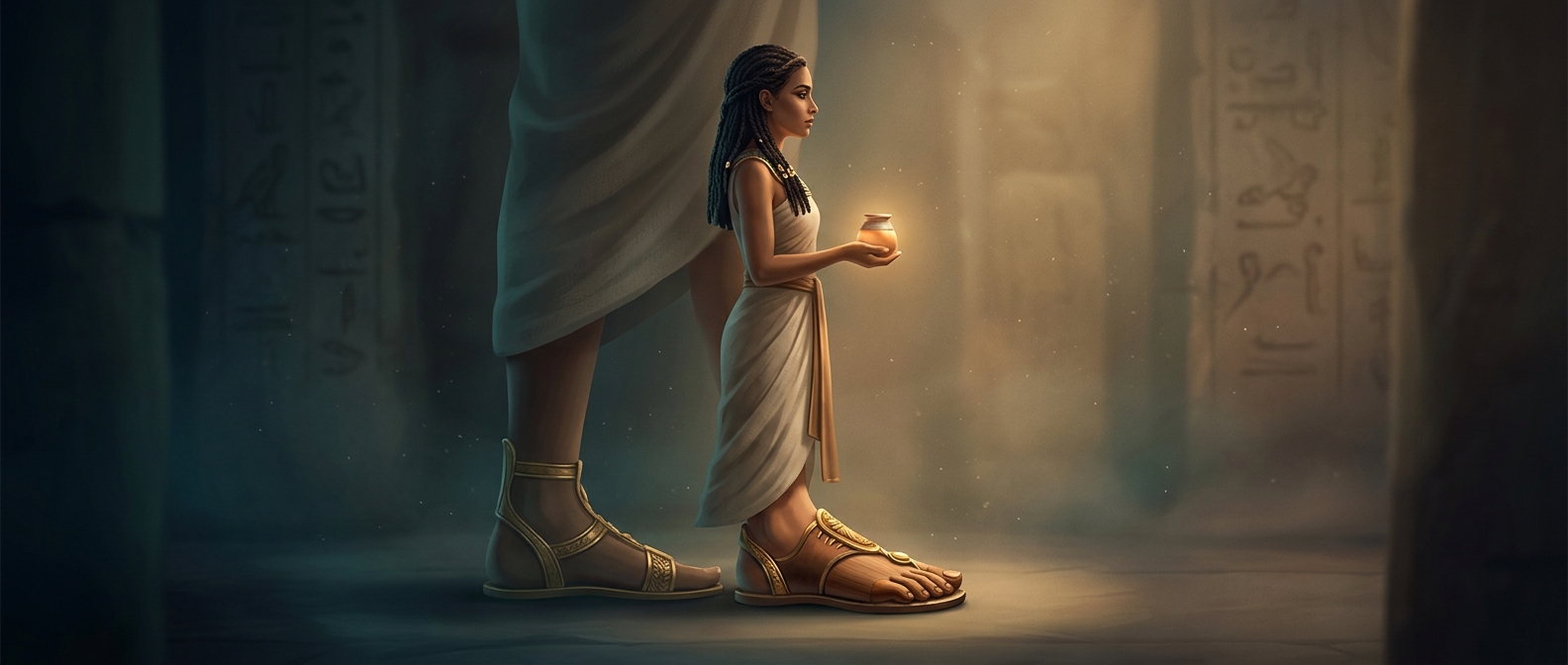
A wooden-and-leather toe found on an Egyptian mummy was shaped to take the place of a missing toe, not merely to hide its absence. That distinction matters: the big toe helps the foot push off the ground with each step and steady the body during walking. Replacing it could make ordinary movement more comfortable and secure.
The materials suited the task. Wood could hold a firm shape, while leather could help attach the piece to the foot or fit it against the skin. A wearable prosthesis had to stay in place as the wearer moved; a realistic outline alone would not have been enough.
What the craftsmanship reveals
Making a replacement for a body part required observing how that part fit and functioned, then shaping materials to meet those needs. The toe shows that ancient Egyptian makers had practical knowledge of both the body and the challenges of turning a rigid material into something wearable.
It does not tell us exactly how often the wearer used it or how much it improved walking. But its construction points to a concrete ambition: to make a missing toe replaceable in daily life. Thousands of years later, the object still makes that ambition visible in the curve of a wooden toe and the leather that helped hold it on.