The collarbone acts like a brace
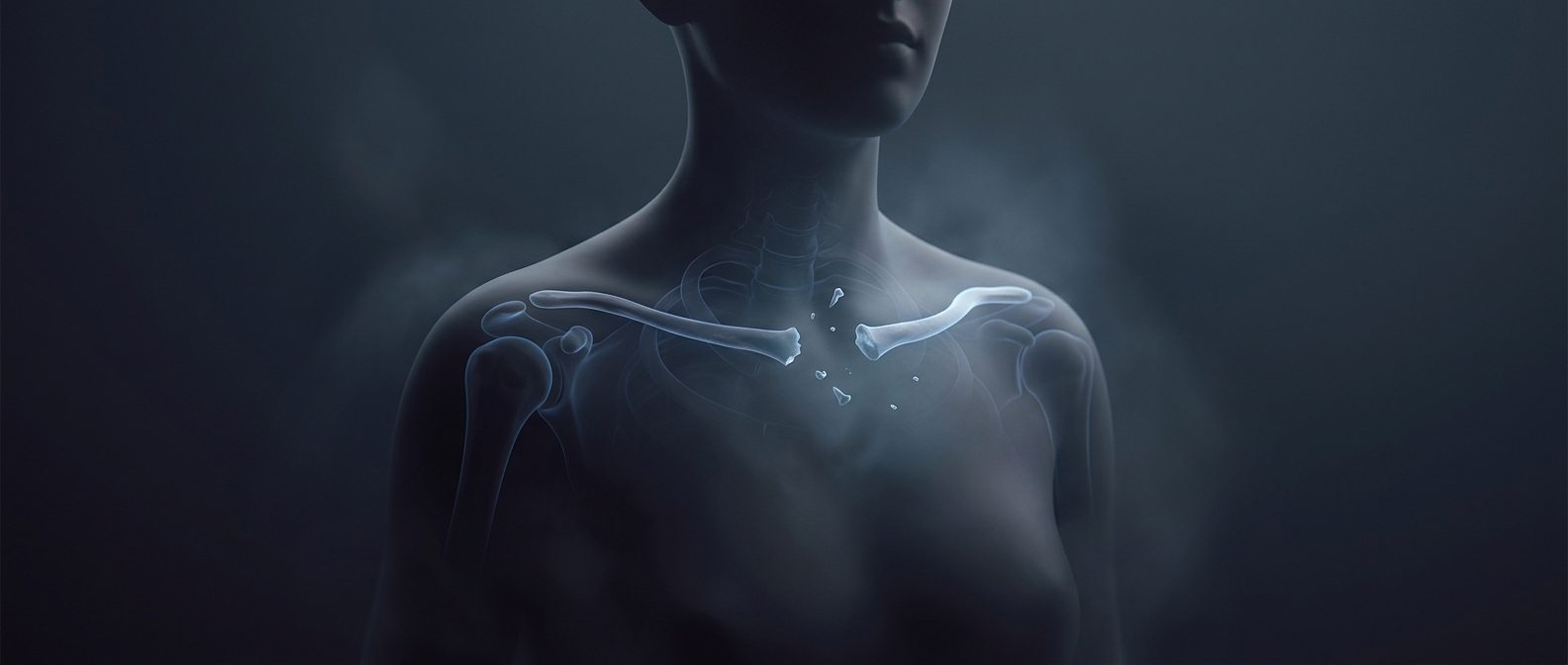
The collarbone, or clavicle, is a narrow, gently curved bone that holds the shoulder away from the chest. That spacing gives the arm room to move. Unlike many bones protected by thick muscle, much of the clavicle lies just beneath the skin, so there is relatively little soft tissue to absorb a direct blow.
Its shape and job also make it a natural weak point in a fall. The shoulder is not fixed to the torso by a solid bony joint; the clavicle serves as a strut between the breastbone and shoulder blade. When the shoulder is driven inward, the strut bends under the load. A fall onto an outstretched hand can send force up the arm and into the same structure.
Why breaks often happen in the middle
The clavicle’s middle section is narrower and less supported than its ends, which are secured by strong ligaments at the breastbone and shoulder. That makes the middle a common place for the bending force to overcome the bone’s strength. The bone does not literally snap because it is unusually fragile: the outcome depends on how much force reaches it, the direction of the impact, and the person’s bone health.
A break can leave the shoulder sagging or make the arm painful to lift, since the bone can no longer hold the shoulder in its usual position. Even so, many clavicle fractures heal without an operation: keeping the arm supported limits painful movement while the bone knits back together. The same exposed brace that makes the collarbone vulnerable is also easy to examine and often allows clinicians to track healing with a physical exam and imaging.