How posture changes the mechanics of a breath
When you inhale, your diaphragm—the broad muscle beneath your lungs—contracts and moves downward. Your ribs also lift and widen, giving the lungs space to expand. The lungs themselves do not pull air in; they expand as the chest cavity grows, drawing air through the airways.
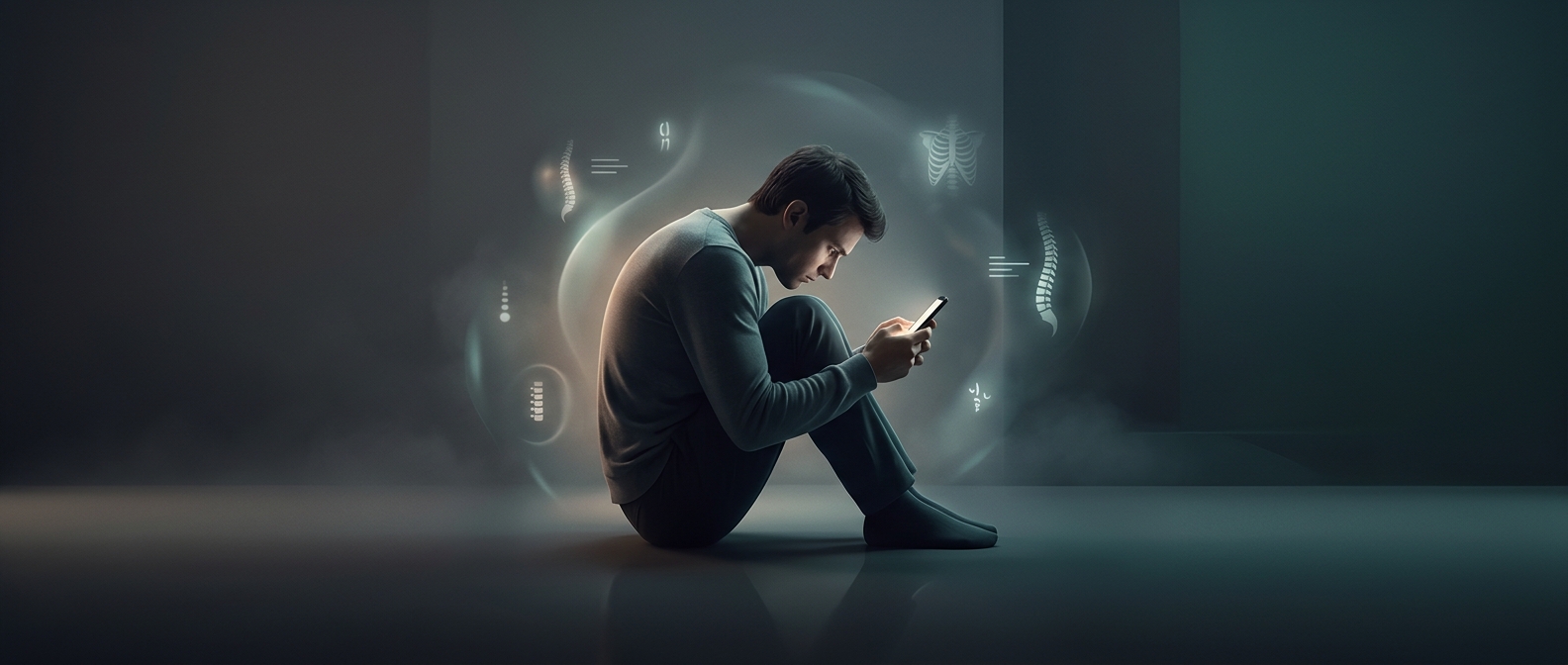
A forward-hunched position bends the trunk and can limit how freely the rib cage moves. It also changes the space available for the diaphragm to descend. The result is a more restricted chest expansion, so a deep breath may feel harder to take. This is a change in room to expand, not a sign that slouching permanently shrinks the lungs.
Why the effect is usually about depth, not every breath
At rest, the body needs only small breaths to keep exchanging oxygen and carbon dioxide. A posture that restricts a fuller inhale may therefore be most noticeable when you try to breathe deeply, exercise, or hold a position for a long time. Sitting taller can give the torso and rib cage more freedom to move, although it does not guarantee a particular amount of extra lung capacity.
The same compression affects the abdomen. The diaphragm sits above the digestive organs, and bending forward can press the belly and make that area feel crowded, especially after eating. Changing posture can relieve some of that pressure by unfolding the trunk.
The practical point is simple: posture influences the space and movement your breathing muscles have to work with. An upright position cannot make lungs larger, but it can make a full, comfortable breath easier to take.