A queue is also a piece of stagecraft
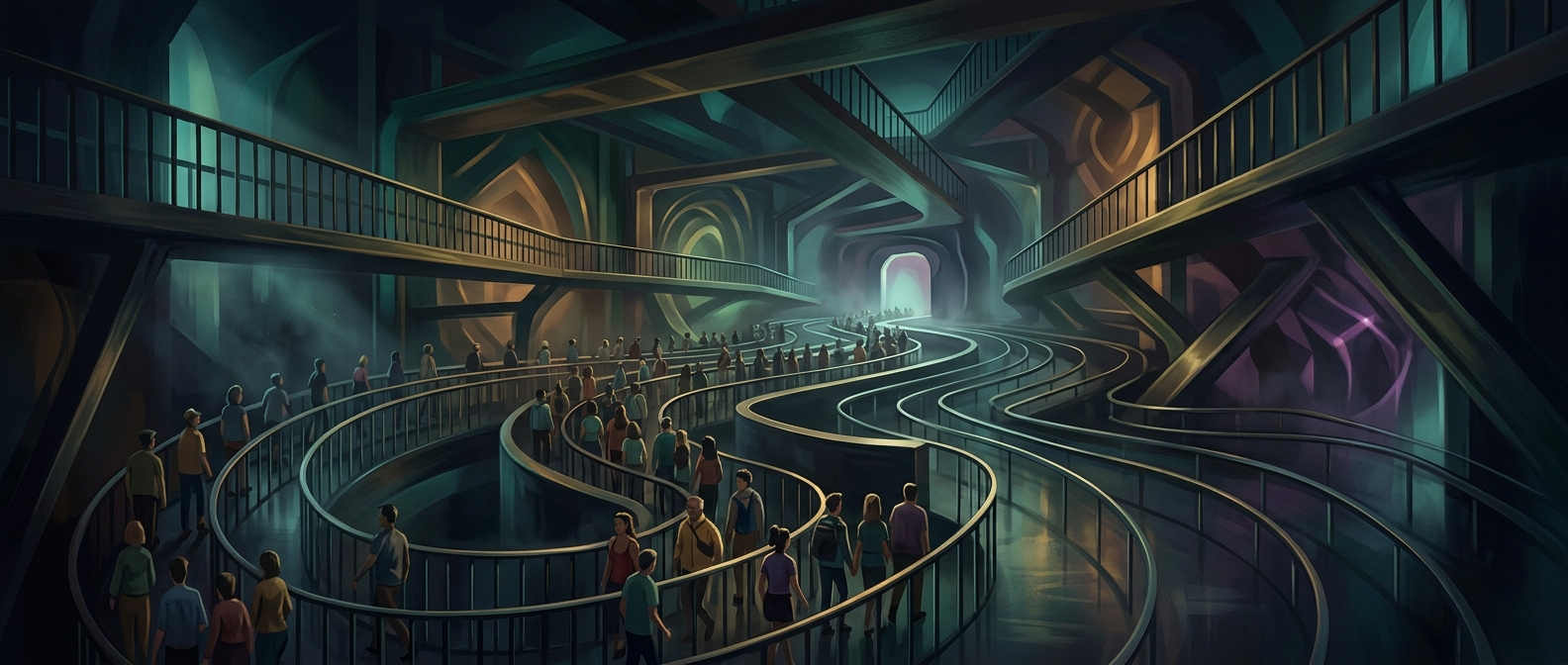
A long wait is easier to tolerate when visitors cannot see its full extent. Theme-park queues use serpentine switchbacks—rows of barriers that fold a walkway back and forth—to fit a lengthy line into a smaller footprint. Each turn blocks the view ahead, so guests see the next stretch rather than a distant endpoint that makes the wait look daunting.
The layout also breaks one imposing line into smaller sections. Passing a turn or entering a new room gives visitors a visible sign of movement, even when the actual pace is slow.
The wait becomes part of the attraction
Designers can use the enclosed path to introduce a ride’s setting through scenery, lighting, sounds, or themed objects. This is called environmental storytelling: details in the space suggest a world or situation without requiring a character to explain it. A queue can therefore offer something to look at and interpret while guests wait, shifting attention from the minutes themselves.
Some attractions add a pre-show—a short scene or presentation before the ride. It can build anticipation and make the queue feel like a sequence of experiences rather than one stretch of standing still. The room may also serve a practical purpose: guests gather there while staff prepare the next group to board.
Perceived time is not elapsed time
These techniques do not make the line move faster. They change what visitors can see and do while it moves. A visible estimate or a clear view of a barely moving queue can keep attention fixed on delay; a turning path, changing scenery, or short show offers other cues to follow. The clock keeps the same time, but the experience can feel less like staring at a line and more like approaching the attraction.