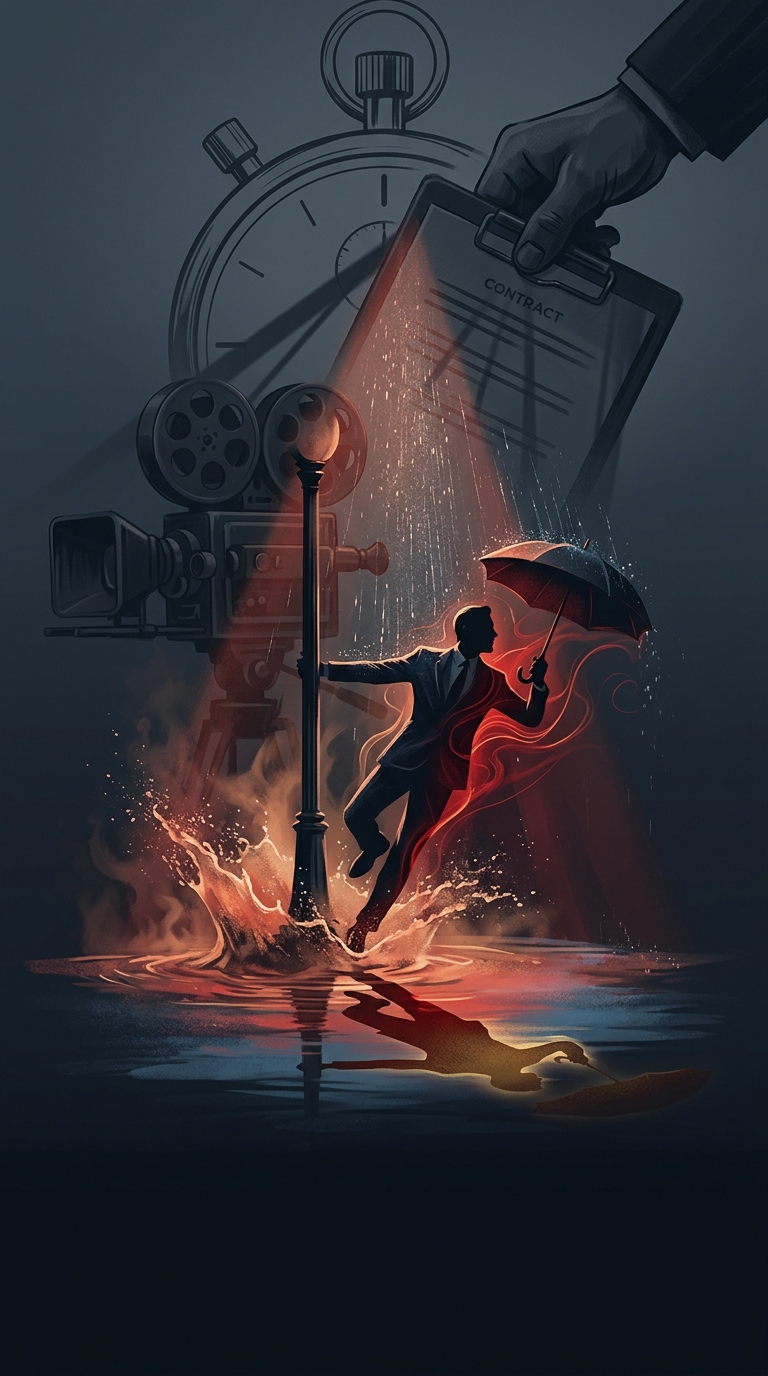
Making Movie Rain Show Up on Camera
A downpour that looks obvious to an audience can vanish on film. Water is nearly transparent, so the production had to make the falling drops catch the light. For the sequence, milk was mixed into the rainwater to make it more visible against the darker background. The effect had to work from the camera’s point of view, not merely feel like rain to the people on set.
That practical setup made the dance a demanding piece of filmmaking: Kelly had to perform precisely while water poured over him, and the crew had to coordinate the rain with the camera and choreography. The fever added a human cost to a scene whose sunny mood can obscure how physically taxing it was to shoot.
Why the Scene Had to Keep Moving
Artificial rain required rented equipment, and the production was already under schedule pressure. Stopping for a long delay would have meant both more time and more expense. Those constraints help explain why the work continued, though they do not make dancing with a high fever safe or easy.
The contrast is part of the sequence’s lasting effect: the camera turns a controlled, costly downpour into an image of carefree delight. What looks spontaneous on screen depended on careful staging—and on Kelly pushing through conditions the finished film never shows.