More Cord Means More Chances to Cross
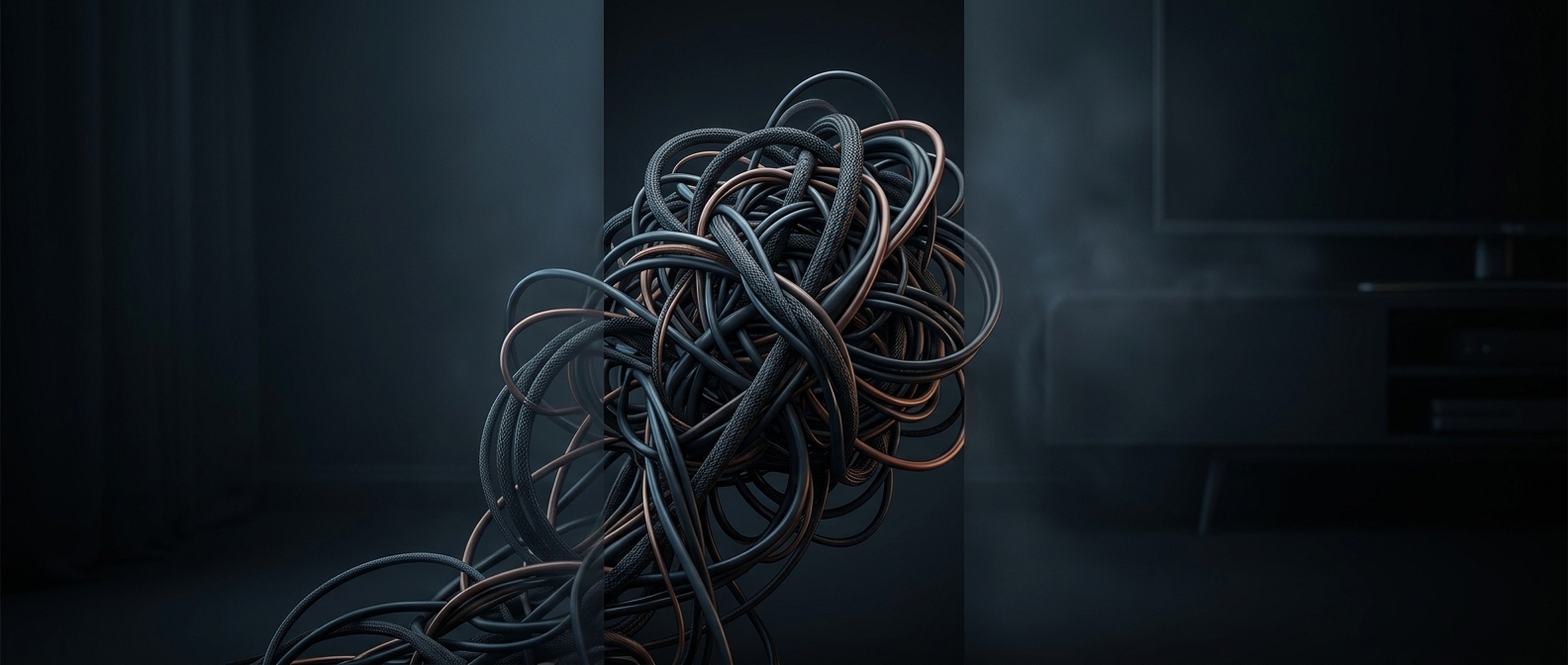
A cable does not tangle simply because it is long. It tangles when one part slips around another and forms a loop that tightens or catches. Adding length gives the cable more segments that can meet—and more opportunities for those crossings to happen.
A short cord has relatively few ways to fold back on itself. A longer one can form several loops at once. When the cable is shaken, jostled in a bag, or pulled from a drawer, those loops shift and slide past one another. Some movements leave a loose curve; others carry one section through a loop, creating the beginnings of a knot.
Small Movements Build a Complicated Tangle
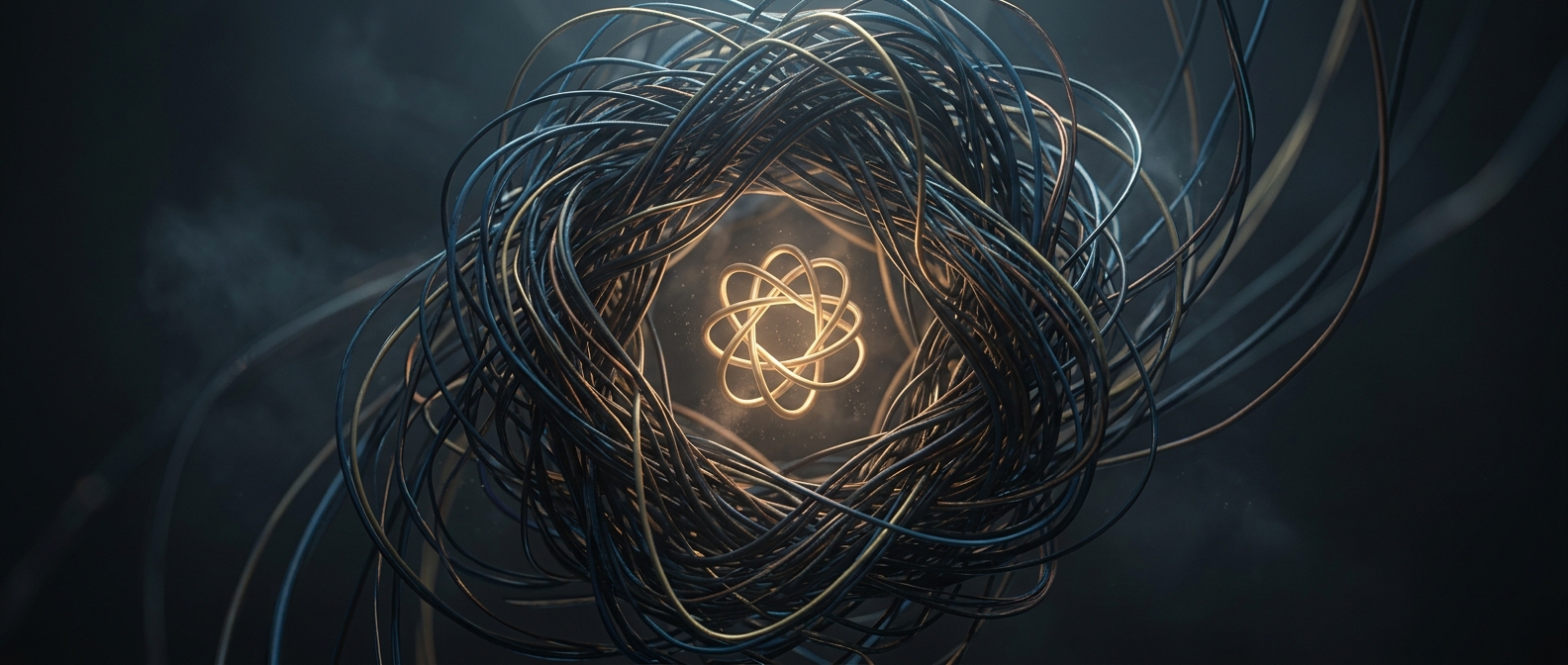
Mathematical knot theory studies how strands and loops can be arranged and whether a tangle can be undone without cutting it. A loose cable is not quite the idealized closed loop mathematicians often analyze, but the same basic insight applies: as the number of possible crossings increases, the number of possible tangled arrangements grows quickly.
That is why a long cable can emerge from storage in a surprisingly dense snarl even if nothing deliberately tied it. Repeated motion gives its many sections chances to form and tighten loops. The practical fix follows the same logic: coil the cable in controlled loops and secure them, reducing how freely its segments can cross while it is stored.