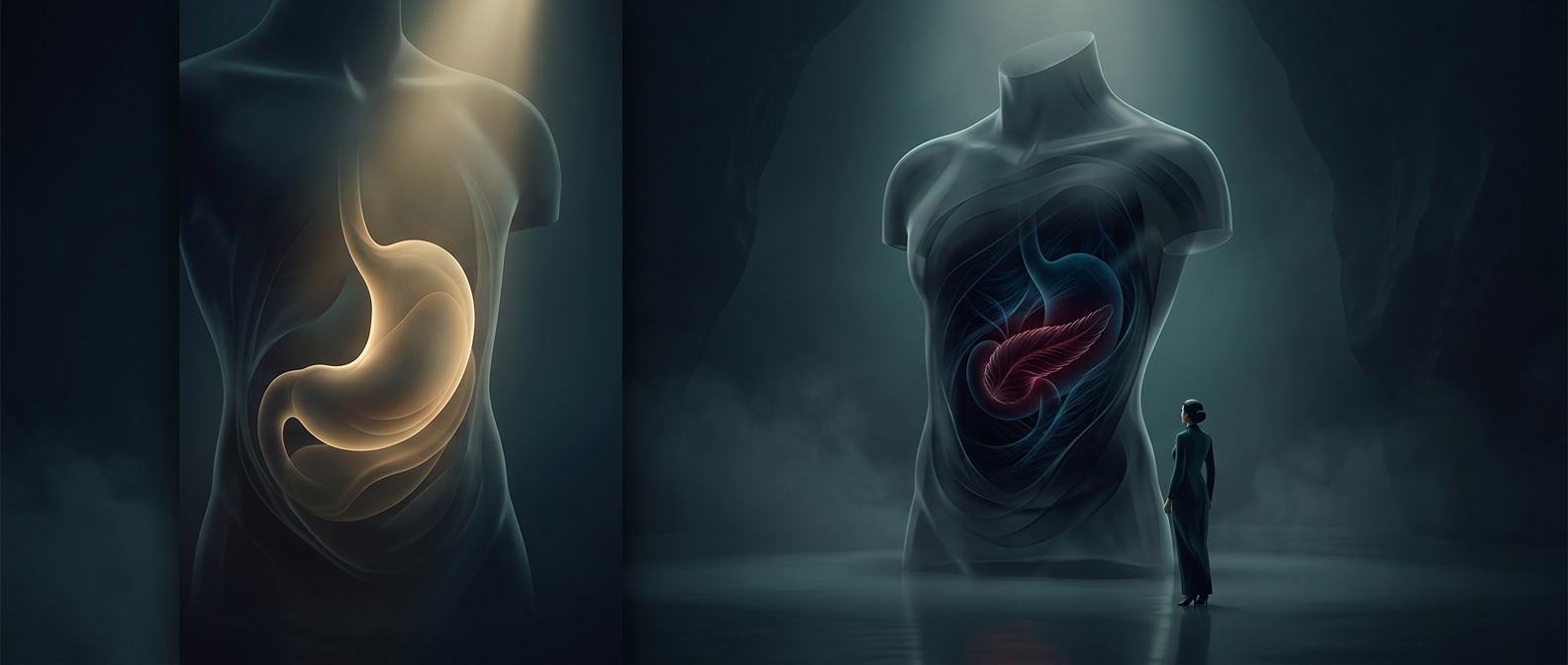
The pancreas ships digestive enzymes in a safe form
Many protein-digesting enzymes are made as inactive precursors, called zymogens. That is a crucial packaging step: an enzyme that can cut proteins should not become active while it is still inside the cells that made it. Pancreatic cells store these precursors in small compartments and release them into tiny ducts rather than letting them mingle freely with the cell’s working parts.
The ducts carry the secretions toward the small intestine. They also add bicarbonate, which helps neutralize acidic fluid arriving from the stomach and creates conditions in which digestive enzymes can work effectively.
A chemical signal starts the digestive chain
In the small intestine, an enzyme on the intestinal lining switches one pancreatic precursor—trypsinogen—into its active form, trypsin. Trypsin then activates other enzyme precursors. This staged handoff means the pancreas can manufacture potent tools without normally turning them loose inside itself.
Not every pancreatic enzyme is inactive before release: fat-digesting enzymes, for example, are handled differently from many protein-digesting ones. But the overall arrangement still depends on keeping enzymes contained and coordinating their release with the arrival of food.
When the safeguards fail
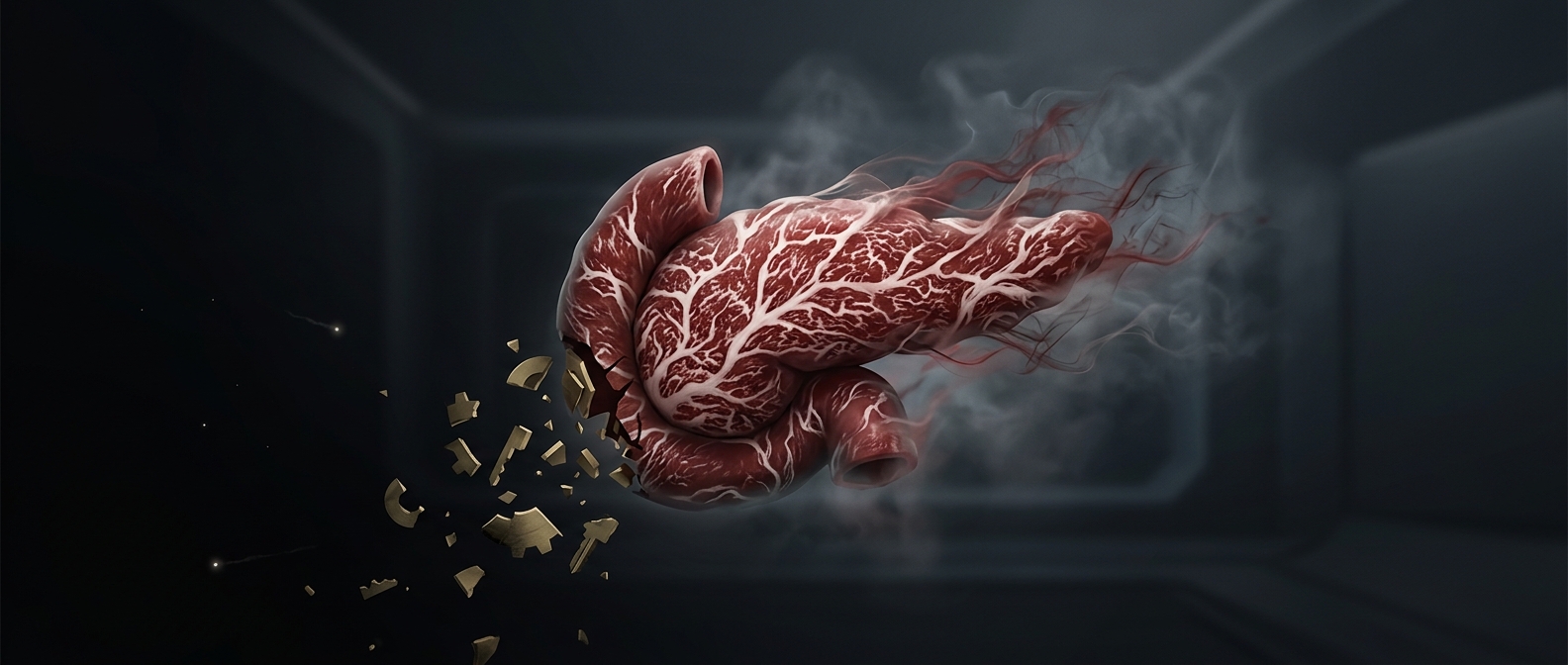
If digestive enzymes become active too early, or the flow through pancreatic ducts is disrupted, they can injure pancreatic tissue and trigger inflammation known as acute pancreatitis. The damage is not simply the organ being rapidly “digested” like a meal; premature enzyme activity can start a broader inflammatory response that harms tissue and can affect nearby organs.
The pancreas’s protection is therefore less like a single lock than a sequence of safeguards: inactive packaging, controlled storage, duct transport, and activation in the intestine. The striking part is that digestion depends not just on what these enzymes can do, but on keeping them inactive until they reach the right destination.