A banana contains a tiny amount of naturally radioactive potassium
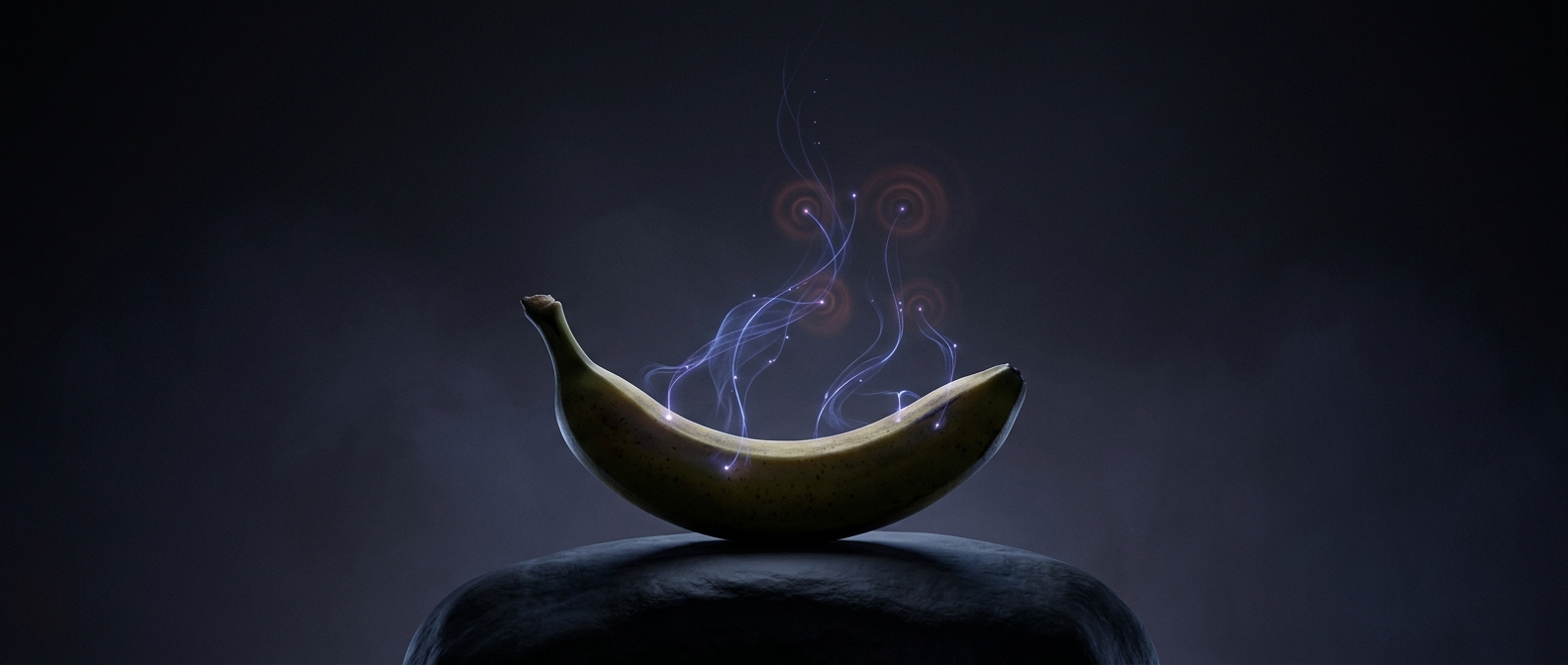
The surprising answer is radiation. A small fraction of the potassium found in nature is potassium-40, an unstable form, or isotope, of the element. It decays inside living things, releasing radiation. Because bananas contain potassium, eating one brings a trace of potassium-40 into your body.
That does not make a banana hazardous. Potassium-40 is present in ordinary foods and in our bodies; it is part of the natural environment, not a substance added to bananas. The word radiation can sound alarming, but risk depends on the kind and amount of radiation and how much reaches tissue. The amount associated with a banana is very small.
Your body keeps potassium in balance
Potassium is essential for normal nerve and muscle function, so the body carefully regulates how much it retains. It does not keep accumulating potassium-40 each time you eat a banana: the body processes and excretes excess potassium, while the isotope decays naturally.
That also explains why eating more bananas is not a practical way to build up a meaningful radiation dose. The potassium in each one is ordinary dietary potassium, and the radioactive portion is only a trace. The memorable detail is that the same natural isotope occurs in you, too—so a banana adds a little to a background your body already has.