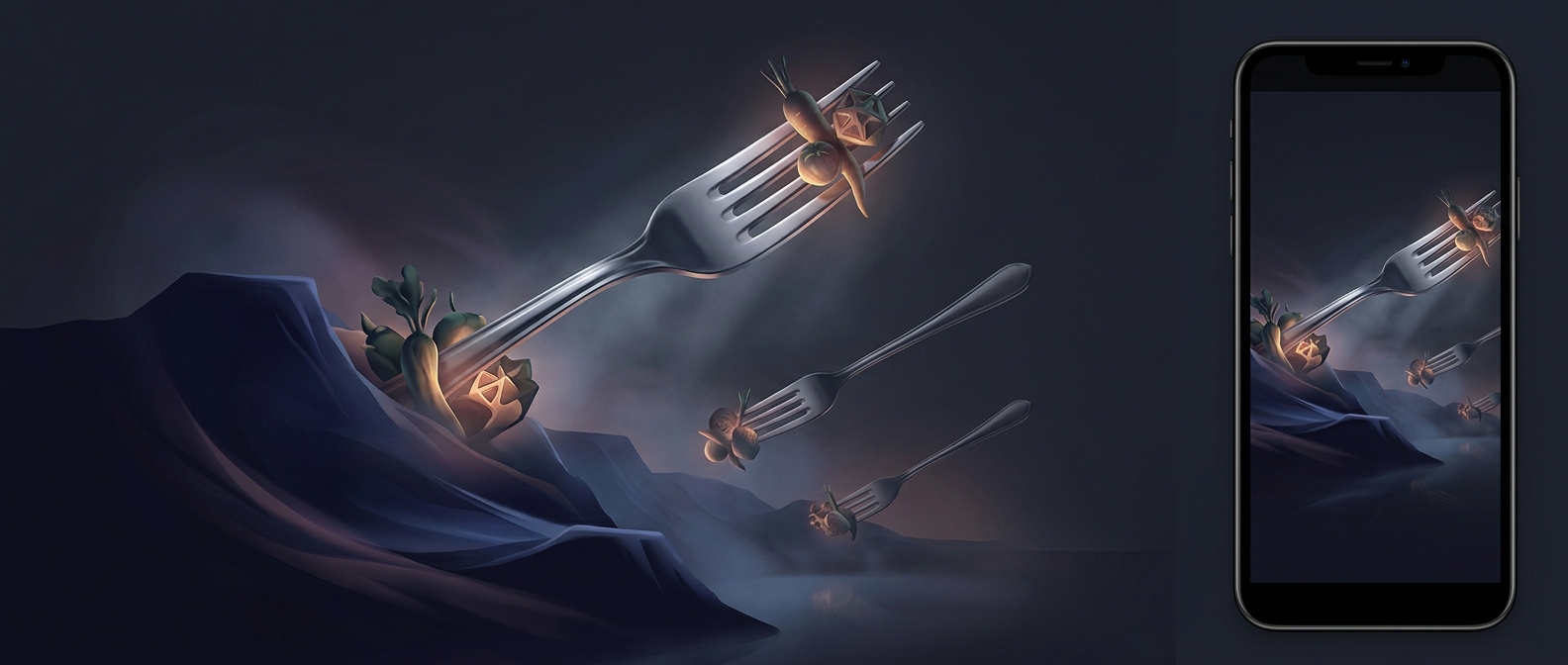
How a fork turns a push into a puncture
A fork works by concentrating the force from your hand at the ends of its tines. Pressure is force spread over an area; because each tine ends in a small point, even a modest push can create enough local pressure to break a food’s surface. A spoon’s broad, rounded edge spreads the same push over more area, so it is more likely to move a firm piece than pierce it.
Once the points enter, the tines help keep the bite from sliding off. Their spacing gives the food several places of contact, while the length of the tines helps resist the bite’s tendency to tip or twist as the fork lifts. The handle then acts as a lever: your hand controls the angle and carries the captured food, while the tines bear the load.
The bite shapes the route
That arrangement works best when food is firm enough to hold together but soft enough to pierce. A very hard crust may resist entry; a crumbly or delicate bite may split instead of traveling intact. The fork’s design is therefore a compromise between points sharp enough to penetrate and tines sturdy enough to carry food without bending.
Not every bite travels by spearing. With slippery noodles, a diner can wind them around the tines; with loose grains or soft food, the fork can push a portion against the plate or use its side to gather it. The fork is not just a set of points—it is a small transport system whose grip changes to match the cargo. Its limits are visible at the table: when a bite will not stay on the tines, the eater changes the loading method, rather than simply pushing harder.