Pressure can masquerade as light
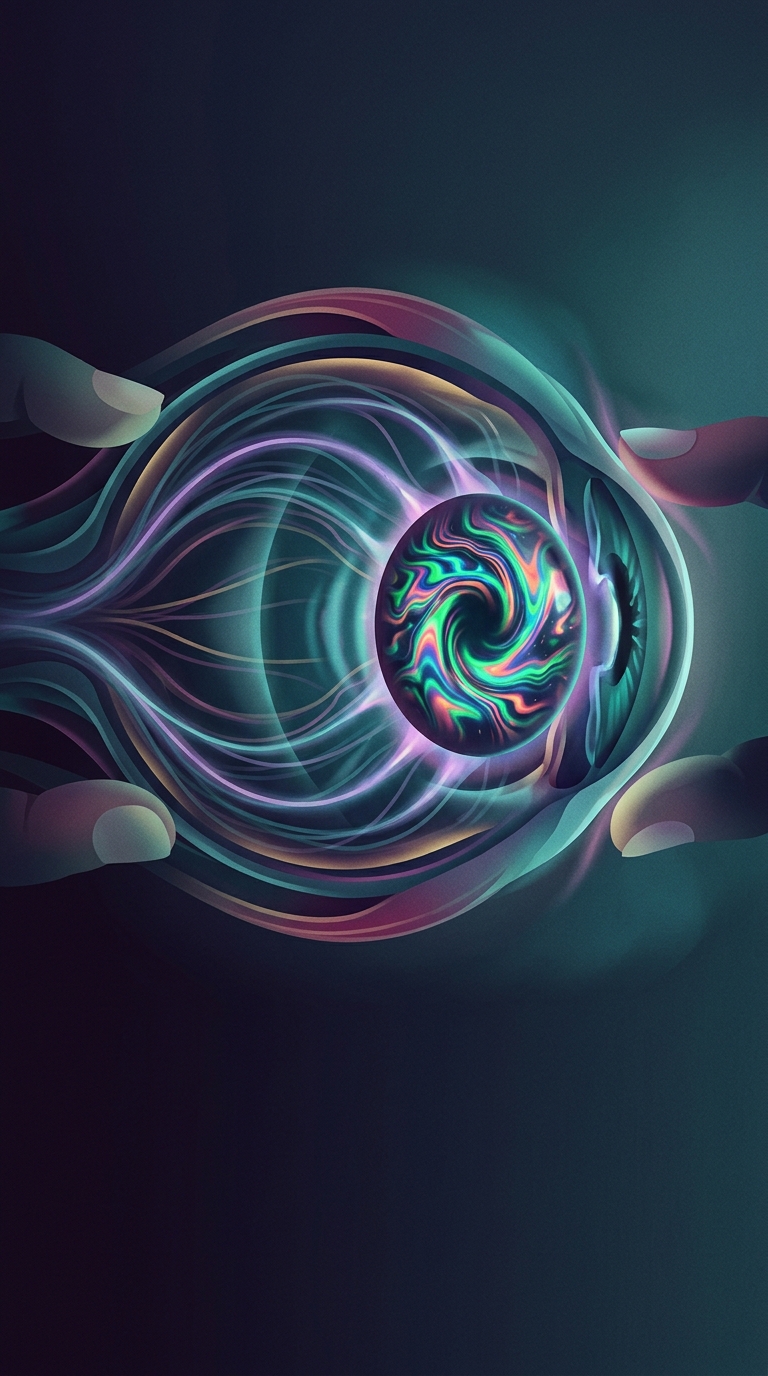
The flashes and shifting shapes are called phosphenes: visual sensations that occur without light entering the eye. Normally, light triggers cells in the retina—the light-sensitive layer at the back of the eye—and those cells send electrical signals to the brain. Pressure on the eyeball can also disturb activity in the retina, producing signals that the brain interprets as visual input.
The brain does not receive a neat message saying “pressure.” It receives activity from parts of the visual system and turns that activity into flickers, spots, arcs, or patterns. Their exact appearance depends on which cells are stimulated and how their signals combine.
Why the dark makes them vivid
In a bright room, incoming light supplies a strong, organized stream of information that tends to dominate perception. In darkness, there is little competing visual input, so pressure-triggered signals can stand out. The result may feel unusually bright or elaborate, even though no corresponding light is shining into the eye.
This is the same broad principle behind other phosphenes, such as the brief sparkles some people notice after a bump to the head: the visual system can produce a sensation of light when its cells or pathways are activated by something other than light.
A vivid effect, but not a safe experiment
The patterns are a sign that the eye’s visual machinery is being mechanically stimulated, not a special view into the brain. Rubbing hard can irritate or injure the eye, so the spectacle is not worth trying to intensify. The striking part is that vision depends on nerve signals—not simply on light itself.