Why Tlatelolco needed market rules
Tlatelolco was a major marketplace in the Aztec capital, where large numbers of buyers and sellers exchanged goods. In a crowded market, customers could not easily verify every transaction: a measure might look full but hold less than it should, and a seller might offer property that had been stolen. Such tricks threatened more than an individual purchase. If people could not trust quantities or ownership, ordinary trade became harder to conduct.
Merchants enforced the standards
The market had a tribunal made up of elite merchants to regulate trading. A tribunal is a body that hears cases and judges alleged wrongdoing. Merchants were well placed to recognize suspicious practices and the standards of exchange, while enforcement gave those standards force beyond a seller’s own reputation.
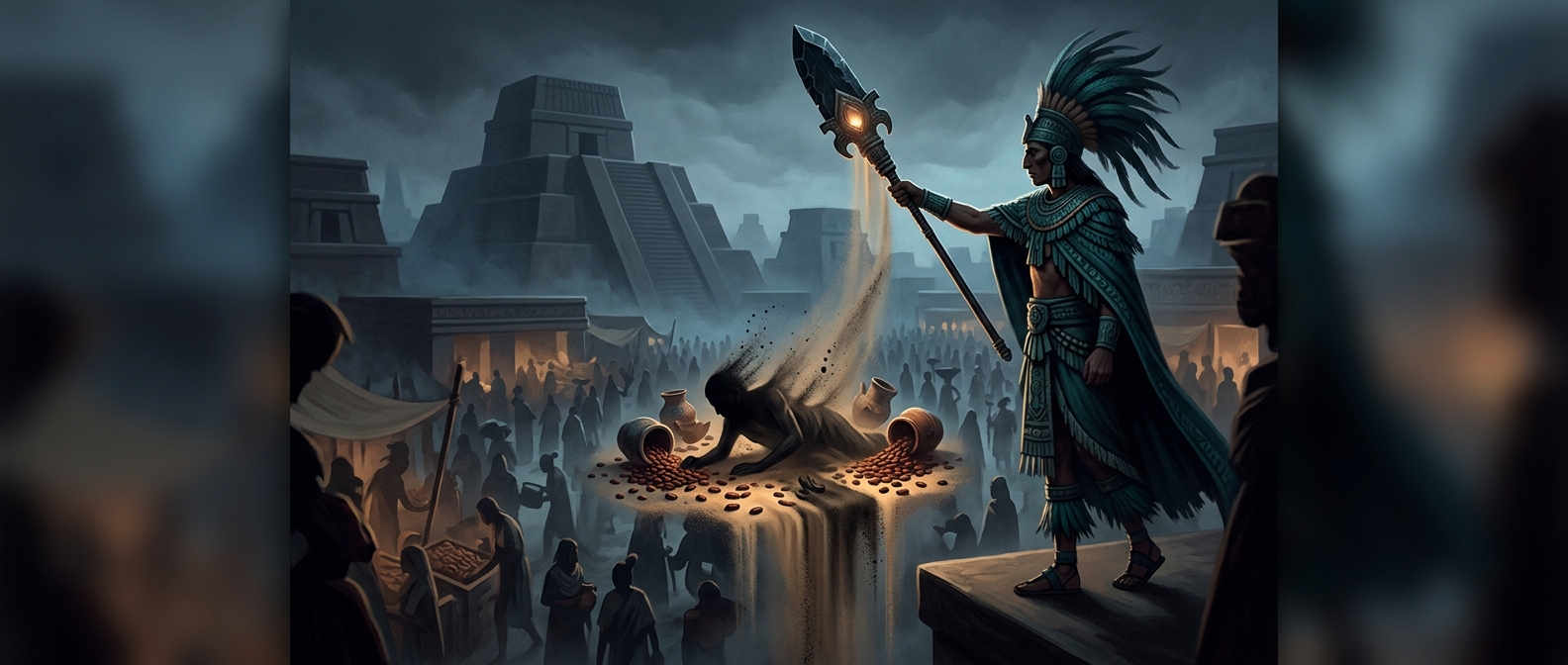
The reported penalties could be extreme: sellers caught using false measures or selling stolen goods could be beaten to death at their stalls. The punishment was public and immediate in setting, making the consequences of fraud visible to other traders and customers.
A market depended on credibility
This system joined commercial expertise to harsh punishment. Its purpose was not simply to settle disputes after a bad deal; it helped establish that measures and ownership claims could be policed. The striking point is that market trust was treated as a matter of public order, not just private bargaining. At Tlatelolco, cheating could bring punishment right where the trade took place.