Trade Routes Became Channels for Intelligence
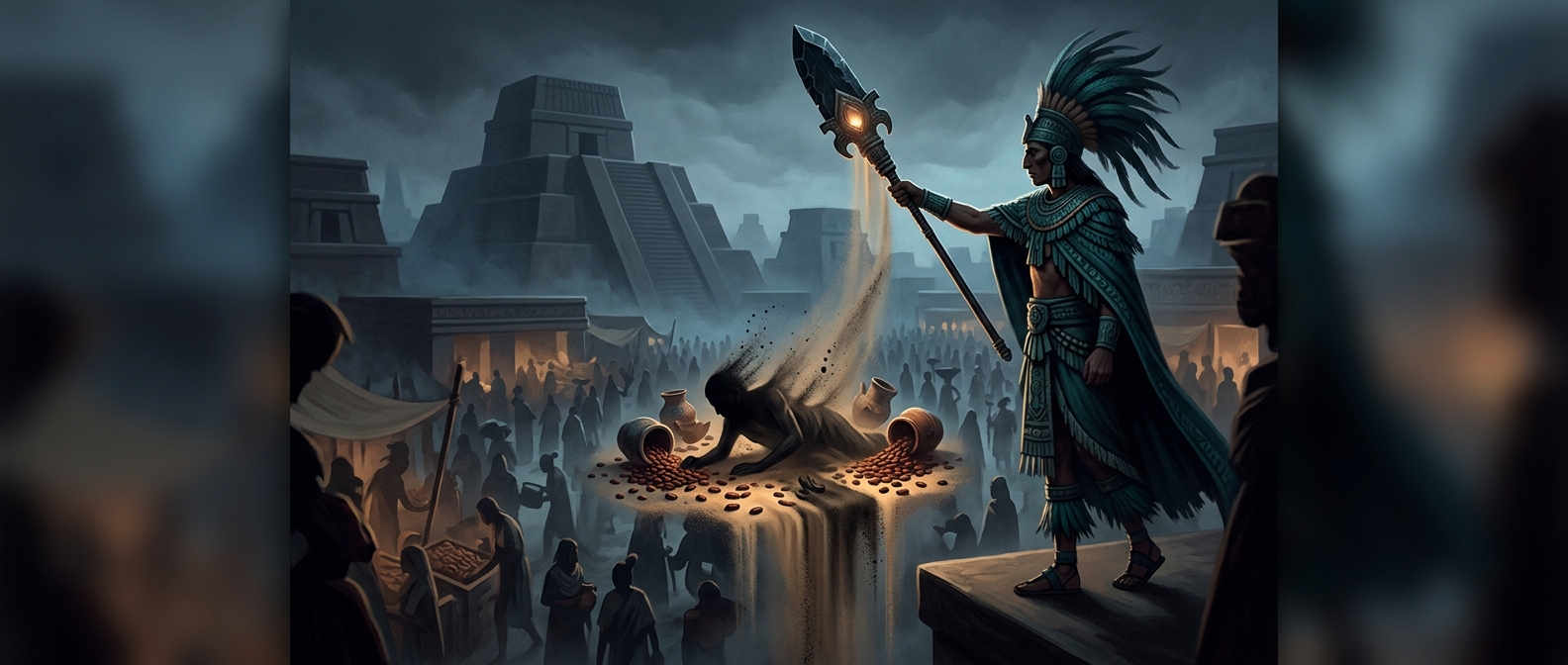
The Aztec Empire could not plan distant campaigns from its capital, Tenochtitlan, by relying on maps or messages alone. It needed to know what lay along the roads: which communities were powerful, how they were defended, and what supplies a force might encounter. Pochteca—long-distance merchants who traveled to trade in far-off markets—could learn much of this simply by doing business.
Under Emperor Ahuitzotl, their commercial journeys also served military purposes. A merchant could enter places where an obvious scout or soldier might attract suspicion. By observing local defenses and political conditions, and carrying information back along established routes, Pochteca could help rulers judge whether and how to intervene.
Why Merchants Could Gather Useful Information
Pochteca were not ordinary travelers. Their work required them to cross political boundaries, deal with unfamiliar communities, and understand the value and availability of goods. Those same skills made them useful observers. Trade offered a plausible reason to be present, while repeated journeys could build knowledge of routes and local circumstances.
This did not make every merchant a spy, or turn trade into a formal intelligence service in the modern sense. It meant that a network created for exchange could also convey information. In an empire expanding across regions with distinct rulers and customs, what merchants learned on the road could shape decisions made at court.
The overlap carried risks: a traveler suspected of spying could face danger, and information gathered at a market was not the same as reliable knowledge of an enemy’s military strength. Still, the arrangement offered a practical advantage. Before an imperial army moved into unfamiliar territory, some of its most useful reconnaissance may already have been gathered by people who had a reason to be there.