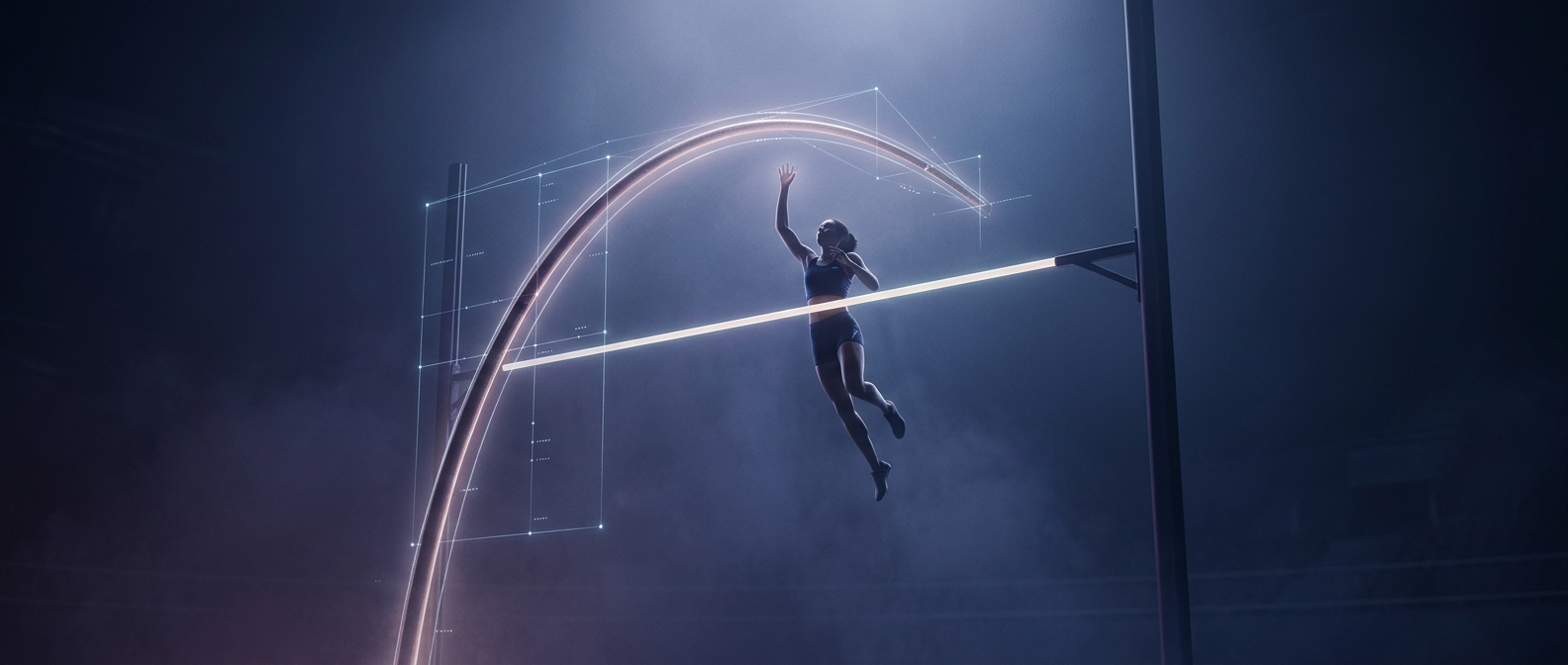
A pole is matched to the vaulter, not just the height
A vaulting pole is designed to flex under a particular load and then recover its shape. Its stiffness depends on factors such as its length, wall construction, and the layers of material used to make it. A vaulter’s weight and technique help determine which pole is appropriate: too stiff, and it may not bend enough to help the athlete move through the vault; too flexible, and it can bend farther than intended or fail.
That is why poles are treated as equipment with defined limits, not as interchangeable sticks. Athletes and coaches select among poles with different stiffnesses, and a vaulter may change poles as conditions or technique change. The pole’s rating is a practical boundary for use, not a promise that every pole will behave identically in every vault.
Timing turns flex into height
The pole does not simply launch the athlete upward. As the vaulter plants it in the box—the recessed metal fixture at the end of the runway—the athlete’s forward motion loads the pole. The vaulter’s grip, body position, and swing influence how that force bends it. As the pole recoils, the athlete must move with it, extending upward while turning to clear the bar.
The equipment therefore works as part of a timed system: the pole’s stiffness, the athlete’s momentum, and the athlete’s movements all have to fit together. A pole that bends within its intended range can help redirect the run into a controlled rise; one that is poorly matched makes that conversion harder. The visible curve is not a sign that the pole is failing—it is the working shape the vaulter and equipment are designed to use.