A little give can soften a jolt
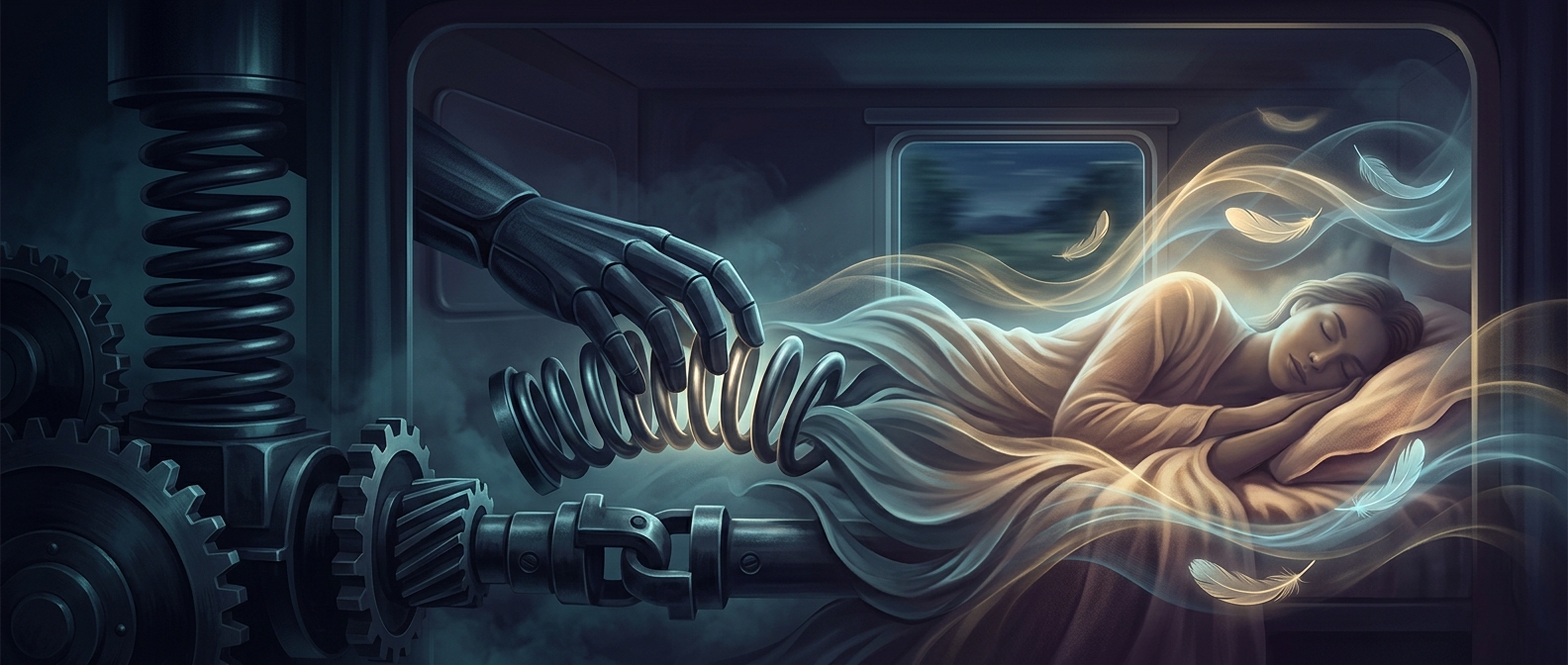
A train’s cars are linked by couplings, the hardware that keeps the vehicles together while transferring the forces of starting, braking, and rolling. On some sleeper trains, the connection is designed to yield slightly rather than behave like a perfectly rigid bar. That small amount of movement can cushion abrupt pulls and pushes as the train moves over track joints, switches, and uneven sections.
The difference is easy to picture: when one car jolts, a completely rigid connection passes much of that movement straight into the next. A coupling with controlled play or cushioning can take up part of the shock before it travels farther along the train. It does not mean the cars are coming apart; the connection remains secure while allowing limited movement.
Why that matters after lights-out
In a seated carriage, a brief bump may be little more than an annoyance. In a sleeping compartment, the same sudden change in motion can wake someone or interrupt light sleep. Smoothing the sharpest impacts helps make the ride feel less abrupt, even though it cannot eliminate the ordinary rocking and vibration of a moving train.
The useful distinction is between controlled give and loose, unsafe coupling. The first can absorb some of the forces that would otherwise pass from car to car; the second would compromise the train’s connection. A sleeper train’s quietness can depend not only on what happens inside the compartment, but also on how gently the cars pass motion along the line.