How rain turns a tree’s sap into a skin irritant
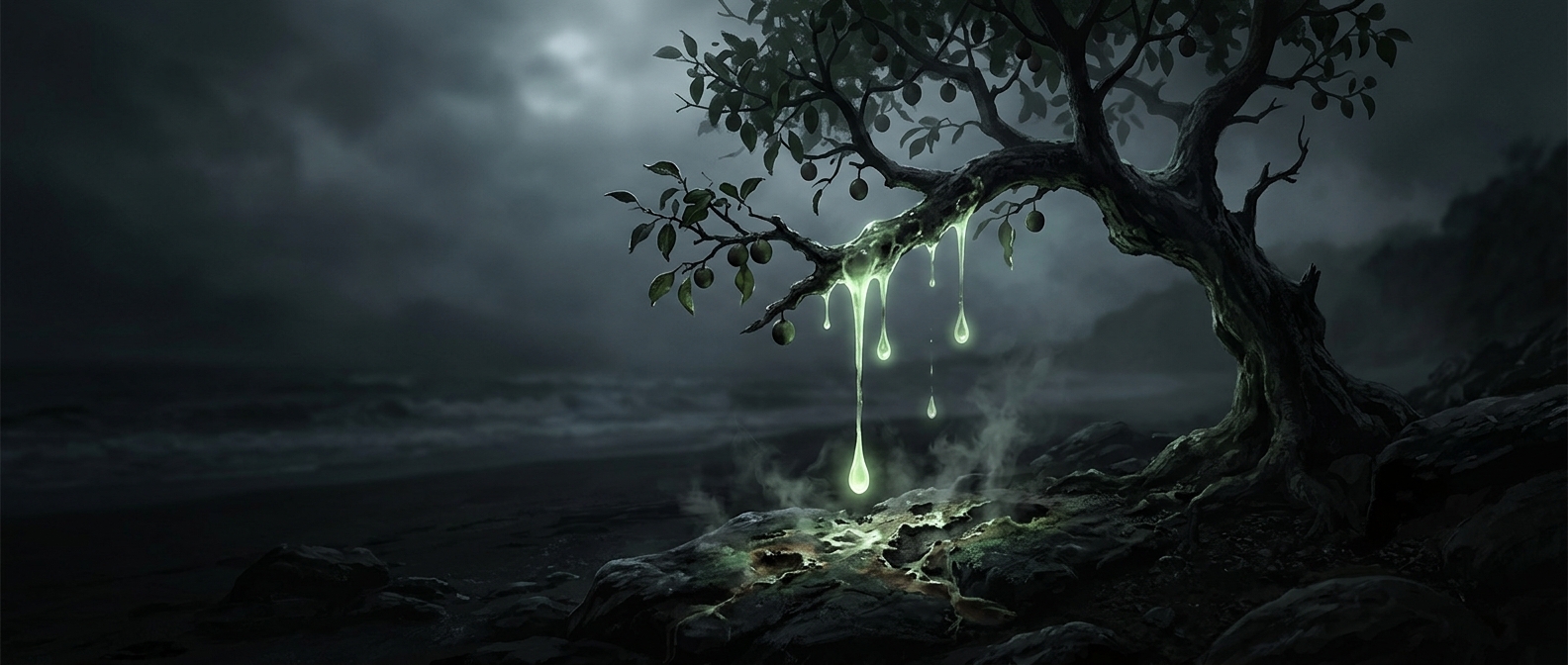
Manchineel’s danger is not limited to touching its trunk. The tree produces a caustic, milky latex—a plant fluid released from its tissues—that can irritate skin. When rain runs over sap on leaves or branches, it can spread the irritant beyond the spot where it originated. A person standing beneath the canopy may therefore be exposed without touching the tree itself.
Why contact can raise blisters
The sap’s irritating chemicals provoke a strong inflammatory response in the skin. Inflammation brings redness, swelling, pain, and, in more serious reactions, fluid-filled blisters. Those blisters are the body’s response to tissue irritation; they are not pockets of tree sap beneath the skin.
The severity can depend on how much sap reaches the skin and how long it remains there. If contaminated rainwater reaches the eyes, the irritation can be especially serious because those tissues are delicate.
The canopy can carry the hazard outward
A useful distinction is that the raindrop is just the carrier: it washes material from the tree and delivers it elsewhere. That makes sheltering under a manchineel a poor way to stay dry. Even without direct contact with the bark, runoff from above can put the tree’s sap on exposed skin.