Why Sleep Beside the Dead?
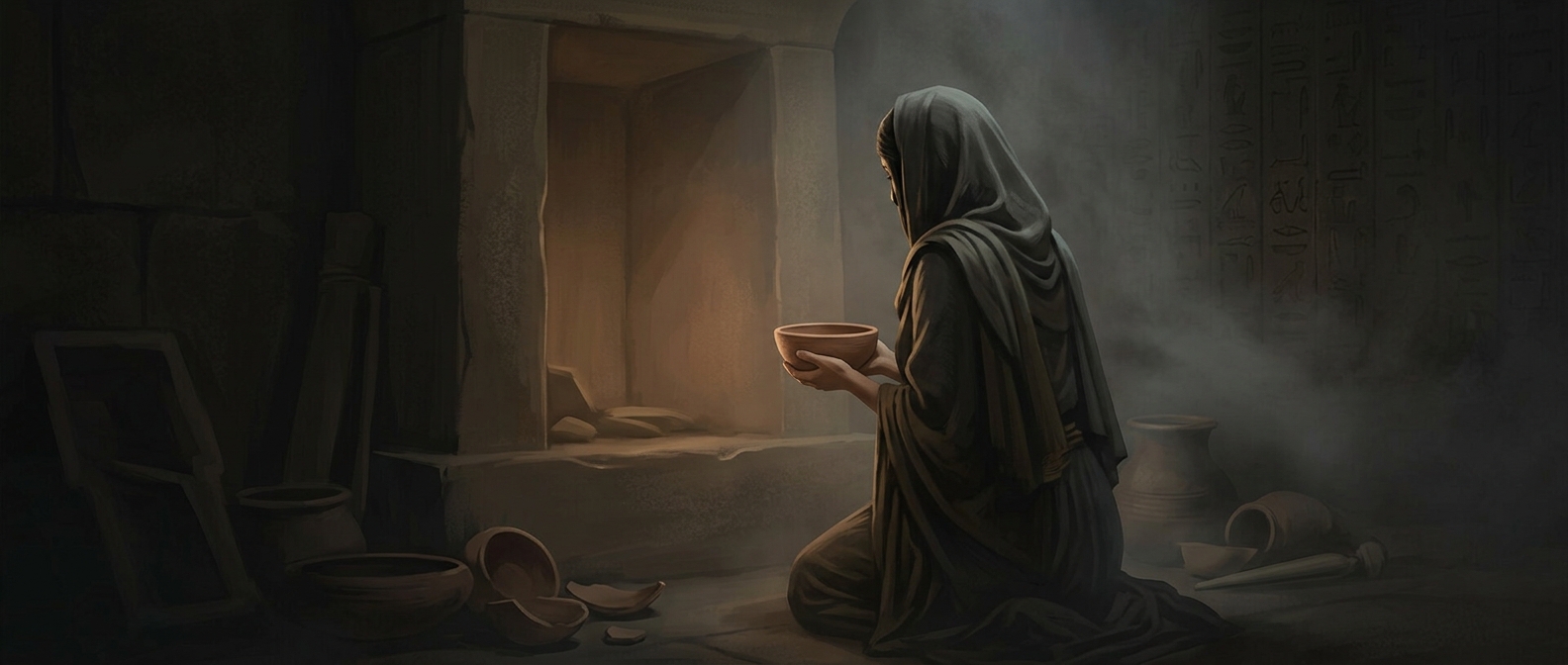
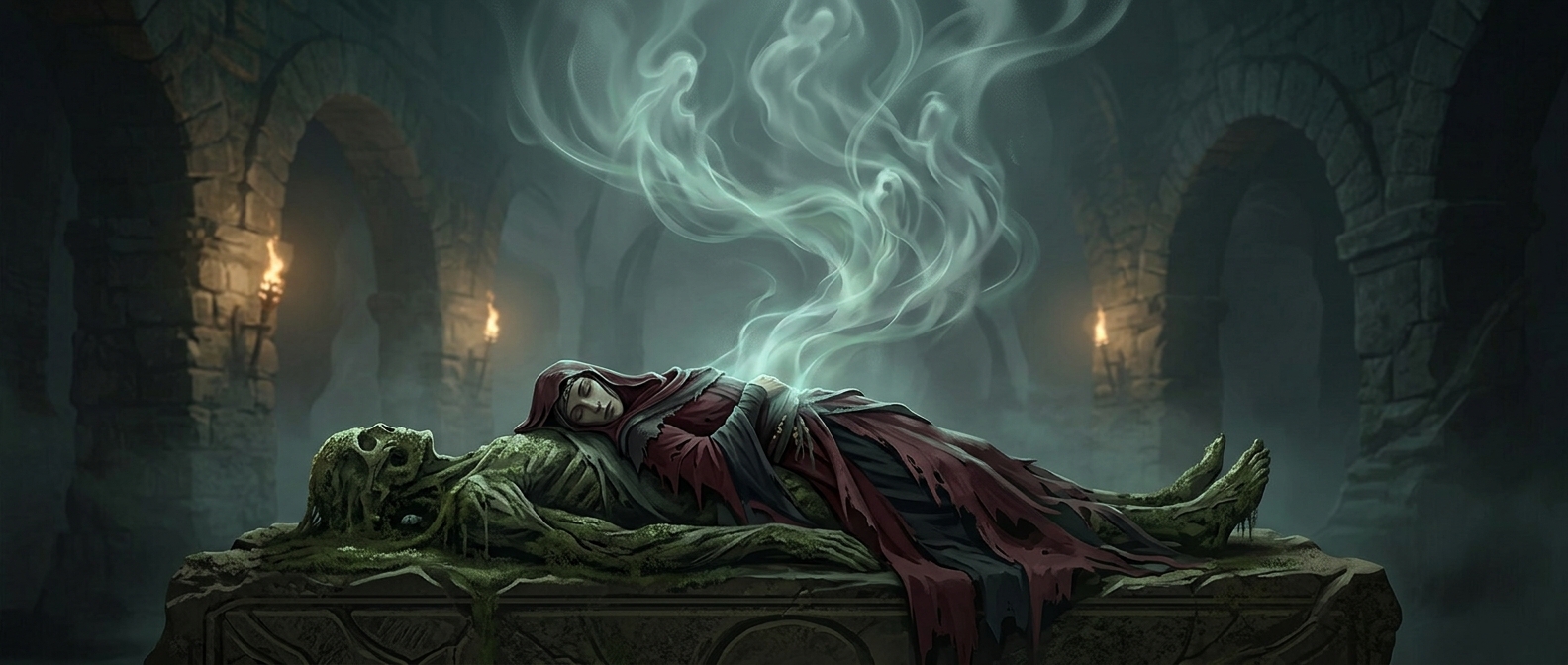
For people who practiced necromancy—the ritual seeking of knowledge from the dead—a corpse could be more than a body. It marked a point of contact with the underworld, where the deceased were thought to remain near the place their bodies had been laid. Sleeping beside the remains was meant to bring the seeker close enough to receive a message.
The practice was called incubation, from a word for lying down. In this setting, sleep mattered because dreams and visions could be treated as encounters with spirits, rather than as ordinary nighttime thoughts. The tomb’s darkness and separation from daily life made the ritual feel like a deliberate crossing into a different realm.
A Dream Turned Into a Message
The aim was not simply to see a frightening image. A spirit might be asked for information about the future, a missing person, or another matter beyond the living person’s reach. The dream or vision supplied the response, which the seeker then had to interpret.
Incubation was also used in other ancient religious settings, including rituals seeking healing; the meaning depended on whom the worshipper hoped to encounter. In necromantic practice, the corpse made the desired connection tangible. The striking feature is how the ritual joined two thresholds—sleep, when ordinary awareness recedes, and the tomb, where the living approached the dead—to make a hoped-for vision seem like a message from beyond.