One tube, two different routes into it
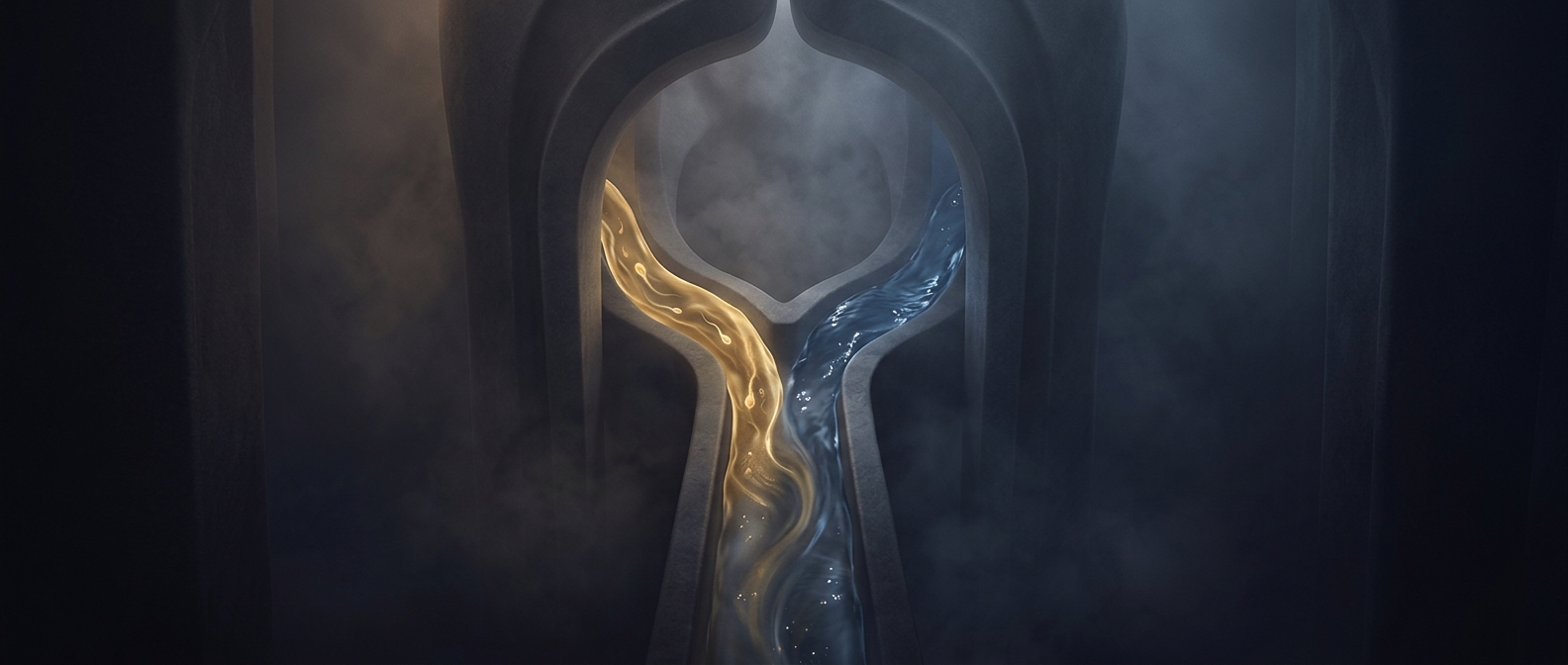
The urethra is shared, but urine and semen do not travel together from the same place. Urine enters it from the bladder. During ejaculation, sperm and fluids from reproductive glands travel through ducts; those fluids join the urethra farther along, inside the prostate. The urethra then carries semen out through the penis.
A valve-like closure changes the flow
At the bladder’s exit is the bladder neck, a ring of smooth muscle that usually stays closed while the bladder stores urine. During ejaculation, nerves prompt this muscle to tighten. That helps keep semen from going backward into the bladder—a condition called retrograde ejaculation—and prevents urine from entering the urethra during the same event.
The separation is a matter of timing and muscle control, not two separate tubes. When the bladder neck does not close properly, semen may flow into the bladder instead of out; it is later passed harmlessly with urine. The shared pathway is therefore more like a junction with a coordinated gate than a pipe carrying both fluids at once.