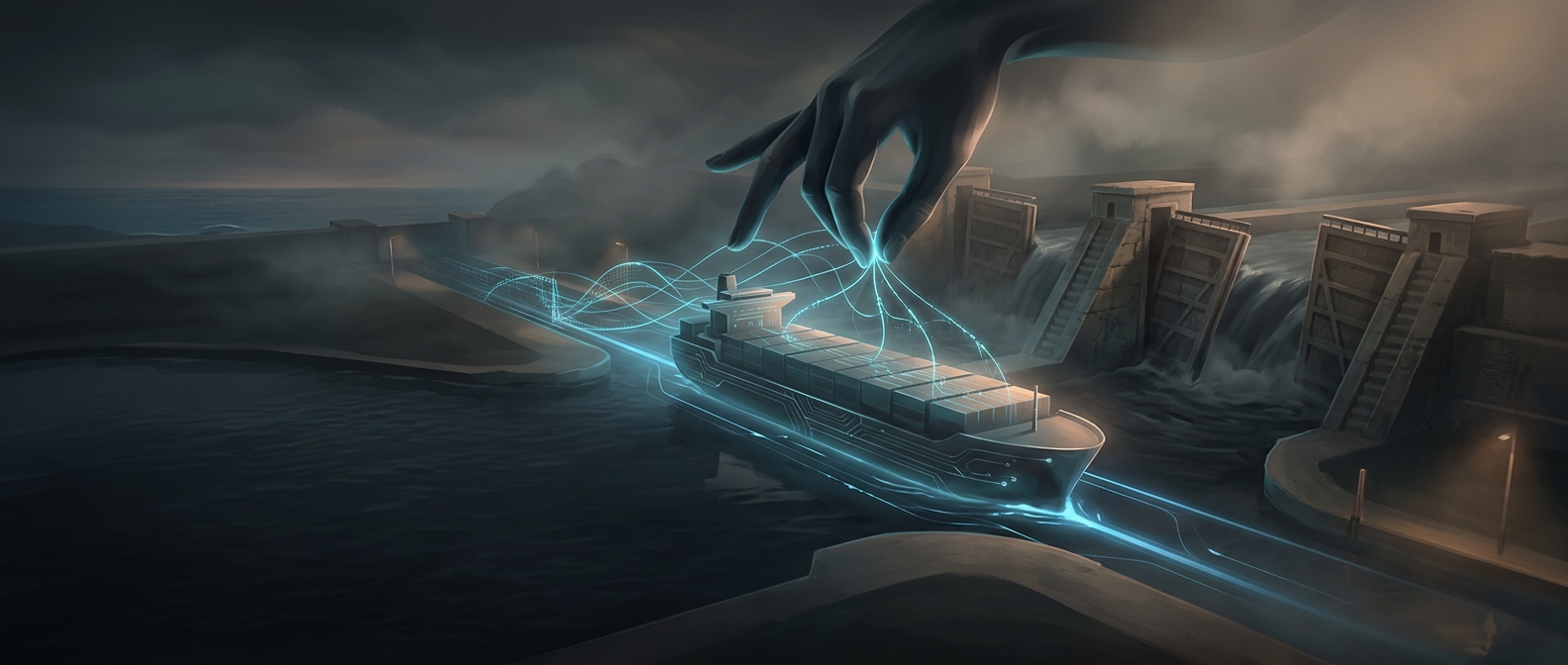
A lock works by changing the water level around a ship
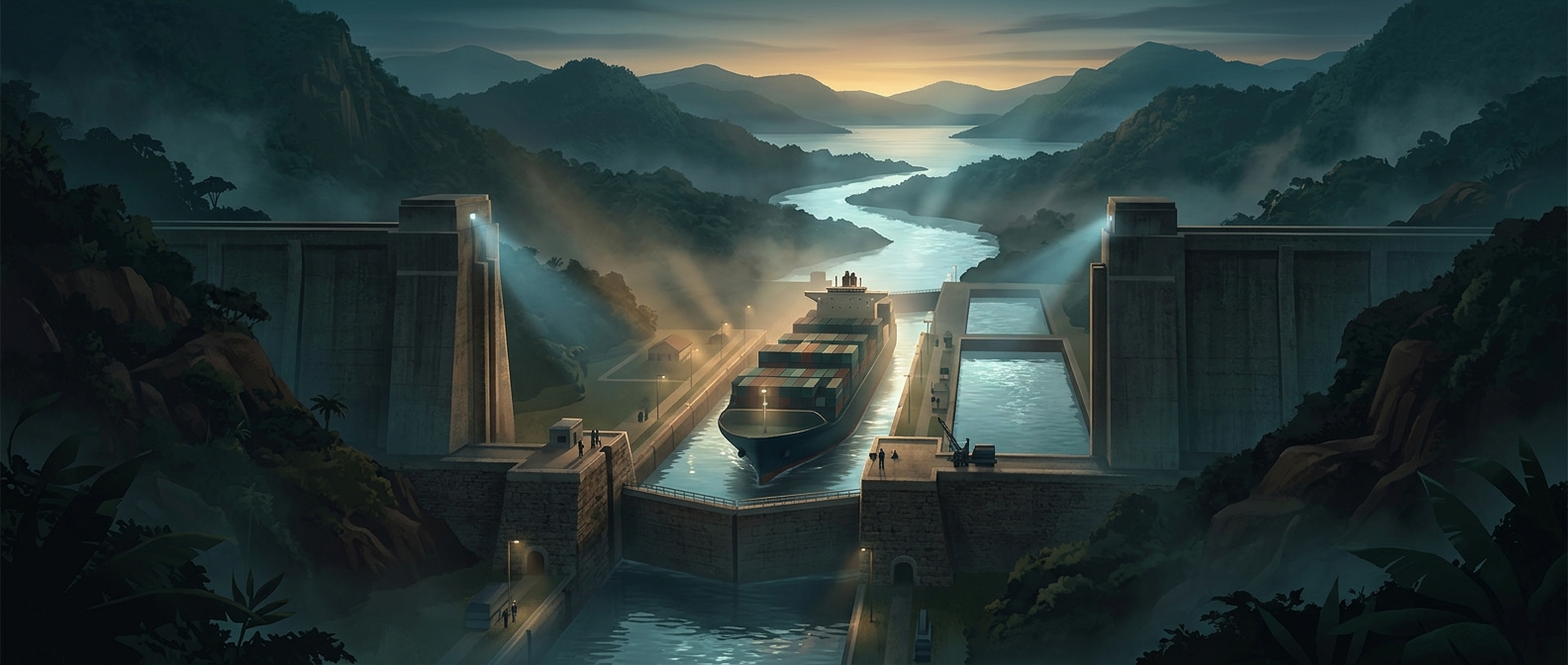
The Panama Canal crosses land that rises well above sea level, so ships cannot simply sail straight through. In a lock, gates seal a chamber around a vessel, and valves let water flow in or out until the chamber matches the level of the next stretch of canal. The ship rises or falls with the water; it is not lifted by a platform.
That level change takes a large volume of fresh water. In the canal’s newer locks, engineers added long, shallow reservoirs beside the chambers, called water-saving basins. Valves connect each basin to a lock chamber at different heights. Because water naturally flows downhill, operators can direct part of a chamber’s water into a basin instead of letting it run all the way out to sea.
The next crossing can use what the last one left behind
When a ship descends, water from the chamber can be stored in the basins at lower levels. During a later raising, that stored water flows back into the chamber as it needs to climb. The arrangement links several steps of a lock’s rise and fall, so water released at one level can be useful at another.
It is not a closed loop: some water still leaves the system, and fresh water must replenish the canal. But storing and reusing part of each lock’s water reduces how much is needed for a transit. The practical payoff is a carefully timed exchange: a ship going down helps conserve the water required to bring another one up.