Why a Cup Can Jump Between Cuts
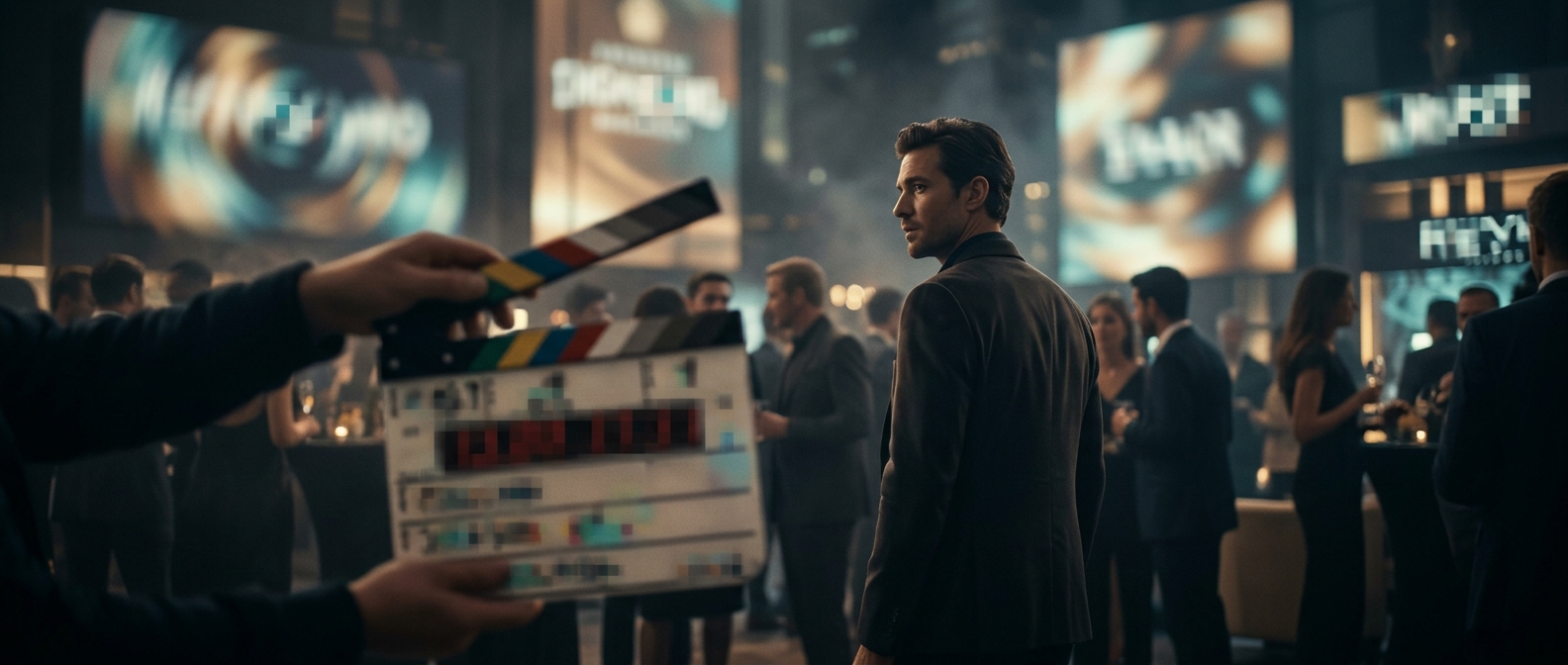
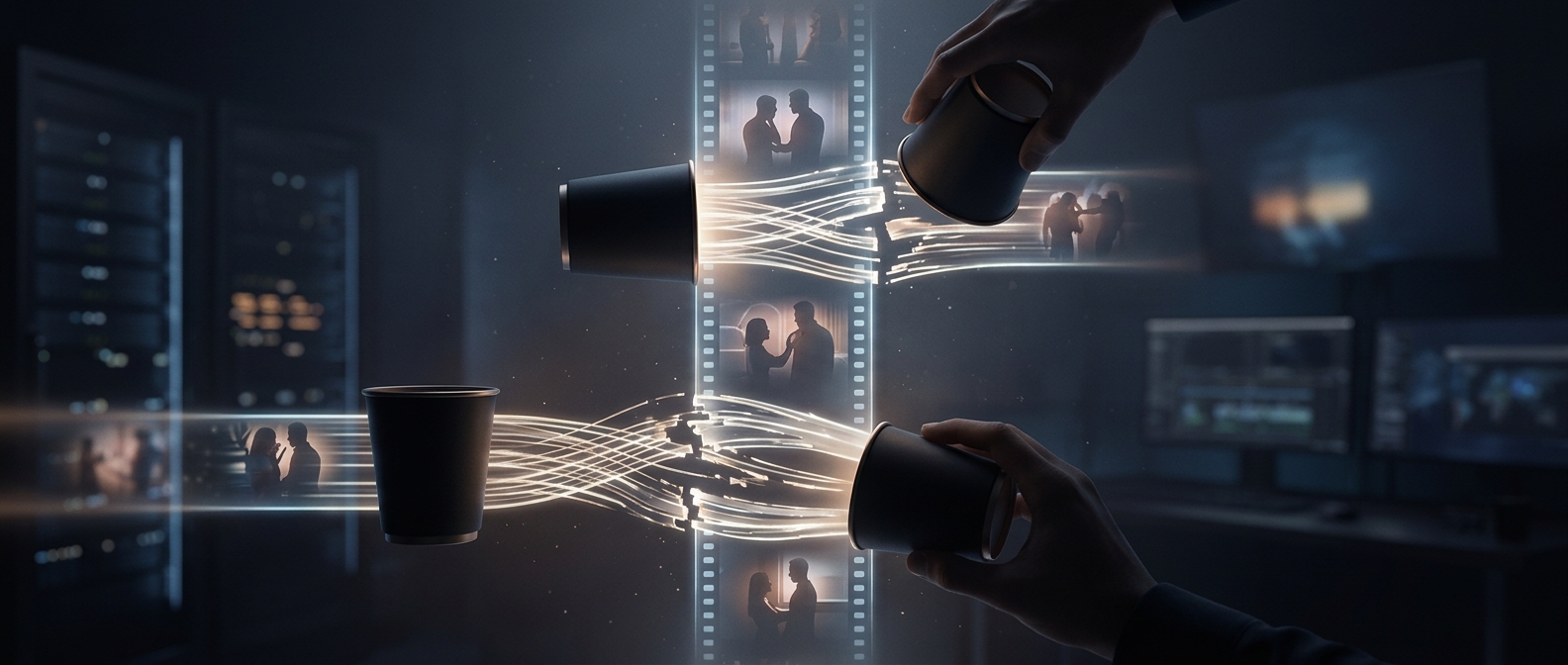
A scene that looks continuous is usually assembled from separate takes. The camera may film one actor’s close-up, then another’s reaction, and later a wider view. Editors join those shots so the conversation feels like one uninterrupted moment—but each take begins with the set reset, and small details can drift.
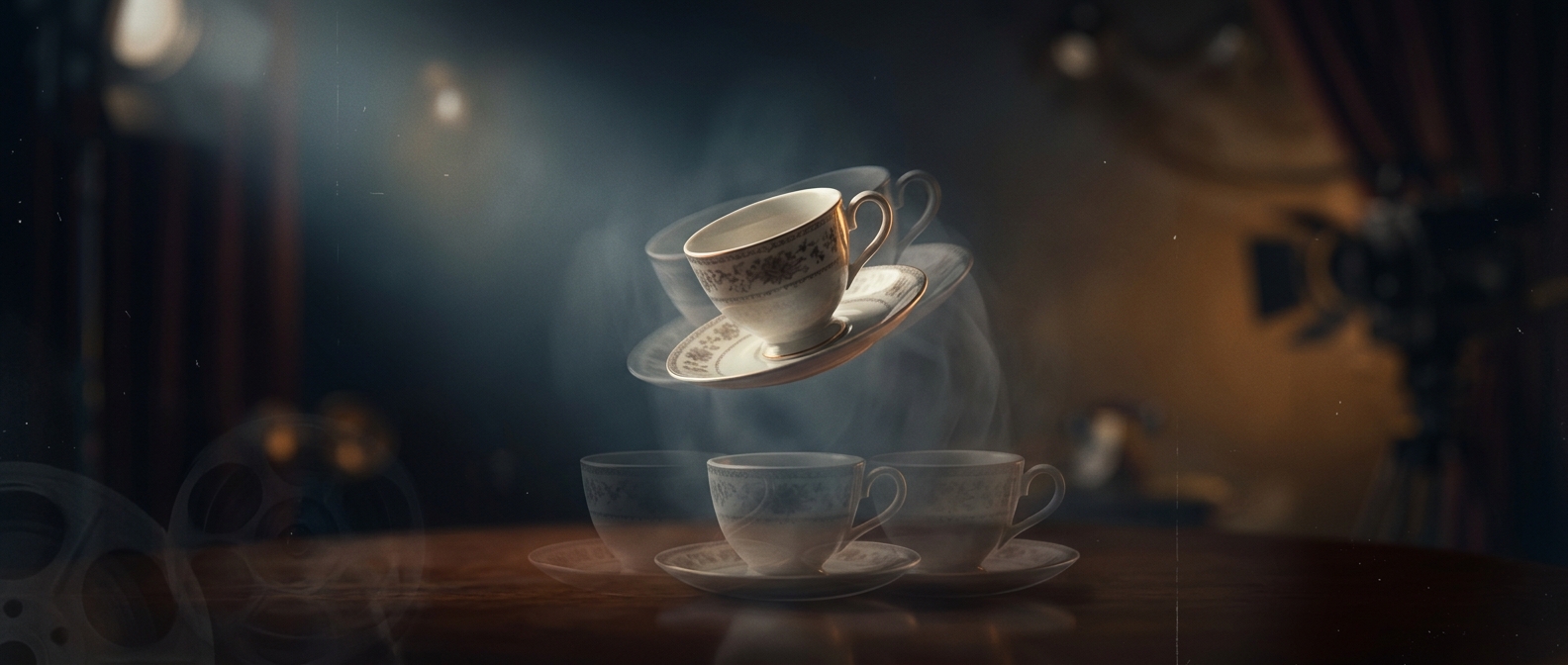
A cup is especially easy to notice because viewers track it without trying. If it is near an actor’s hand in one shot and farther away in the next, or if the drink level suddenly rises, the cut can make it seem to jump.
The Invisible Work of Matching Takes
To preserve continuity, crews record details such as where props sit, which hand holds them, and how much liquid remains. A continuity supervisor or other crew member helps track those details, while photographs and notes can guide resets. Actors also try to repeat movements precisely: lifting the cup, taking a sip, and putting it down in the same place.
But matching a performance exactly is difficult. A take may be repeated for a different camera angle, or a scene may be filmed out of story order. The actor’s timing changes, a prop is moved between setups, or a sip is taken on one take but not another. If the mismatch slips past the edit, the two shots can end up adjacent.
Why the Error Survives
Editors and directors prioritize performance, pacing, and clarity. A tiny shift in a cup may be less distracting than using a weaker take or disrupting the scene’s rhythm. Many viewers focus on faces and dialogue, so the mismatch goes unnoticed—until someone spots it and the cup becomes the scene’s most memorable moving object.