How the platter changed a screening
A feature film was shipped as a series of separate reels, each too short to cover a full screening. In a traditional two-projector booth, the projectionist threaded the next reel on one machine while the other was running. Near the end of a reel, small cues on the picture told the operator when to start the second projector and switch the image and sound over. The process repeated roughly every 20 minutes.
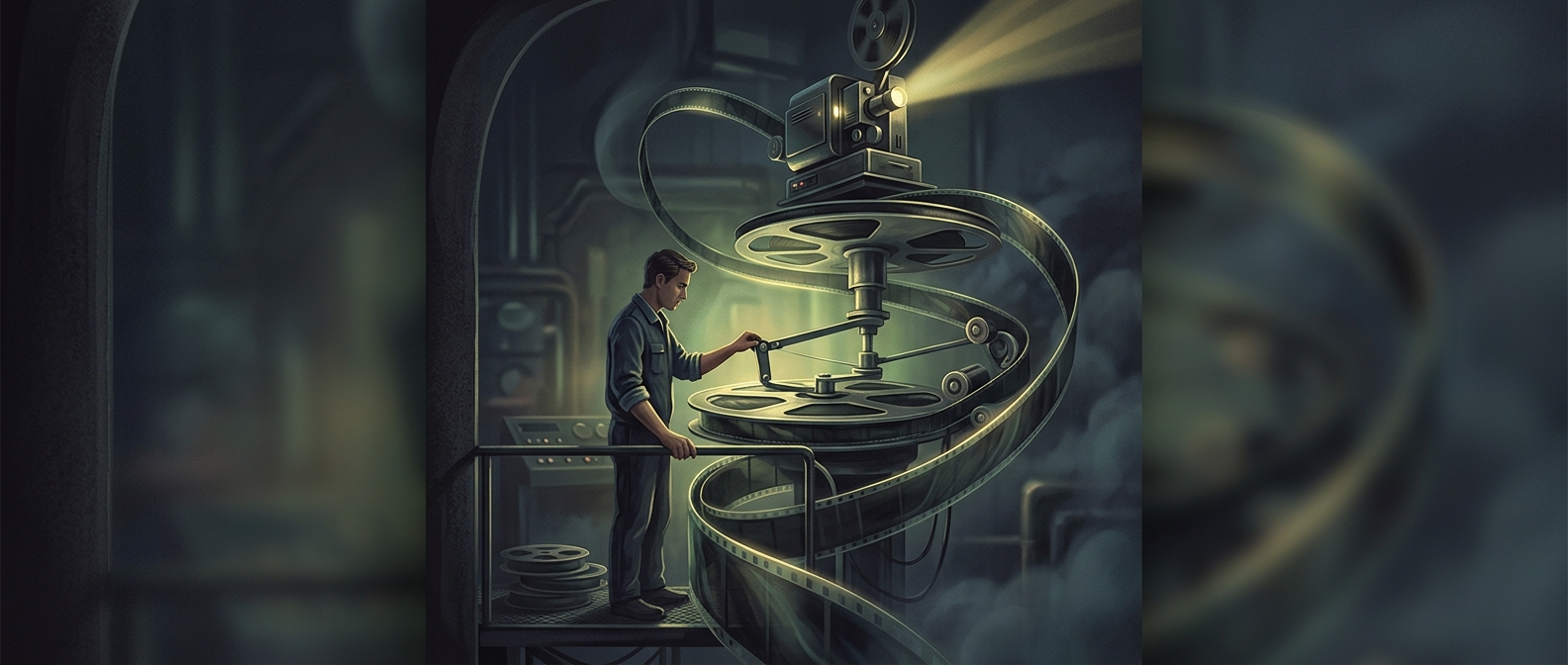
A platter replaced those handoffs with a long, horizontal stack of rotating discs. The projectionist joined the reels end to end with tape, making one continuous strip, then wound it into a large coil on the platter. A feed arm guided film from the coil through the projector, while another mechanism collected it as it emerged.
Fewer changes, different responsibilities
With the reels joined, one projector could run the whole feature without a mid-show changeover. That reduced the need for a second projector and freed the projectionist from repeating a timed switch during every screening. The job did not disappear: someone still had to assemble the film, thread it correctly, monitor the run, and rewind or reassemble it afterward.
The tradeoff was that a long strip could be awkward to handle and vulnerable to damage if it was mishandled. Platter systems also required careful setup so the film fed smoothly and the picture stayed steady. The platter shifted the work from repeated reel changes to preparing and managing one continuous loop.