How a dragonfly can cross open water
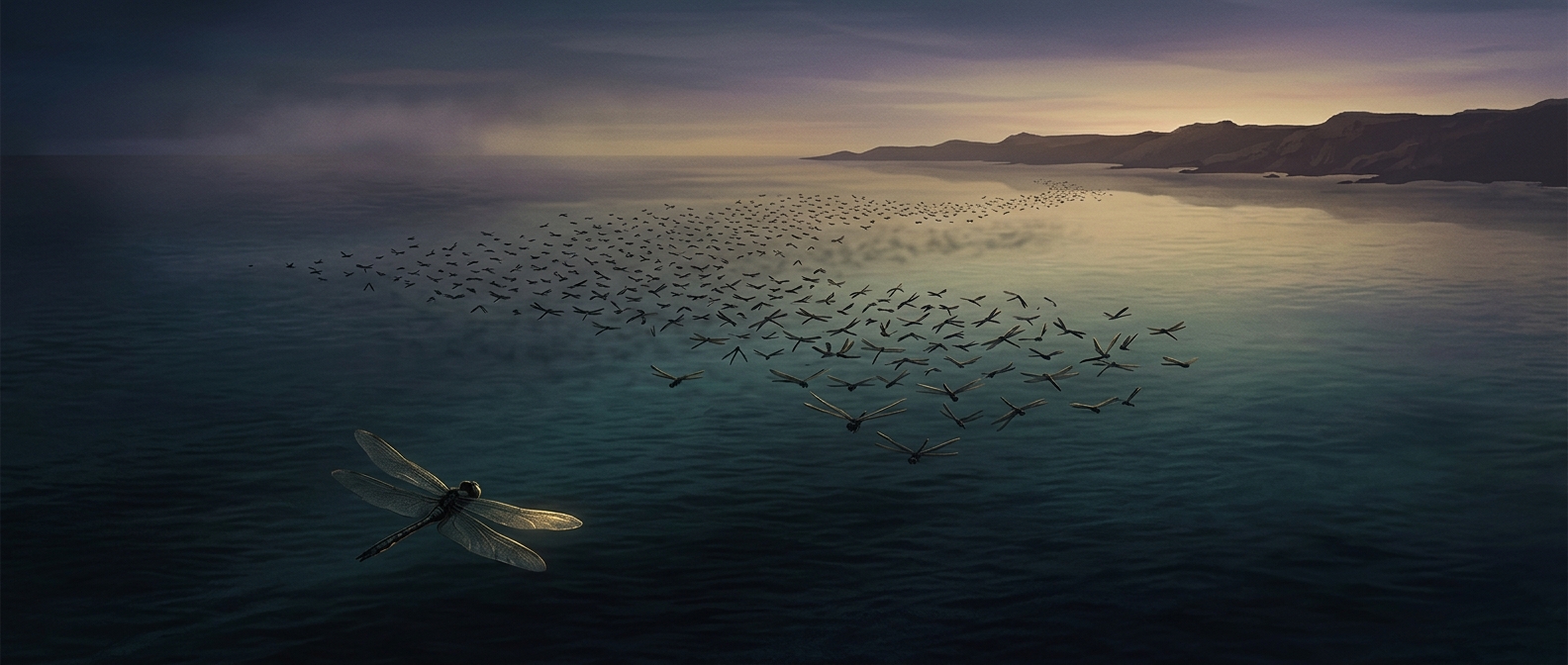
The globe skimmer, a small dragonfly known for long migrations, faces a basic problem over the ocean: it cannot stop to rest or refuel. Its advantage is that a flying insect moves through air, while the air itself may be moving rapidly over the sea.
A tailwind adds to the dragonfly’s speed over the ground. The insect still has to keep itself aloft and make flight decisions, but it can cover more distance in the same time than it could in still air. By alternating flapping with periods of gliding, it can also reduce how much muscle work it does while traveling. Gliding is not effortless—the wings must still support its weight—but it uses less active wingbeat effort than continuous flapping.
A route shaped by weather
For a tiny migrant, the difference between flying into a headwind and moving with a tailwind can determine whether a long stretch of water is manageable. Winds can carry dragonflies far from land, so successful ocean crossings depend not just on the insect’s own flight but on when and where favorable air currents occur. The same wind that helps with distance can also push an insect off course; it must still respond to the air and keep its flight under control.
That combination—powered flight, energy-saving glides, and a moving air mass—makes an ocean barrier crossable without making it easy. The dragonfly cannot count on a landing place beneath it; its best chance is to spend less effort per mile while the wind carries it toward the next coast.