How a trail becomes a traffic signal
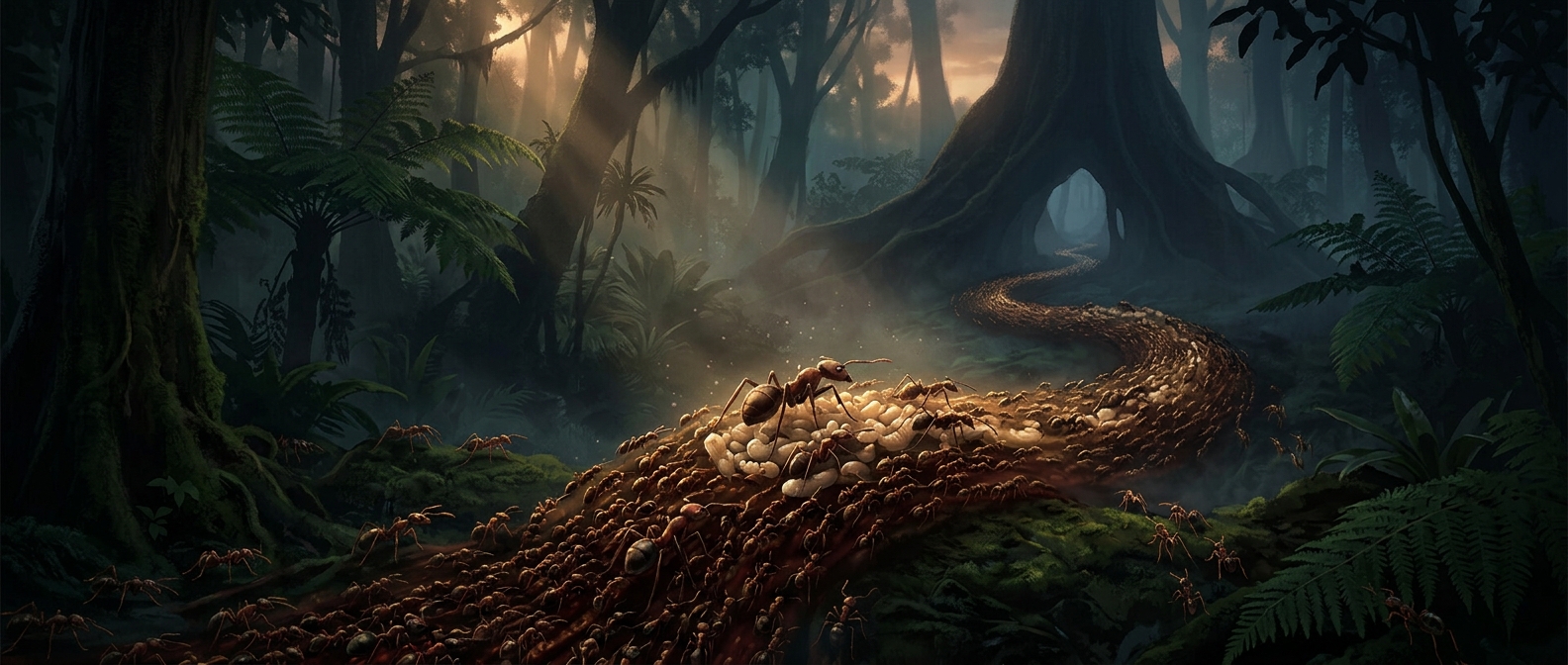
A pheromone is a chemical cue an animal can detect. For many ants, a trail does more than point toward food: its strength gives other ants a rough measure of how actively the route is being used. Each ant responds locally, following stronger cues and reinforcing them as it travels. No ant needs to know the colony’s overall plan.
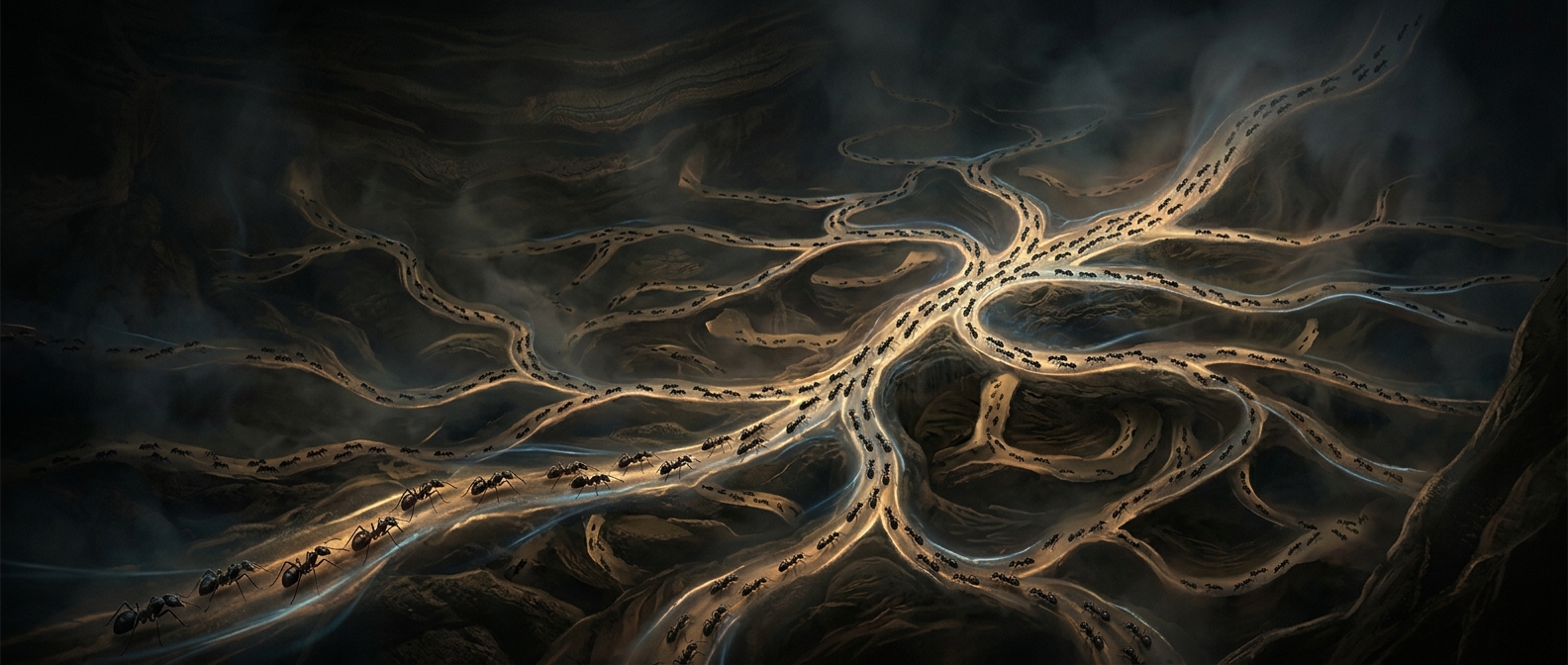
This creates a feedback loop. If two routes lead to food, ants that happen to take the quicker one can return and reinforce it sooner. More ants then encounter a stronger trail there, so that path tends to attract still more traffic. It is a rough, collective sorting process—not a deliberate survey or a guarantee that the colony has found the mathematically best route.
Why the system can change direction
Chemical trails do not last forever. As scent fades, an abandoned or unproductive path becomes less compelling, while a route to food can stay strong through repeated use. That lets traffic shift when conditions change, such as when food runs out or a path is blocked.
The result is coordination built from simple responses rather than instructions from a central planner. The same trail can guide many ants, yet it remains adjustable because its signal must be continually renewed. A route is therefore not a permanent command; it is a path the colony keeps choosing, one trip at a time.