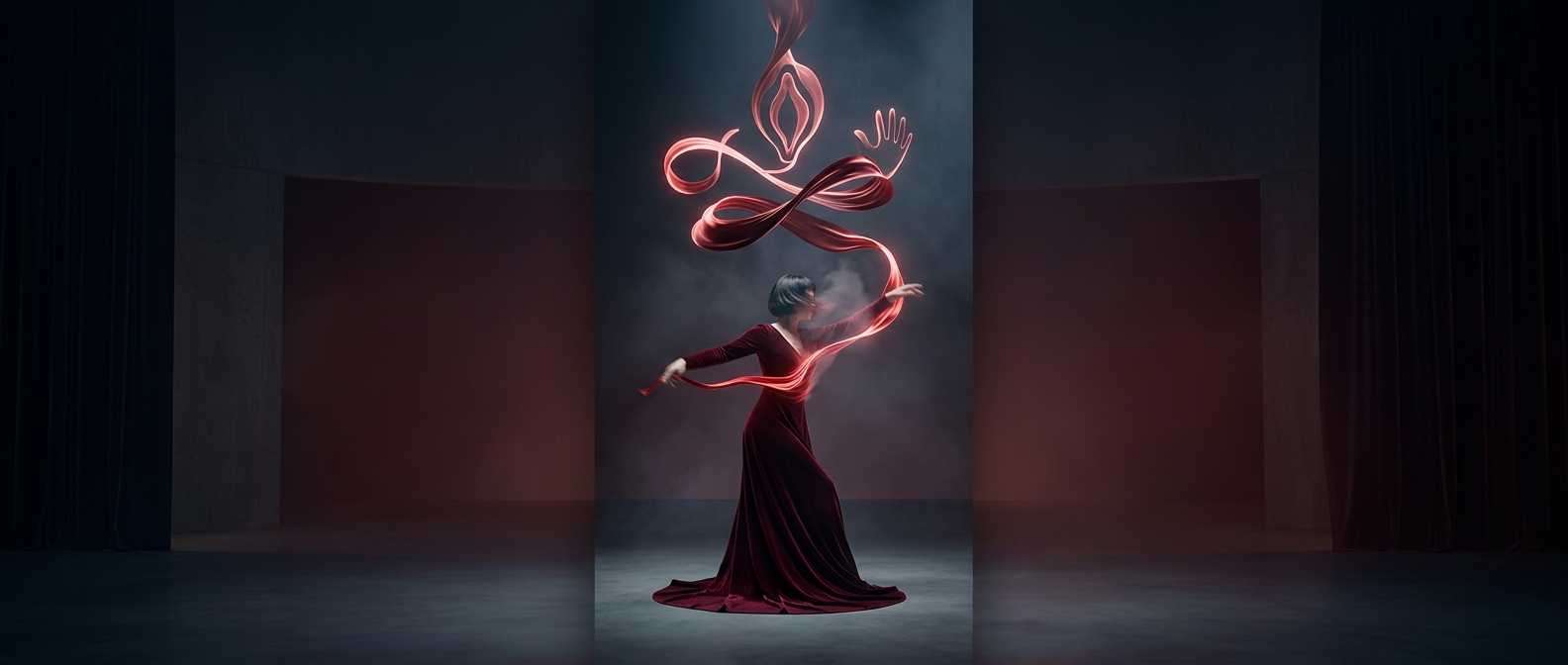
A text hidden inside the body
In 1975, artist Carolee Schneemann performed Interior Scroll at a women’s art event in New York. Standing nude on a table, she slowly drew a narrow paper scroll from her vagina and read its text aloud. The action made the body—not a painting or a page—the place where the work began.
The scroll’s words grew out of Schneemann’s experience of being dismissed by a male filmmaker who criticized her work as “messy.” As she read, the performance turned that judgment inside out: what had been treated as disorder or mere bodily matter became a vehicle for thought and speech.
Challenging who gets to make meaning
Much of the art world prized formalism: attention to a work’s structure and ideas, often framed as separate from the artist’s personal life or physical body. Women artists faced a narrowing choice: be treated as bodies to look at, or try to meet standards of supposedly detached intellectual seriousness.
Schneemann refused that division. In Interior Scroll, her body was neither a passive image nor an embarrassment to be concealed. It was the source of a text, and she controlled how the audience encountered it. The act was provocative partly because it brought a private, stigmatized part of the body into a public art setting—but its point was more than shock. It challenged the assumption that bodily experience and intellectual authority cannot belong together.
Why the performance endured
The work became a landmark of feminist performance art, a form that uses the artist’s own actions and presence as its medium. Its central conflict remains legible: who is allowed to speak as a thinker, and whose body is expected to remain silent or simply be looked at? Schneemann made that question impossible to separate from the act of reading itself.