Why an Antelope May Go Under Instead of Over
A fence changes the problem from “How fast can I run?” to “Where can my body pass without catching?” Barbed wire is especially hazardous to a leaping animal: a hoof or lower leg can land across a strand, while a horn or shoulder may snag as the animal clears it. A stumble against taut wire can turn a brief crossing into a struggle.
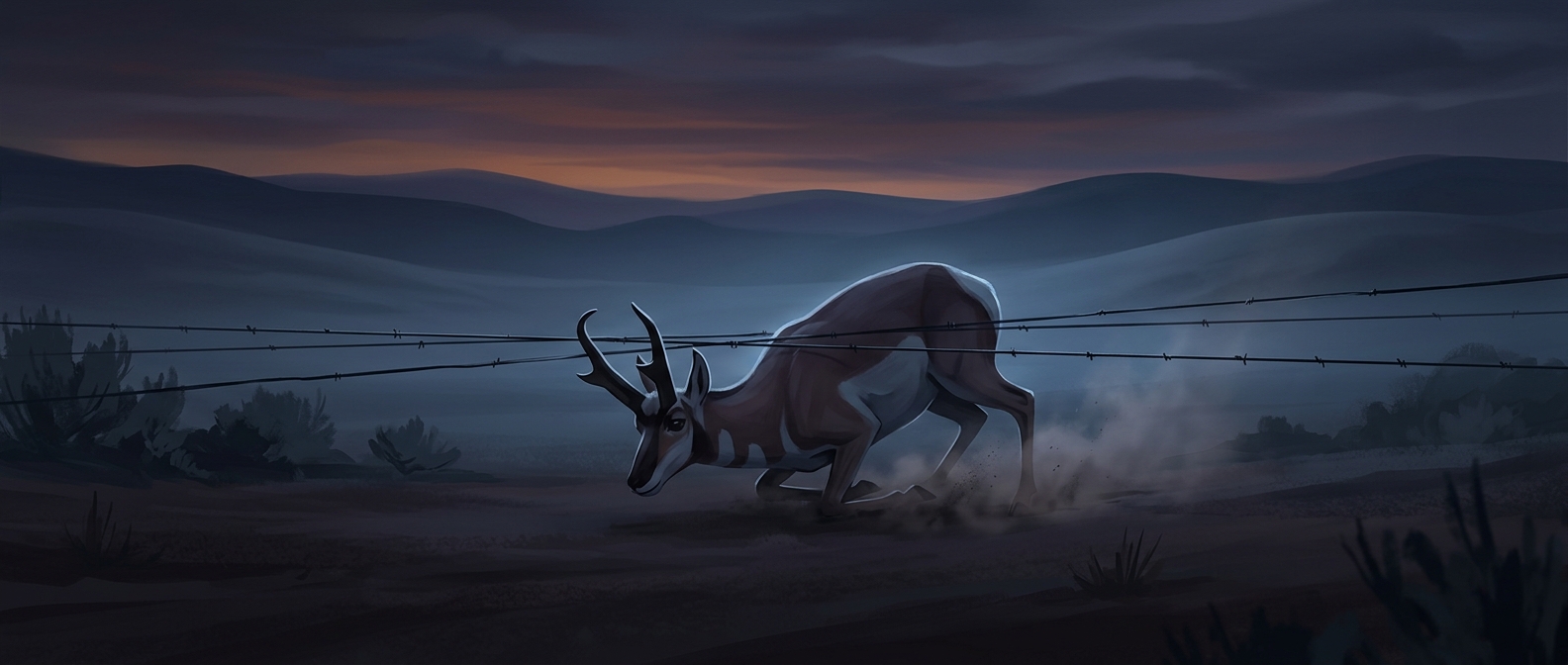
If there is enough space beneath the lowest strand, an antelope can take the slower route. It lowers its body, bends its legs, and edges through the opening rather than launching into the wire. The gap has to be high enough for the animal to pass and clear of obstacles on the other side; crawling is not a universal escape route.
A Different Kind of Speed
The maneuver is not a contradiction of the antelope’s reputation for speed. A sprint is useful in open ground, but a fence makes speed less valuable: momentum gives the animal less room to correct its path if it misjudges the jump. Moving cautiously through a gap trades time for control.
That small change in movement can matter wherever fences divide grazing or travel routes. A barrier need not stop an animal completely to shape its behavior; a low opening can make the safer passage the one that requires it to crouch and move carefully.