Why a quiet vehicle matters on a film set
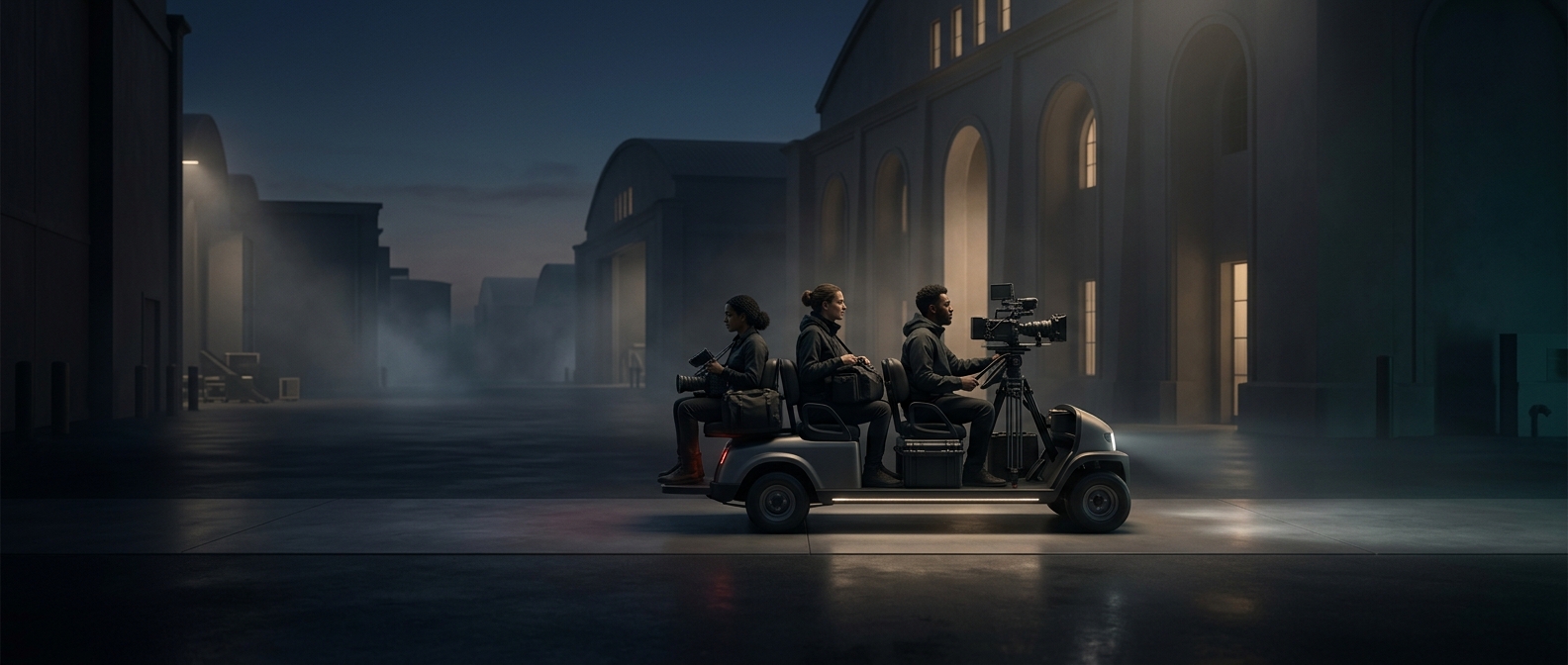
A studio lot can stretch across soundstages, offices, exterior sets, and equipment areas. Crew members may need to move between them repeatedly, sometimes carrying cases or other gear. Walking every trip costs time; using a conventional vehicle can bring engine noise right up to a scene being filmed.
An electric cart avoids much of that noise because it uses an electric motor rather than a running combustion engine. There is no exhaust, and the motor does not need to idle while the cart waits nearby. That makes it easier to move people and equipment around a working set without adding a low rumble that could interfere with recorded dialogue or force a pause in filming.
Quiet is a production tool, not a soundproof bubble
Electric does not mean completely silent: tires, brakes, rattling cargo, and voices can still be heard. Drivers still need to move carefully, especially near active filming. But removing engine noise reduces one predictable source of disruption—and one that would otherwise follow the cart wherever it went.
That matters because a scene’s sound is often captured live. If unwanted noise reaches the microphones, the crew may have to stop, wait for the area to clear, or record dialogue again. A cart that can carry people and equipment without announcing its approach helps keep routine movement separate from the work happening in front of the camera. Its most useful contribution may be the interruption that never happens.