The tie has a rule—but drivers have to recognize it
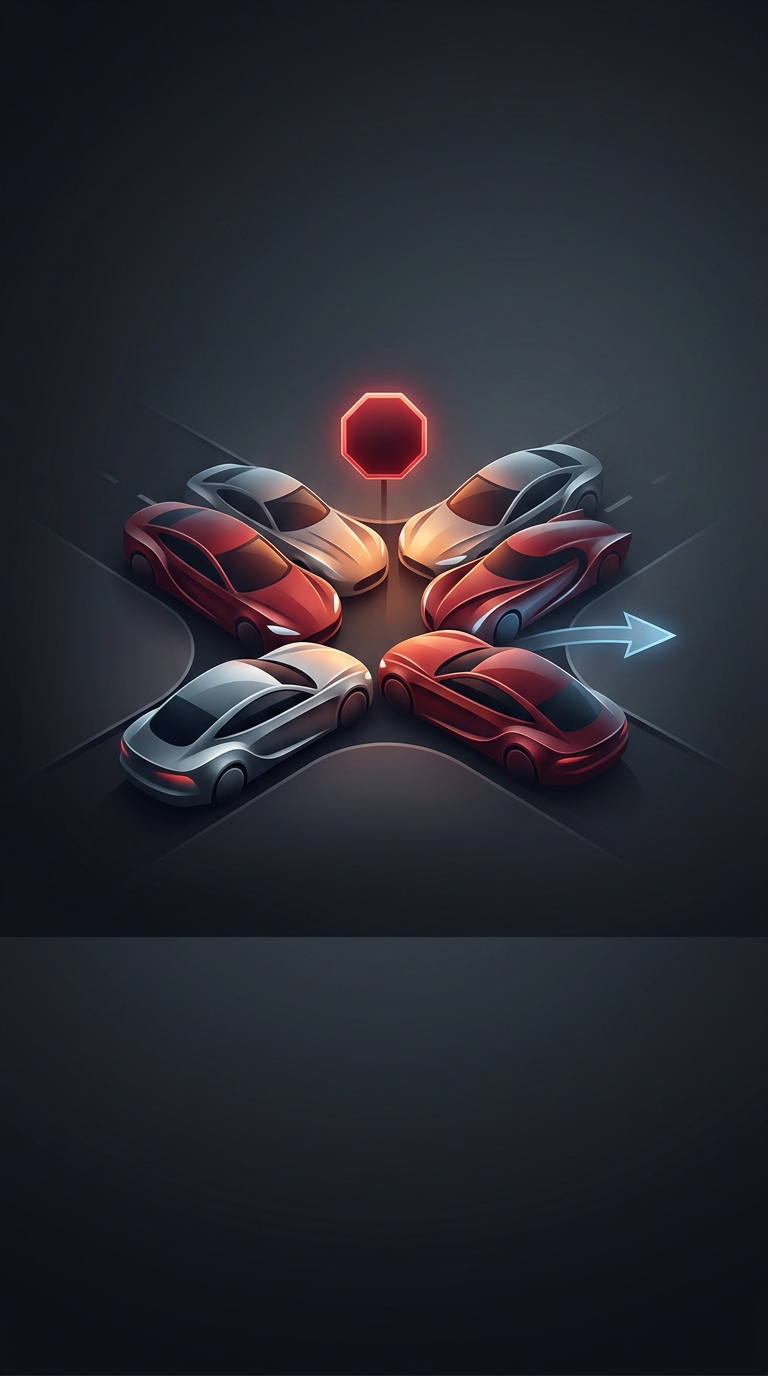
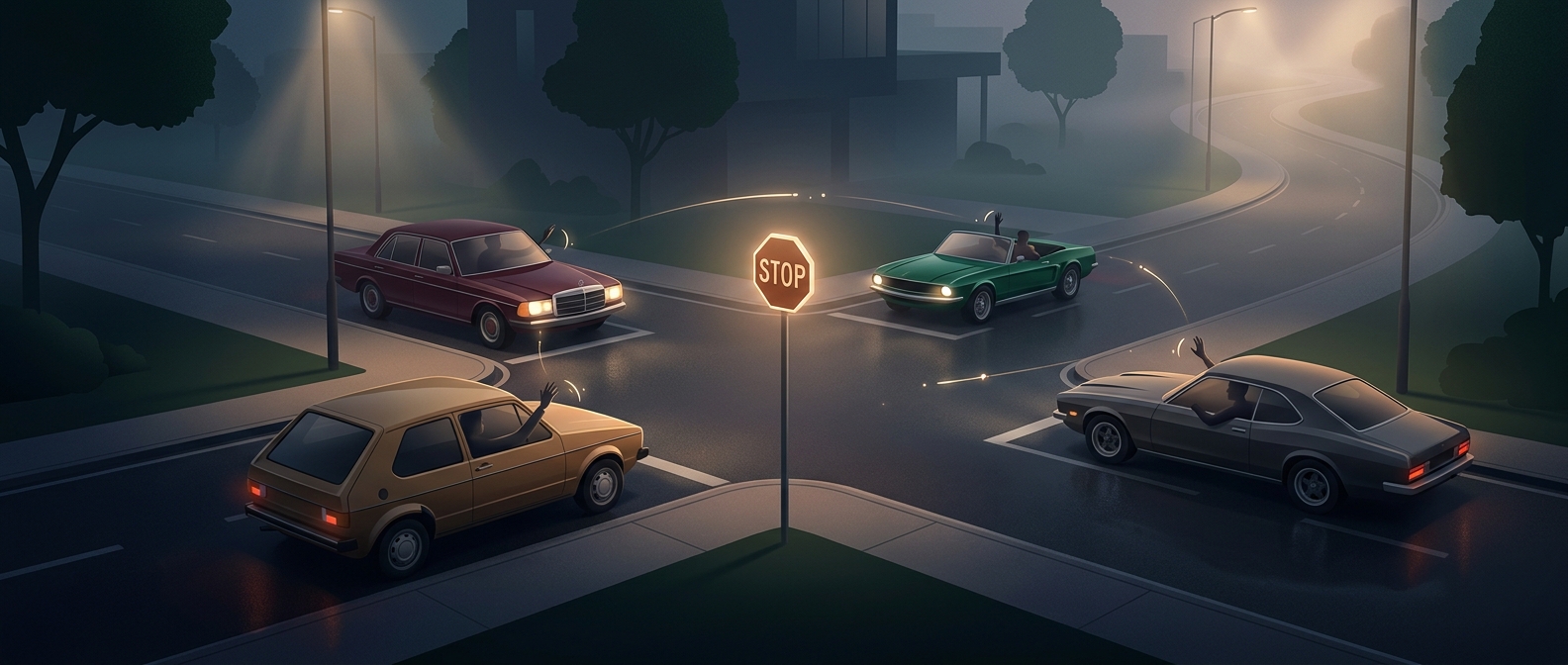
When two cars reach a four-way stop at nearly the same time, each driver is judging a moving scene: Did the other car stop first, or did it only seem that way? A difference of a fraction of a second can be hard to see from behind a windshield, especially when both vehicles are still rolling toward the stop line.
In many U.S. jurisdictions, if vehicles arrive at the same time, the driver on the left yields to the vehicle on the right. That gives the tie a predictable resolution, but it helps only when both drivers agree that the arrival was simultaneous and know which car is on which side.
Why the wave can make things less clear
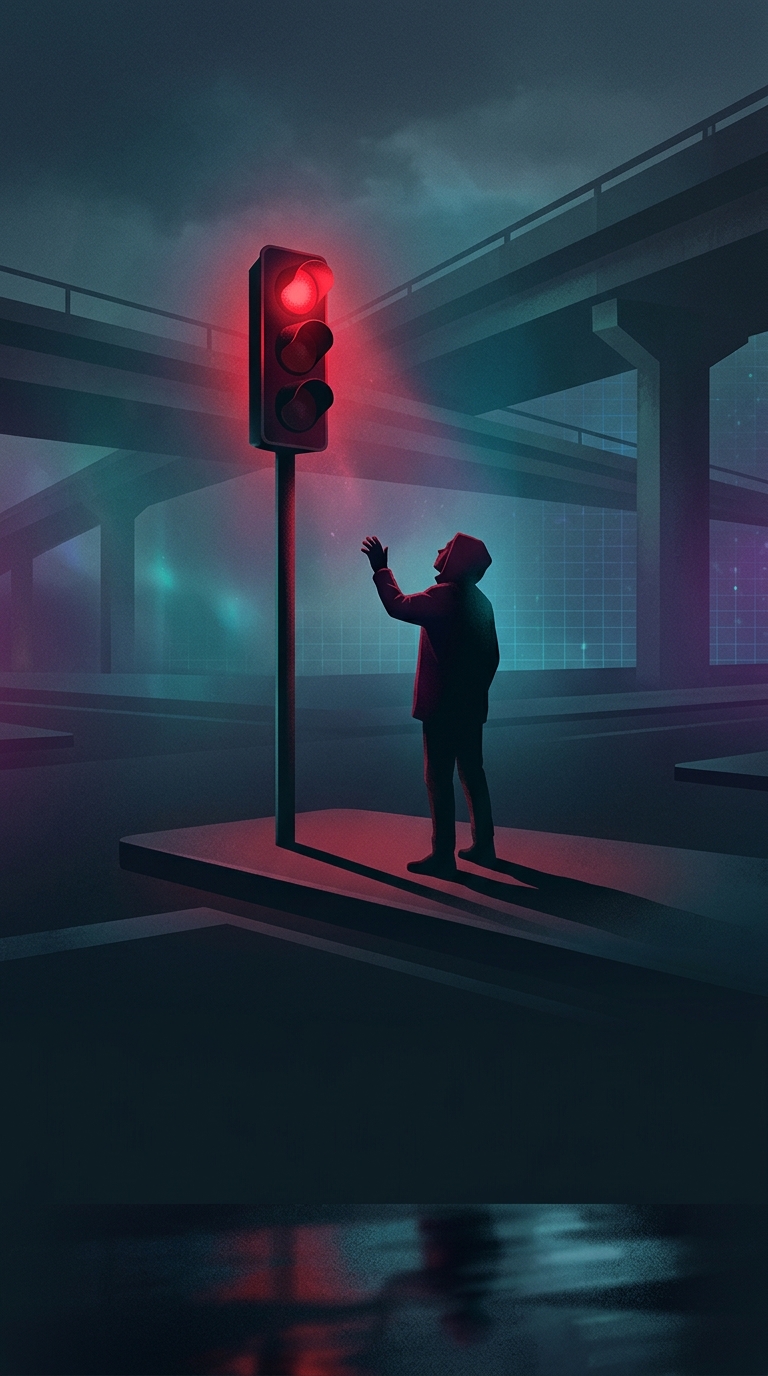
A driver who believes the other car has priority may wave it through. But a wave can be hard to see, and the other driver may be yielding in return. If both cars start moving, the polite gesture has created a new uncertainty: who is actually going?
The safest way out is to make the decision legible. One driver waits while the other proceeds, and the waiting driver moves only after the intersection is clear. At a stop sign, courtesy works best when it confirms a clear turn—not when both drivers use it to negotiate one.